


More news on this day
Hundreds of thousands of travelers across the United States are facing another turbulent travel day as aviation data shows 69 flights canceled and roughly 2,875 delayed, snarling operations at major hubs from Illinois and Nevada to Puerto Rico, Los Angeles, Atlanta, New York, Seattle and San Diego and rippling across the networks of American, Southwest, United, Delta and other carriers.
Get the latest news straight to your inbox!
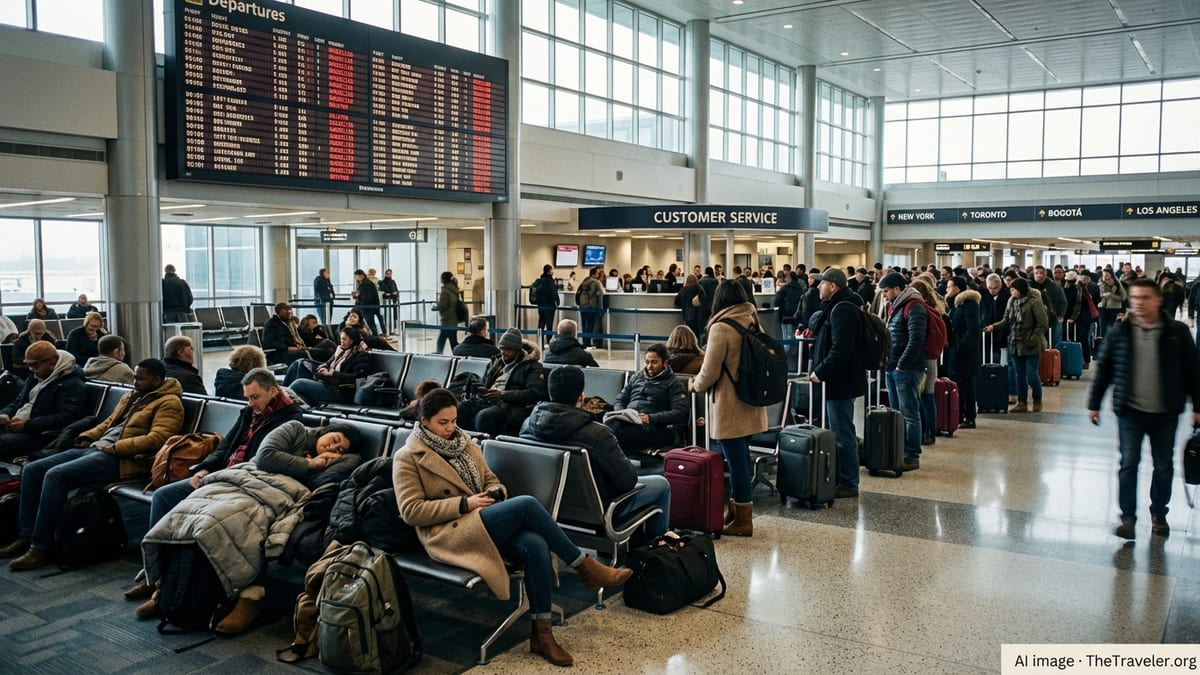
Nationwide Disruptions Concentrated at Major Gateways
Real-time tracking from aviation data providers indicates that the latest wave of disruption is concentrated around some of the country’s busiest passenger gateways, including Chicago O’Hare in Illinois, Las Vegas in Nevada, San Juan in Puerto Rico, Los Angeles, Atlanta, New York City, Seattle and San Diego. These airports function as crucial domestic and international transfer points, meaning localized problems can quickly cascade through the broader network.
At hubs such as Atlanta, Los Angeles and New York, even a modest number of cancellations can translate into hours of delays as aircraft and crews fall out of position. When compounded by congestion on key routes, each missed departure increases the risk of knock-on delays for later flights, particularly during peak afternoon and evening travel windows.
Operational dashboards used by airlines and airports show that departures and arrivals are being held or rescheduled rather than mass-canceled, contributing to the relatively low cancellation count compared with the elevated delay total. For passengers, this often means long waits at the gate or in the terminal instead of outright flight loss, but it can still disrupt connections and onward plans.
Traffic flows into coastal hubs including New York, Los Angeles and Seattle are especially sensitive to airspace constraints and congestion. Reports indicate that arrivals into these cities are experiencing longer taxi and ground holds, which in turn limit the ability of airports to reset schedules once disruptions begin to accumulate.
Weather, Congestion and Operational Strain Behind the Numbers
Published coverage and live airport-status pages point to a familiar mix of contributing factors behind the 69 cancellations and 2,875 delays. Seasonal weather patterns, including thunderstorms, reduced visibility and shifting wind conditions, have combined with heavy traffic volumes to create bottlenecks in already busy corridors.
Data from U.S. airspace management tools shows a patchwork of ground delays and flow-control measures affecting selected airports, including San Diego, where general arrival and departure delays have been flagged at various points in the day. These measures are typically used to manage demand when runway capacity is temporarily reduced or when inbound traffic exceeds safe handling limits.
Airlines are also navigating ongoing operational pressures, such as tight aircraft utilization and crew scheduling constraints. When storms or traffic-management initiatives force schedule changes at one hub, aircraft and staff may not be in place for subsequent flights at downline airports such as Las Vegas, San Juan or secondary city spokes, contributing to the elevated delay count even when local conditions appear calm.
Aviation analysts note that in this environment, even short bursts of adverse weather can have outsized effects. With many carriers operating close to capacity on popular routes, there is limited slack to absorb disruptions, so relatively small clusters of cancellations and a few thousand delays can still translate into widespread inconvenience for passengers across the country.
American, Southwest, United and Delta Among Most Affected
Live statistics from flight-tracking services indicate that the current disruption is hitting the country’s largest carriers hardest, simply because of their scale and the prominence of their hub operations at airports such as Dallas Fort Worth, Atlanta, Chicago O’Hare, Los Angeles, New York and Seattle. American Airlines, Southwest Airlines, United Airlines and Delta Air Lines account for a significant share of both the 69 cancellations and the 2,875 delays.
Operational performance dashboards for these airlines show elevated same-day delay rates compared with typical off-peak conditions. Even when daily cancellation percentages appear relatively low, the absolute numbers translate into thousands of passengers needing rebooking, hotel support or alternative connections, particularly at major transfer hubs.
Smaller and hybrid carriers are also experiencing knock-on effects where they share gate space, runway capacity or connecting passengers with the large network airlines. Regional operators feeding traffic into hubs in Illinois, Nevada and the Pacific Northwest, for example, can face late inbound aircraft or sudden schedule changes when mainline partners adjust operations in response to airspace constraints or weather diversions.
Because many U.S. routes are dominated by a limited number of large airlines at each hub, passengers may have fewer same-day alternatives when irregular operations increase. This can lead to crowded standby lists, longer waits at customer-service desks and tighter competition for the limited number of seats available on later flights.
Impact on Travelers From Coast to Coast
For passengers, the practical effects of 69 canceled flights and nearly 2,900 delays are felt in missed connections, shortened vacations and disrupted business trips. Reports from major terminals indicate long lines at check-in counters and gate podiums in cities such as Atlanta, New York, Los Angeles and Seattle, as travelers seek rerouting options or updated departure times.
Families and leisure travelers flying through holiday destinations including Nevada and Puerto Rico may be particularly vulnerable when schedules shift unexpectedly. These routes often have fewer daily frequencies, making it harder to rebook within the same day when a single flight is canceled or significantly delayed.
Business travelers connecting through central hubs in Illinois or the Southeast face another set of challenges, as even minor schedule changes can cause them to miss meetings or events downline. Published accounts show that some travelers are opting to rebook for early-morning departures on subsequent days, which tend to be less affected by the cumulative effect of cascading delays.
Accessibility and accommodation issues can also arise when delays stretch late into the evening. Passengers with young children, mobility needs or tight international connections may need last-minute hotel stays or assistance within the terminal, adding additional strain to airport support services during peak disruption periods.
What Passengers Can Do as Disruptions Continue
Travel experts reviewing the latest data recommend that passengers flying through the affected hubs build extra time into their itineraries, particularly if they are connecting through Atlanta, Chicago, Los Angeles, New York, Seattle, San Diego, Las Vegas or San Juan. Booking longer connection windows can reduce the risk of missed onward flights when early segments run late.
Publicly available guidance from aviation and consumer agencies emphasizes the importance of monitoring real-time flight status through airline apps and airport information boards. Same-day schedule changes are often posted first in digital channels, giving travelers additional minutes to adjust plans, request alternative routings or secure earlier rebooking options.
Passengers are also encouraged to review their airline’s policies on rebooking, meal vouchers and overnight accommodations before arriving at the airport. While compensation rules in the United States differ from those in some other regions, individual airlines may offer travel credits, fee waivers or other support during significant operational disruptions, particularly when problems are within the carrier’s control.
With disruptions continuing to emerge across multiple regions on the same day, analysts suggest that travelers remain flexible about routings, departure times and even origin or destination airports where practical. Adjusting to less congested hubs or off-peak departures can improve the chances of an on-time journey while airlines and airports work to ease the current backlog of delays.