


More news on this day
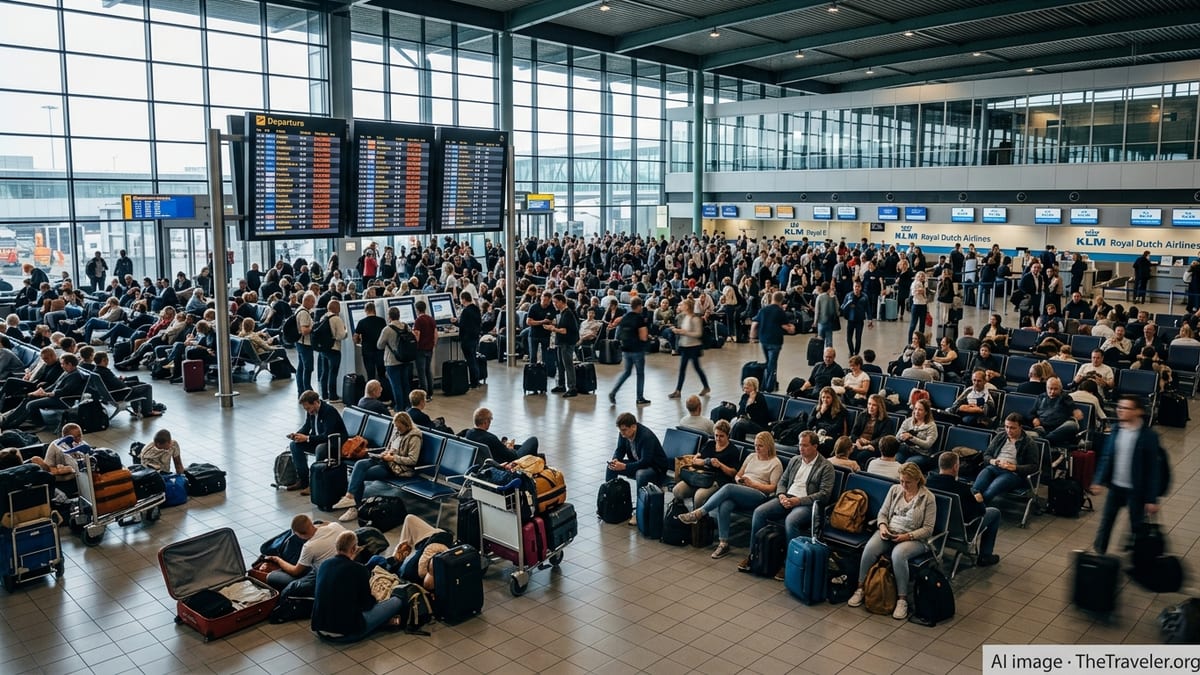
Hundreds of travelers were left stranded at Amsterdam Schiphol Airport on June 8 and 9 as publicly available flight tracking data showed more than 250 delays and around 20 cancellations disrupting services operated by KLM, Delta Air Lines, British Airways, Lufthansa and other major carriers across Europe and North America.
Get the latest news straight to your inbox!
Heavy Disruption Across Key European and Transatlantic Routes
Operational data compiled from publicly accessible tracking platforms indicates that Schiphol recorded in the region of 255 delayed departures and arrivals alongside approximately 20 outright cancellations over the latest 24 hour period. The imbalance between delays and cancellations meant that while relatively few flights were removed from schedules entirely, large numbers departed hours behind plan, creating a rolling pattern of missed connections and forced rebookings.
Publicly available information shows that the disruption affected a wide mix of European and long haul routes, with knock on effects felt on flights linking Amsterdam with London, Paris, Dublin, Frankfurt and Zurich, as well as major transatlantic services to New York and other North American gateways. Airlines including KLM, Delta Air Lines, British Airways and Lufthansa all appeared among the most affected operators in the airport’s live departure and arrival boards.
Reports from travel tracking services and consumer rights platforms describe congested transfer zones, full departure lounges and extended queues at airline service counters as passengers attempted to rearrange their journeys. Many travelers heading to onward long haul destinations via Amsterdam were forced to accept rerouting through alternative hubs or overnight stays when available seats on later services ran short.
The latest disruption follows a pattern of irregular operations at Schiphol in recent months, with various episodes of weather related constraint, technical issues and resource limitations periodically reducing the airport’s capacity. Industry observers note that even when the number of outright cancellations is contained, a spike in delays at a major connecting hub like Amsterdam is enough to unsettle the wider European and transatlantic network.
Impact on KLM, Delta, British Airways, Lufthansa and Partner Networks
According to published coverage focused on flight disruption metrics, KLM Royal Dutch Airlines once again carried a significant share of the operational burden as Schiphol’s largest operator, with a higher volume of delayed rotations compared with many smaller carriers. Some KLM services were canceled completely, including selected European routes that feed long haul departures, complicating rebooking options for affected passengers.
Delta Air Lines, which operates a transatlantic joint venture with KLM, also experienced a series of delays and a small number of cancellations on services linking Amsterdam with the United States. Publicly available flight status information showed irregular operations on routes to New York and other US cities, with some aircraft departing considerably behind schedule and others removed from the timetable for the day.
British Airways and Lufthansa, which rely on Schiphol for a combination of point to point traffic and connecting flows into their respective hubs, reported disrupted schedules as congestion rippled beyond any single airline. Information drawn from airport boards and tracking platforms indicates that flights to and from London and German hubs were among those delayed, contributing to a broader tightening of available seats across northwestern Europe.
Travel industry analysis suggests that partnership structures and codeshares magnify the consequences of local disruption at Schiphol. When a KLM operated feeder flight is delayed or canceled, for example, passengers booked under partner airline codes may find their onward connections jeopardized, increasing the complexity of rebooking and straining call centers, digital platforms and airport based customer support teams.
Scenes on the Ground: Crowded Halls, Tight Connections and Overnight Stays
Accounts compiled from public social media posts and travel forums portray an airport operating under heavy strain, with long lines at transfer desks and customer service counters as travelers sought new itineraries. Many described busy gate areas and terminal corridors filled with passengers waiting for revised departure times to be confirmed.
Coverage focused on Schiphol highlights that some connecting passengers arriving late from other European cities missed tightly timed onward flights to London, New York and Paris, in some cases by just a few minutes. As alternative services filled, travelers reported being rebooked onto flights departing many hours later or even the following day, increasing demand for hotel rooms around the airport.
Publicly available information from consumer advocacy and compensation platforms notes that disrupted passengers often faced a secondary challenge in tracking their checked baggage. When itineraries change at short notice, bags may need to be offloaded, re tagged and routed separately, which can result in luggage arriving on later flights even after the passenger has reached their destination.
Despite the scale of the disruption, operational data suggests that Schiphol remained open and functioning throughout, with ground and air traffic control services continuing to move aircraft in and out of the hub at a reduced level of punctuality. Analysts point out that in such circumstances the priority for airlines is typically to maintain as many flights as possible, even at the cost of extended delays, in order to prevent a deeper backlog building in subsequent days.
Passenger Rights and What Stranded Travelers Can Do
Publicly accessible guidance on European air passenger regulations indicates that travelers departing from or arriving into Amsterdam Schiphol may be covered by EU air passenger protection rules when their flights are significantly delayed or canceled. Depending on the circumstances, airlines may be required to provide meals, refreshments and hotel accommodation, as well as transport between the airport and lodging when an overnight stay is necessary.
Consumer rights organizations explain that financial compensation may also be available for some passengers whose flights were canceled at short notice or who experienced long delays that were within the airline’s control. However, eligibility typically depends on the cause of the disruption, the length of the delay and the distance of the flight, and certain extraordinary circumstances can exempt airlines from paying compensation even when passengers still qualify for care and assistance at the airport.
Travel experts routinely advise passengers caught up in major operational events at hubs like Schiphol to document their experience carefully, retaining boarding passes, written confirmations of delays or cancellations and receipts for meals, transportation and accommodation. This documentation can be useful when submitting claims directly to airlines or through third party compensation services in the days and weeks following the incident.
Publicly available information from airlines and airports emphasizes the importance of regularly checking flight status through official digital channels during periods of disruption. Departure times can change multiple times in a short window, and online or app based rebooking tools may sometimes offer faster solutions than standing in long lines at airport desks, particularly for passengers comfortable managing their own travel arrangements.
Ongoing Strain on Europe’s Air Travel Network
The latest wave of disruption at Amsterdam Schiphol comes against a wider backdrop of operational stress across Europe’s aviation system during 2026. Recent data sets compiled by travel intelligence firms point to repeated days with thousands of delayed flights and more than a hundred cancellations across the continent, often concentrated at major hubs such as London Heathrow, Frankfurt and Amsterdam.
Analysts note that the combination of high seasonal demand, tight staffing levels, occasional weather constraints and technical issues can quickly translate into significant knock on effects when a single large hub experiences disruption. Missed connections, out of position aircraft and crew duty time limitations can force airlines to adjust schedules for days after an initial incident, even if conditions at the original airport appear to have normalized.
For passengers planning to travel through Schiphol in the coming days, publicly available advice from travel organizations suggests allowing additional time for connections, favoring longer layovers where possible and monitoring bookings closely. While the level of disruption can ease as airlines work through backlogs, the tightly coupled nature of the European network means that localized problems can reappear quickly when traffic peaks again.
Industry observers expect carriers operating at Schiphol, including KLM and its partners, to continue refining schedules and contingency plans as they head further into the busy summer period. The latest events at Amsterdam underline how swiftly operational challenges at a single hub can send ripples across multiple regions, leaving hundreds of travelers unexpectedly grounded far from their intended destinations.