


More news on this day
Summer travelers across the United States faced another day of disruption as nearly 200 flights were canceled and more than 700 delayed, with major impacts reported at airports in Texas, Georgia, Illinois, Colorado and Massachusetts, while ripple effects extended north to Toronto.
Get the latest news straight to your inbox!
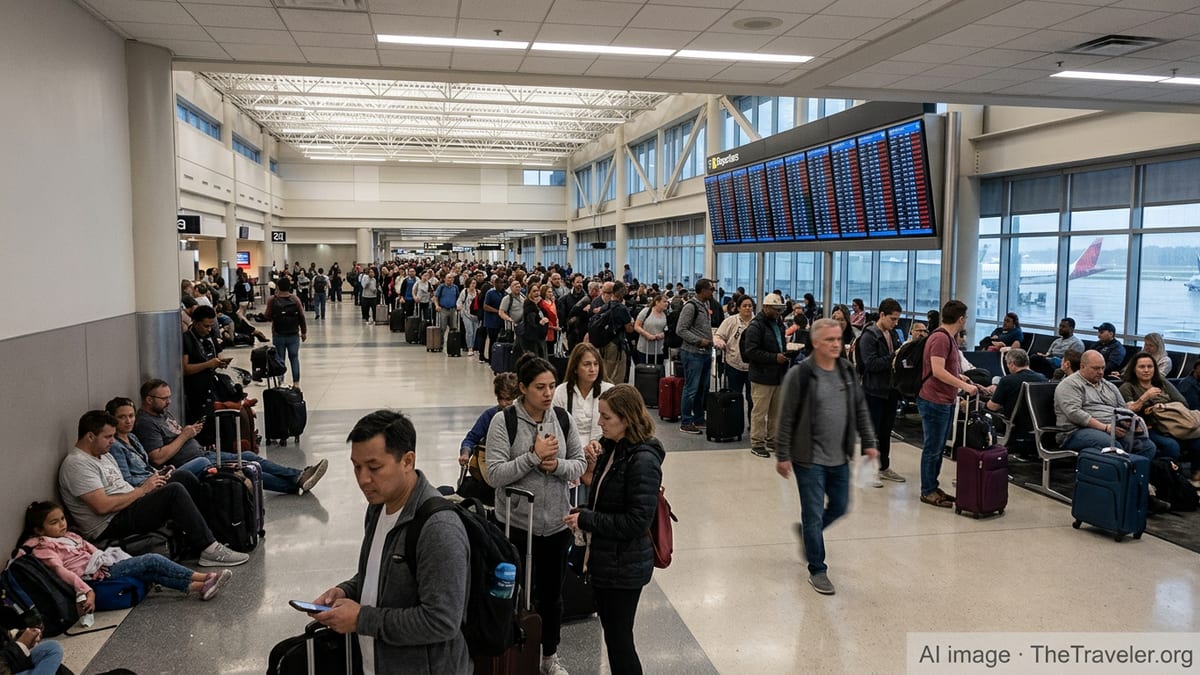
Major Hubs From Dallas to Boston Struggle With Disruptions
Tracking services and airline status boards on Saturday indicated that U.S. airports serving Texas, Georgia, Illinois, Colorado and Massachusetts were among the hardest hit by a new wave of cancellations and delays. In total, reports pointed to 198 flights canceled and about 742 delayed across the country, as a busy June travel weekend collided with operational bottlenecks.
Dallas Fort Worth and Dallas Love Field in Texas, Hartsfield Jackson Atlanta International in Georgia, Chicago’s O’Hare and Midway in Illinois, Denver International in Colorado and Boston Logan in Massachusetts all showed elevated disruption levels. Travelers reported long lines at check in and security, crowded gate areas and rolling departure time changes affecting both domestic and cross border services.
The pattern added to mounting evidence that the early summer travel period is again testing airline and airport resilience. Publicly available aviation data shows that even modest schedule interruptions can cascade across networks built around large hubs, quickly creating multi state impacts for passengers.
Big U.S. Carriers Among the Most Affected
American Airlines, Delta Air Lines, Southwest Airlines, Frontier Airlines, SkyWest Airlines and United Airlines were all prominently represented on cancellation and delay tallies. These carriers collectively operate a substantial share of U.S. domestic flights, and their networks are deeply intertwined with the hubs experiencing the greatest strain.
Industry wide performance data published by the U.S. Department of Transportation has previously highlighted how even well performing large carriers can see on time rates slip when demand peaks and weather or air traffic constraints emerge. Recent federal consumer reports on air travel show that airlines such as American, Delta, Southwest, Frontier, SkyWest and United typically cancel only a small percentage of scheduled services, but account for a large absolute number of delayed flights during high season because of their scale.
On Saturday, that scale translated into visible queues of branded aircraft waiting for departure slots and a steady stream of rolling gate updates. Flight status portals showed clusters of late running services from these carriers linking the affected hubs with smaller regional airports across the country, suggesting ongoing ripple effects for the remainder of the weekend.
Operational Strain, Weather and Airspace Constraints
Publicly available information from aviation trackers and consumer advocates indicates that the disruption appears to stem from a mix of factors, including localized weather, high traffic volumes and underlying staffing constraints in parts of the air traffic system. Even when storms are limited to a particular region, airspace congestion can force ground stops or flow restrictions that slow departures hundreds of miles away.
Recent federal analyses of delay causes have consistently flagged air carrier operations, national aviation system constraints, extreme weather and late arriving aircraft as the main drivers of schedule problems. Saturday’s totals fit that broader pattern, with many delays attributed to aircraft arriving late from already disrupted routes or waiting for clearance in crowded departure corridors.
Observers note that once a large hub like Atlanta, Chicago or Dallas begins to accumulate late departures, airlines face difficult choices about crew duty limits, aircraft rotations and gate availability. The result is often a wave of relatively short but widespread delays, punctuated by cancellations on heavily affected routes or at times of day when network recovery is harder.
Toronto Feels the Cross Border Ripple
The impact of the U.S. disruptions was not confined to domestic travelers. Flight status boards at Toronto’s main airport also displayed knock on delays and cancellations on services linking Canada’s largest city with U.S. hubs in Texas, Georgia, Illinois, Colorado and Massachusetts. Passengers on both sides of the border encountered rebooking lines and gate changes as airlines attempted to re synchronize schedules.
Canadian aviation outlets have recently highlighted how closely integrated transborder networks are with U.S. hub operations. When a flight from a U.S. hub to Toronto departs late or is canceled, aircraft and crew positioning can affect multiple onward departures, from Canadian domestic routes to long haul services to Europe and beyond.
For travelers, the result on Saturday was a familiar mix of uncertainty and improvisation. Some were offered alternative routings through less congested airports, while others faced overnight stays as evening cancellations left limited options to reach final destinations the same day.
Travelers Urged to Plan Around a Volatile Weekend
Consumer advocates and travel analysts responding to the latest data urged passengers to treat this weekend as a period of heightened risk for disruption. With hundreds of flights already canceled or delayed and aircraft and crews out of position, publicly available forecasts suggest that irregular operations could extend into Sunday as airlines work through backlogs.
Travel experts frequently recommend that passengers monitor flight status early and often, allow extra time for connections, and consider early morning departures, which historically have better on time performance before delays accumulate. They also point to the value of understanding passenger rights under U.S. and Canadian regulations, particularly when cancellations or long delays necessitate meal vouchers, hotel stays or refunds.
As the summer peak continues, the strain seen on Saturday serves as another reminder of the fragility of tightly packed airline schedules. With major carriers and hubs once again under pressure, travelers across Texas, Georgia, Illinois, Colorado, Massachusetts and Toronto may face more turbulence on the ground before they even reach the runway.