


More news on this day
Xi’an Xianyang International Airport is facing a fresh bout of disruption as 25 China Eastern services are withdrawn from the schedule and at least 143 delays stack up across Tianjin Airlines, Air China, Hainan Airlines and other Chinese carriers, sending knock-on effects through major hubs in Beijing, Shanghai, Guangzhou and Shenzhen at the start of the busy summer travel period.
Get the latest news straight to your inbox!
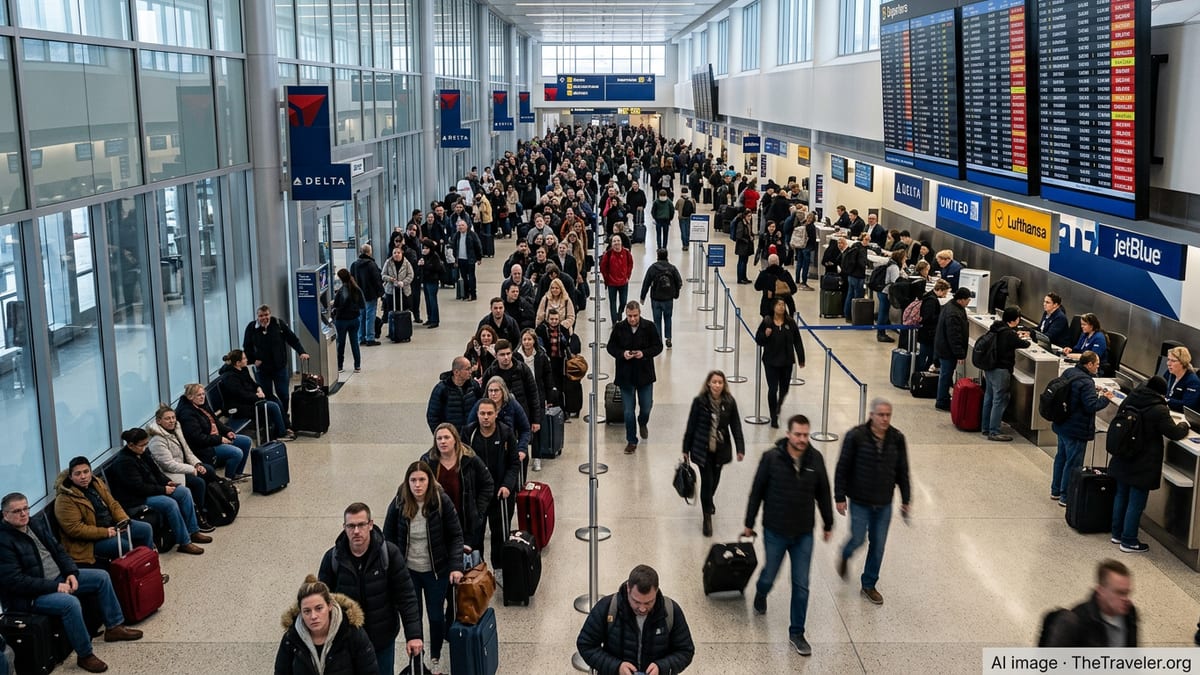
Targeted Cuts at Xi’an Underscore Network Strains
Publicly available operational data and industry trackers indicate that Xi’an Xianyang, a key inland hub linking northwestern China with coastal megacities, has become the focal point of a new wave of flight disruptions. China Eastern has withdrawn 25 departures and arrivals at the airport over a short window, reshaping its schedule and triggering slots to be reassigned or left temporarily unused.
The withdrawals appear to be selective rather than a full-scale pullback. Routes connecting Xi’an with major commercial centers such as Shanghai and coastal destinations used by transfer passengers are the most affected, according to recent schedule comparisons. These changes, while limited in number, are significant in a hub where China Eastern and partner carriers funnel large volumes of connecting traffic.
Xi’an’s role as a hub has grown alongside the completion of recent terminal expansion projects, which were designed to ease congestion and support higher volumes of domestic and international services. The current bout of flight thinning runs counter to that growth narrative and highlights the pressure airlines face to continuously recalibrate capacity in response to operational constraints and uneven demand patterns across the country.
Aviation analysts note that concentrated schedule adjustments at a single inland hub can quickly echo through national networks because many aircraft and crews are rostered to operate multiple domestic turns per day. When even a modest number of flights are withdrawn, it alters aircraft rotations and reduces the system’s flexibility to absorb subsequent delays.
143 Delays Ripple Across Chinese Carriers
Beyond the targeted cancellations in Xi’an, domestic carriers are wrestling with at least 143 delayed services tied to the same network strain, affecting a wide spread of operators that includes Tianjin Airlines, Air China, Hainan Airlines and several regional and low cost brands. Tracking platforms and timetable snapshots show late departures piling up across mid morning and afternoon peaks, the key bank times for China’s dense trunk routes.
While individual delay durations vary, many services are reported departing well behind schedule, in some cases after extended ground waits as crews and aircraft arrive late from previous sectors. This pattern aligns with the cascading disruption that experts often associate with tightly scheduled domestic networks, where a single late arrival can affect multiple subsequent flights across different cities.
The range of affected airlines reflects how integrated Chinese carriers have become through codeshares and interline arrangements. A delay involving a Tianjin Airlines regional service into a hub can impact onward connections on partner airlines such as Hainan or Air China, while disruptions to China Eastern’s Xi’an rotation can reverberate through Shanghai and coastal gateways used as onward transfer points.
In addition to the major state controlled groups, several smaller carriers are reported to be facing schedule slippage, particularly on routes linking secondary cities to the main coastal hubs. For passengers, this increases the likelihood of missed connections and rebookings, even when their immediate flight appears unaffected at the time of check in.
Impact on Beijing, Shanghai, Guangzhou and Shenzhen Hubs
The gridlock at Xi’an is feeding into broader congestion at primary airports in Beijing, Shanghai, Guangzhou and Shenzhen, which are already operating close to capacity during the early summer season. Industry monitoring services and recent disruption tallies show that these megahubs continue to bear the brunt of delays and cancellations whenever there is a disturbance in the wider network.
Beijing’s dual airport system, anchored by Beijing Capital and the newer Daxing facility, has seen waves of disrupted flights in recent weeks, with delayed arrivals from inland points compressing turnaround times. Similar pressure is visible in Shanghai, where Pudong and Hongqiao must accommodate a mix of trunk domestic flights, regional services and a growing number of long haul international departures.
In Guangzhou and Shenzhen, high traffic volumes and dense banks of short haul domestic flights leave little margin for recovery when rotation chains are interrupted upstream. Previous data from recent disruption events show that Shenzhen, in particular, can experience sharply elevated average departure delays when weather or congestion elsewhere pushes aircraft and crews off their planned patterns.
When Xi’an based flights into these hubs run behind schedule or are removed from the timetable, airport operators are forced to revise stand assignments and manage last minute gate changes. Although these airports are accustomed to handling irregular operations, simultaneous issues at multiple feeder points increase the complexity of day to day planning and can lengthen recovery times after the initial trigger has passed.
Weather, Airspace and Capacity Constraints Combine
Recent disruption reports across China point to a familiar combination of contributing factors: convective summer weather, tight airspace allocations and high utilisation of aircraft and crew resources. Heavy rain and thunderstorms over parts of northern and central China have periodically slowed operations, while limited civilian airspace and strict flow management procedures continue to restrict how quickly airlines can recover from earlier delays.
Studies of Chinese airline performance have long noted that the country’s air transport system is especially vulnerable to knock on effects once schedules begin to slip. A relatively small portion of national airspace is available for civil aviation, and heavy reliance on a few large carriers and hubs concentrates the impact of any disruption. As a result, a storm cell or temporary ground stop at one airport can create ripples hundreds of kilometres away.
In parallel, carriers have been rebuilding and reshaping their domestic networks, adjusting frequencies and aircraft types after several years of changing demand patterns. This recalibration has increased operational complexity and, in some cases, reduced spare capacity that might previously have been used as a buffer during peak travel periods.
Observers also highlight the role of crew duty time limits, which can force airlines to cancel or significantly delay flights if delays earlier in the day push pilots and cabin staff beyond legal working hours. In a tightly scheduled environment, even a handful of such cases can affect dozens of flights, especially where crews are rostered to operate multiple legs through hubs like Xi’an.
Travellers Face Longer Journeys and Limited Options
For passengers, the immediate effect of the latest gridlock is longer travel times, missed connections and, in some cases, spontaneous changes of routing. With 25 China Eastern flights withdrawn from Xi’an and dozens more services delayed across multiple carriers, many travellers are encountering extended waits in terminals, rebooked itineraries via alternative hubs and short notice gate changes.
Consumer advocacy platforms that track disruption trends in China indicate that passengers are increasingly turning to airline mobile apps and airport information displays for near real time updates, as schedule changes can occur with little warning on days when weather and congestion intersect. Some travellers are also adjusting plans by opting for earlier departures to protect critical same day connections.
Travel industry observers suggest that those flying through Xi’an Xianyang and the major coastal hubs in the coming days should build in additional buffer time between domestic connections and be prepared for potential reaccommodation on different flights or carriers. The combination of targeted cancellations and widespread delays limits the pool of available seats, particularly during afternoon and evening peaks.
While airlines and airports continue to adjust operations in an effort to restore punctuality, the current episode underscores the fragility of China’s tightly wound domestic flight network during the summer season. The experience at Xi’an, and the cascading disruption it has triggered across Beijing, Shanghai, Guangzhou and Shenzhen, offers a reminder that even focused schedule changes can reverberate widely when capacity and resilience are already under strain.