


More news on this day
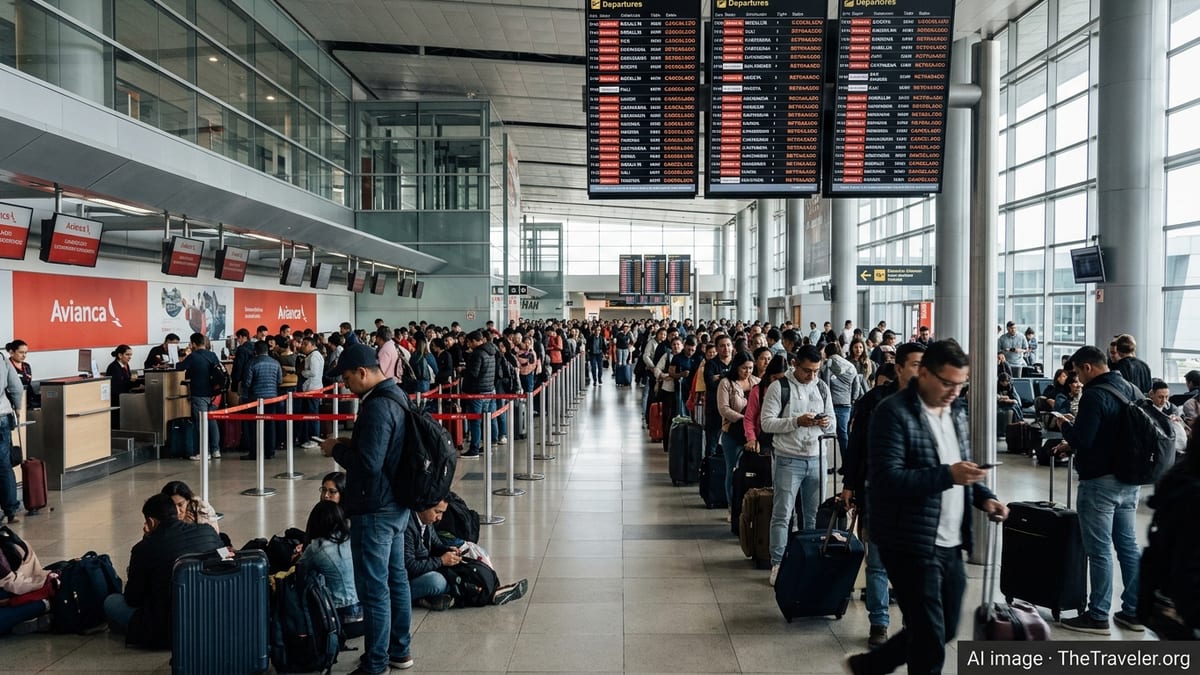
Hundreds of passengers were left stranded across Colombia over the weekend after more than 20 domestic and international flights were canceled or heavily delayed, with disruptions centered on routes operated by Avianca and other carriers through Bogotá’s El Dorado International Airport and Medellín’s José María Córdova International Airport.
Get the latest news straight to your inbox!
Widespread Disruptions Centered on Bogotá and Medellín
Published flight tracking data and local aviation coverage for April 26 and 27 indicate an unusual cluster of cancellations affecting some of Colombia’s busiest city pairs, including Bogotá Medellín, Bogotá Cali and Bogotá Cúcuta, as well as selected international links. El Dorado International Airport in Bogotá, the country’s main hub, saw several Avianca services scrubbed from the schedule, forcing passengers to rebook or wait for later departures as available seats quickly filled up.
On the Medellín side, operations at José María Córdova International Airport were already under strain after a communication failure in the air traffic control system was reported on April 25, prompting temporary restrictions on takeoffs and landings. Although services were gradually restored, residual delays and aircraft rotations appear to have cascaded into Sunday and Monday, leaving some flights to and from Bogotá either canceled or rescheduled at short notice.
Airports in Cali, Cúcuta, Santa Marta and other regional cities also reported knock on effects as aircraft and crews were repositioned. Passengers on north coast routes into Bogotá, including services from Santa Marta and Barranquilla, described abrupt status changes from scheduled to canceled, followed by long queues at customer service counters as travelers sought alternative options.
Avianca Routes Among the Most Affected
Data from multiple flight status platforms for April 26 and 27 show a concentration of cancellations on routes operated by Avianca, Colombia’s largest carrier, particularly on high frequency shuttles linking El Dorado with Medellín’s José María Córdova airport. At least one Santa Marta Bogotá flight was listed as canceled for the period, while several Bogotá Medellín rotations did not operate as originally planned, reducing capacity on a corridor that typically handles thousands of passengers a day.
The irregular operations extended beyond domestic routes. Some Bogotá connections feeding long haul services, including flights to Central America and onward to North America and Europe, experienced knock on delays as missed inbound aircraft disrupted carefully planned schedules. Travelers connecting through El Dorado reported tight turnaround times shrinking further as departure boards refreshed with revised timings and occasional cancellations.
While Avianca accounted for a prominent share of the affected services due to its dominant market position, other airlines using Bogotá and Medellín as hubs also made selective schedule adjustments. Low cost and regional operators serving secondary cities such as Cúcuta, Pereira and Bucaramanga faced the challenge of limited spare aircraft, reducing their ability to absorb last minute changes without canceling one or more rotations.
Technical Issues and Operational Pressures Drive Cancellations
Initial reports point to a mix of technical issues and broader operational pressures behind the wave of cancellations. The communication system failure at José María Córdova on April 25 triggered a period of reduced capacity in Medellín, forcing controllers to limit movements and prioritize certain flights. Even after systems were stabilized, aircraft and crews were out of their planned positions, creating a ripple effect that extended into the following days.
Industry observers note that Colombian carriers have been operating with relatively tight fleets, a common outcome of post pandemic restructuring and the earlier collapse of competitors such as Viva Air. Under these conditions, disruptions at a single airport can quickly spread across the network, especially when they affect trunk routes like Bogotá Medellín or Bogotá Cali where turnaround times are short and aircraft utilization is high.
Schedule data and punctuality statistics for El Dorado also indicate that airlines have been pushing high traffic volumes through constrained infrastructure during peak hours. When an unexpected bottleneck occurs, whether from weather, technical glitches or airspace restrictions, there is less room to recover without cancelling flights outright, particularly on shorter domestic legs with multiple daily frequencies.
Travelers Face Long Lines, Rebookings and Missed Connections
Passengers caught in the disruption reported long waits at check in and ticket desks, with some travelers in Bogotá and Medellín spending several hours in queues to obtain rebooking options or accommodation vouchers. Social media posts and traveler forums on Sunday and Monday described confusion over which flights were still operating as airport display systems and mobile apps updated at different times.
For those connecting through El Dorado en route to international destinations, missed domestic feeders created additional complications. Some travelers were reprotected on later long haul departures, while others had to overnight in Bogotá or adjust itineraries entirely. In a few cases, the next available flights on popular routes were not until the following day, reflecting strong demand and limited spare capacity at short notice.
Consumer advocates pointed travelers to Colombia’s air transport regulations, which specify compensation and assistance in cases where cancellations are attributable to the airline rather than extraordinary circumstances. Guidance shared on regional forums emphasized keeping receipts, documenting delays and, when applicable, requesting meal, transport and hotel support directly from carriers at the airport.
Airlines Work to Stabilize Schedules as Peak Travel Looms
By Monday afternoon, schedules showed signs of gradual normalization, although some gaps remained on busy domestic routes. Airlines began to consolidate lightly booked services, swap aircraft between routes and adjust departure times in an effort to rebuild regular patterns. Publicly available timetables for the coming days still reflect occasional alterations, but the volume of outright cancellations appeared lower than during the peak of the disruption.
The incident has nevertheless highlighted the fragility of Colombia’s air network at a time of rising demand. With the country approaching a series of long weekend holidays and the mid year vacation period, aviation analysts note that carriers may need additional contingency planning around key hubs such as Bogotá, Medellín and Cali to reduce the risk of similar system wide impacts from localized technical failures.
For travelers, the events of the weekend serve as a reminder to monitor flight status closely, especially when connecting through El Dorado or José María Córdova on tight itineraries. Many booking platforms and airline apps now provide near real time updates on gate changes and delays, but the rapid sequence of cancellations in recent days suggests that building extra buffer time between flights remains a prudent strategy for journeys across Colombia’s busy skies.