


More news on this day
Hundreds of Amtrak passengers in Florida were stranded on board for nearly 24 hours this week after fast-moving wildfires along a key rail corridor forced their train to halt, leaving riders to endure overflowing bathrooms, limited supplies and mounting frustration as flames and smoke disrupted service across the state.
Get the latest news straight to your inbox!
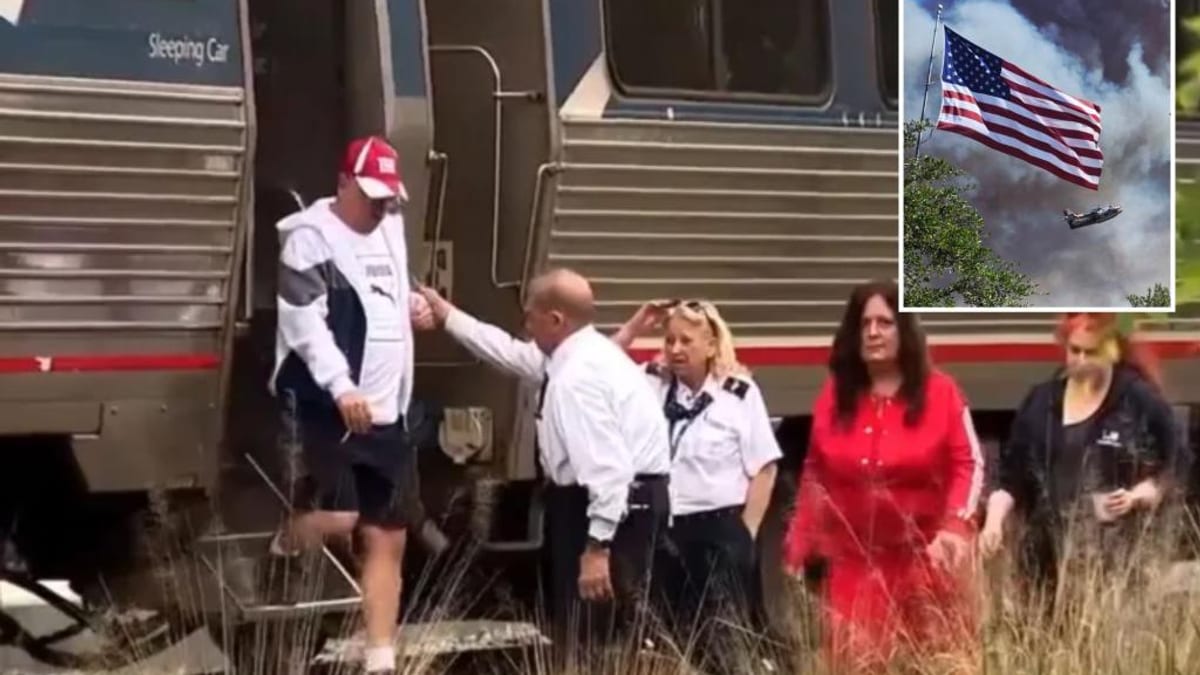
Train Halted Along North Florida Wildfire Corridor
Publicly available information indicates that the disruption began late on Sunday, April 19, along a section of track near the Clay and Putnam County line in north Florida. A series of brush fires burning close to the rail line created heavy smoke and unsafe visibility, prompting rail traffic to stop on a corridor used by Amtrak’s Silver Meteor and other long-distance services linking Miami with the Northeast.
Coverage from regional television outlets and national media describes at least one northbound Amtrak train brought to a standstill south of Jacksonville and another held near DeLand as fire activity intensified. The halted train carried several hundred passengers on an overnight schedule that was not designed for an extended stationary stay approaching a full day.
Reports indicate that as conditions near the tracks remained unstable, the train that had stopped in the wildfire zone was unable to safely proceed. For hours, rail dispatchers and emergency planners weighed whether the route could reopen or whether the train would need to backtrack, while passengers remained confined to their cars amid rising temperatures, smoke in the distance and limited updates about next steps.
According to published coverage, Amtrak eventually opted to move at least one affected train away from the most active fire area and, in one case, to reverse direction rather than attempt to push through the corridor. That decision resolved immediate safety concerns but resulted in delays that stretched close to a full day for some travelers and contributed to a cascade of cancellations across the Florida network.
Overflowing Bathrooms and Strained Onboard Services
As the hours passed, basic onboard services became a central source of passenger frustration. Television segments, passenger videos and social media posts circulated widely showing riders describing toilets that had become inoperable or overflowed, along with dwindling water supplies in some coaches. Long-distance trains typically carry enough potable water and waste capacity for a scheduled trip, but unplanned stoppages of nearly 24 hours can push those systems beyond their limits.
Accounts compiled in news reports and online discussions suggest that travelers in coach cars bore the brunt of the strain. With every restroom on their side of the train eventually out of service or unsanitary, some passengers reported crowding into a limited number of still-functioning facilities elsewhere on the train, while others described trying to minimize food and water intake to avoid bathroom trips altogether.
Passengers in sleeping cars, by contrast, appeared to experience relatively better conditions, according to coverage referencing their accounts. Those riders generally retained access to private restrooms and included meals, creating a stark divide in comfort levels on a single train where everyone remained equally unable to disembark because of safety restrictions near the fire zone.
Publicly available information from Amtrak statements summarized in national coverage notes that service on several affected routes has since resumed, but that two trains remained disrupted for a time as crews monitored wildfire behavior. The company has not publicly detailed how many toilets failed or how water supplies were managed during the stoppage, but the widespread attention focused on sanitation problems has renewed debate over emergency preparedness on long-distance routes.
Wildfires Intensify Across a Drought-Stricken State
The passenger ordeal unfolded against the backdrop of a worsening wildfire season in Florida. Data compiled by state forestry agencies and summarized in recent reporting show that parts of north Florida entered April under extreme drought classifications, with parched vegetation primed to ignite and spread rapidly when exposed to sparks or embers.
In the Clay and Putnam County area, publicly available incident summaries describe fires growing to several thousand acres over a matter of days, producing thick smoke near highways and rail lines. Sections of nearby U.S. Highway 17 were temporarily closed, and rail operators, including Amtrak, faced rolling suspensions and reroutes as crews worked to contain multiple blazes.
Some local leaders cited in regional reports have indicated that preliminary assessments point to sparks associated with rail activity as a possible ignition source for at least one of the fires, though formal investigations are ongoing. The suggestion that trains themselves may have contributed to the fire risk has added a complicated dimension for passenger rail operators who must both avoid active fire zones and, potentially, adapt equipment and procedures to reduce the chance of ignitions along dry rights of way.
As of late April, published information shows that several major fires in north Florida remain only partially contained, with officials warning that hot, dry and breezy conditions could allow new ignitions to spread quickly. That ongoing risk has kept transportation planners on alert and raised the possibility of additional disruption if flames again encroach on critical corridors.
Systemwide Disruptions and Scrutiny of Passenger Care
The halted train was not the only rail service affected by the fires. According to publicly available schedules and media reports, Amtrak temporarily curtailed or rerouted multiple Silver Service trains running into and out of Florida as visibility fell and fire behavior shifted. Some travelers reported on social platforms that their trains were turned back before reaching central Florida or that they were rebooked on later departures after extended waits.
Coverage from Florida-based outlets shows that Amtrak’s Auto Train, which connects the Washington region with Sanford near Orlando, also experienced schedule changes as the 4,000 acre fire complex burned in central and north Florida. Although most Auto Train service has now resumed, passengers boarding in the days after the incident described watching news of the fires closely and weighing whether to proceed with or cancel long-planned trips.
The events have drawn renewed scrutiny of how rail operators care for passengers during prolonged disruptions caused by extreme weather and natural hazards. Commentators in transportation forums and advocacy groups, cited in recent analyses, argue that long-distance rail carriers should maintain larger emergency stocks of water, shelf stable food and sanitation supplies, and ensure clear contingency plans for medical needs when passengers cannot disembark.
Others note that access to accurate, timely information can matter as much as physical comfort. Some riders from the stranded train described in media accounts that they received only intermittent updates about the status of the fire and the length of the delay, contributing to anxiety and a sense of powerlessness as the hours ticked by. Advocates contend that clearer communication protocols could help mitigate tensions when safety conditions limit the ability to move passengers off a train.
Growing Questions for Rail Travel in an Era of Climate Extremes
The disruption in Florida adds to a growing list of climate related incidents that have entangled passenger rail around the United States in recent years. Publicly documented cases elsewhere have involved trains halted by heat related track issues, flooding, landslides and wildfire smoke, often leading to extended delays and, in some cases, similar complaints about basic services breaking down over time.
Transportation analysts quoted across recent coverage suggest that as climate driven extremes intensify, long-distance rail operators will likely need to reassess how they plan for prolonged immobilization of trains. That reassessment could include revised thresholds for suspending service in advance of high risk fire weather, investments in more robust onboard water and waste systems, and clearer agreements with local emergency management agencies about when and how to evacuate trains if conditions allow.
In Florida, where brush fires are a recurring seasonal threat, the near 24 hour stranding of Amtrak passengers has become a focal point in public debate over resilience of critical infrastructure. Commentaries in regional outlets and online communities highlight the tension between maintaining vital intercity connections and ensuring that when routes suddenly become unsafe, those who rely on them are not left in unsanitary and stressful conditions for extended periods.
For the travelers caught in the latest disruption, the experience has already reshaped plans. Some have indicated through public posts and interviews cited in coverage that they are reconsidering future rail bookings into Florida’s high fire season, while others say they still see trains as a preferable alternative to long drives or flights but expect operators to learn from the episode. As wildfire season continues, the state’s rail system is likely to remain a closely watched barometer of how well passenger transportation can adapt to a more volatile climate.