


More news on this day
Passengers traveling from Seoul Incheon to Manila faced unexpected disruption after a key Philippine Airlines service on the busy evening Seoul–Manila corridor was cancelled, leaving travelers stranded in South Korea and scrambling to salvage tightly timed international connections.
Get the latest news straight to your inbox!
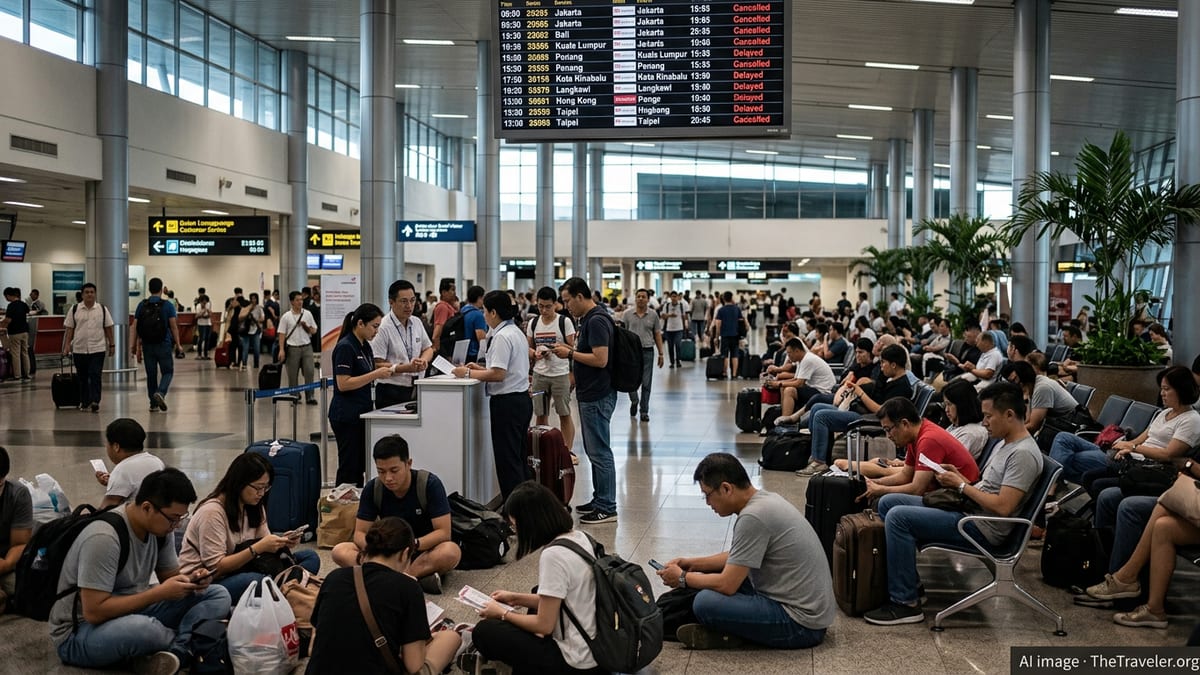
Evening Seoul–Manila Service Abruptly Disrupted
Recent operational disruption at Philippine Airlines has resulted in the cancellation of a key evening flight from Seoul Incheon to Manila, affecting one of the carrier’s most heavily used regional corridors. The affected service typically departs Incheon in the evening and arrives in Manila late at night, a schedule that is popular with both overseas Filipino workers and transit passengers relying on overnight arrivals to connect with early morning departures from the Philippine capital.
Reports from flight-tracking platforms and traveler forums indicate that passengers arriving at Incheon for the Philippine Airlines evening departure were informed of the cancellation with limited advance notice. Many had already checked in or passed through security when the disruption became apparent, heightening stress levels and complicating options for same-day alternatives on a route that is already described as operating at high load factors during the spring travel period.
The cancellation comes at a time when Philippine Airlines is already adjusting parts of its international network due to higher operating costs, fuel price volatility, and wider geopolitical pressures on long-haul routes. While these broader schedule changes have focused on Middle East and select regional services, the knock-on impact is now being felt on high-demand Northeast Asia links, including Seoul–Manila, that support both point-to-point traffic and substantial connecting flows.
With limited spare capacity on competing evening departures from Incheon to Manila, many affected travelers reportedly faced the prospect of overnight delays in South Korea, additional accommodation costs, or complex rerouting via other Asian hubs such as Taipei, Hong Kong, Singapore, or Tokyo in order to reach Manila in time for onward flights.
Knock-On Effects on International Connectivity
The timing of the affected Seoul–Manila service is critical for passengers connecting at Ninoy Aquino International Airport onto long-haul and regional routes, including departures to North America, the Middle East, and Southeast Asia. The evening flight’s arrival window is designed to funnel travelers into Manila in time for late-night or early morning bank departures, forming part of Philippine Airlines’ broader hub strategy.
When the evening flight is cancelled, this timing advantage disappears and many itineraries become unworkable. Travelers with tightly scheduled connections have reported that even a one-day delay can cause missed departures to destinations that do not operate daily. This is particularly problematic for routes where Philippine Airlines has recently reduced frequencies or suspended selected services, making rebooking onto the next available departure more challenging and sometimes stretching into several days of delay.
Publicly available information on Philippine Airlines’ network adjustments in recent weeks shows temporary suspensions and reductions on several international routes, partly attributed to higher fuel costs and regional security uncertainties on certain corridors. These changes have reduced the buffer in the airline’s schedule, making it harder to absorb last-minute disruptions without downstream effects on connecting passengers.
For many travelers, the Seoul–Manila segment is only the first leg of complex multi-country itineraries that include separate tickets on other airlines. Missed onward flights in Manila can lead to cascading costs, including change fees, fare differences, additional nights of accommodation, and even forfeited hotel and tour bookings at final destinations. In some cases, passengers may find that consumer protections are less generous for international journeys that span multiple jurisdictions, making out-of-pocket expenses significant.
Stranded Passengers Face Limited Same-Day Options
The Seoul Incheon to Manila market is served by multiple carriers, but same-day alternatives for stranded passengers are not always guaranteed, especially during busy travel periods. Most airlines on the route operate a limited number of frequencies per day, and evening departures in particular are often close to full, limiting the number of spare seats available at short notice.
Travel platforms tracking April schedules show that Philippine Airlines operates key daily frequencies between Seoul Incheon and Manila, complemented by services from low-cost and full-service competitors. However, capacity has not fully kept pace with pent-up demand from leisure travelers, overseas workers, and students, leading to higher load factors and making reaccommodation on competitor flights more difficult, especially for large family groups or tour parties.
For those stranded in Seoul, options can include waiting for the next available Philippine Airlines flight, accepting rerouting via third-country hubs, or seeking refunds and making entirely new arrangements on another carrier. Each choice carries trade-offs between cost, arrival time, and the risk of further disruption, particularly for those with non-flexible commitments in the Philippines or beyond.
Travel advisory content published in recent weeks has highlighted a broader pattern of schedule volatility across parts of the Asia Pacific network, with travelers encouraged to build longer connection windows and to monitor flight status closely in the 24 hours before departure. The latest disruption on the Seoul–Manila route underlines how even routinely reliable city pairs can be affected by wider operational pressures.
Regulatory Protections and Passenger Options
In the Philippines, passenger rights for cancelled flights are framed by the country’s Air Passenger Bill of Rights, which outlines obligations on rebooking, refund, and compensation in specific circumstances such as carrier-initiated cancellations. However, the practical application of these protections can vary depending on the cause of the disruption, whether it is within the airline’s control, and whether the journey involves multiple carriers and jurisdictions.
Publicly available guidance explains that when a flight is cancelled due to operational reasons within a carrier’s control, airlines are generally expected to offer free rebooking on the next available flight, rerouting subject to seat availability, or full refunds. Additional compensation and assistance, such as meals or accommodation, may be subject to conditions and may not always cover the full out-of-pocket costs borne by passengers, particularly for ancillary expenses like missed hotel nights at final destinations.
Passengers traveling on separate tickets or mixed-carrier itineraries can face additional complexity. If the first flight segment is cancelled, downstream segments on other airlines are not automatically protected, and travelers may have to rely on travel insurance or the goodwill policies of partner carriers to avoid losing value on subsequent legs. This has led many frequent travelers in the region to recommend booking critical connections on a single ticket or through established interline agreements whenever possible.
Consumer advocates and travel commentators in the region have underscored the importance of documenting all expenses and communications when a disruption occurs, in order to support later claims with airlines, travel agencies, or insurers. In the context of the latest Seoul–Manila cancellation, such records may help affected passengers pursue reimbursement or compensation, particularly when the disruption can be clearly linked to a chain of missed connections and additional costs.
What Travelers Can Do on the Seoul–Manila Corridor
The disruption affecting Philippine Airlines’ evening Seoul Incheon to Manila service highlights how quickly a single cancellation can unravel complex travel plans. For future trips on this corridor, travel specialists suggest several practical steps to reduce risk. These include avoiding very tight connection windows in Manila, especially for long-haul or non-daily services, and considering earlier arrivals that provide more buffer in case of delay or schedule change.
Monitoring flight status via airline channels, airport displays, and independent tracking platforms in the 24 hours before departure can also provide earlier warning of potential disruptions. Travelers holding non-refundable hotel or tour bookings at their final destination may benefit from flexible airfares or comprehensive travel insurance policies that specifically cover airline cancellations and missed connections.
The Seoul–Manila route will remain a vital artery for tourism, business travel, and family visits between South Korea and the Philippines. As Philippine Airlines recalibrates its network and other carriers adjust capacity in response to demand and operating costs, passengers are being reminded that resilience and flexibility are increasingly essential parts of international trip planning.
For those already affected by the latest disruption, the priority remains securing new arrangements to reach Manila and onward destinations as quickly and affordably as possible. For future travelers, the episode serves as a timely reminder to build in contingency plans and to stay informed about evolving airline schedules on even the busiest and most familiar routes.