


More news on this day
Air Arabia’s Doha to Sharjah operations have been hit by a new round of cancellations, with at least three key flights dropped from schedules and passengers reporting lengthy delays and confusion at both Hamad International Airport and Sharjah International Airport.
Get the latest news straight to your inbox!
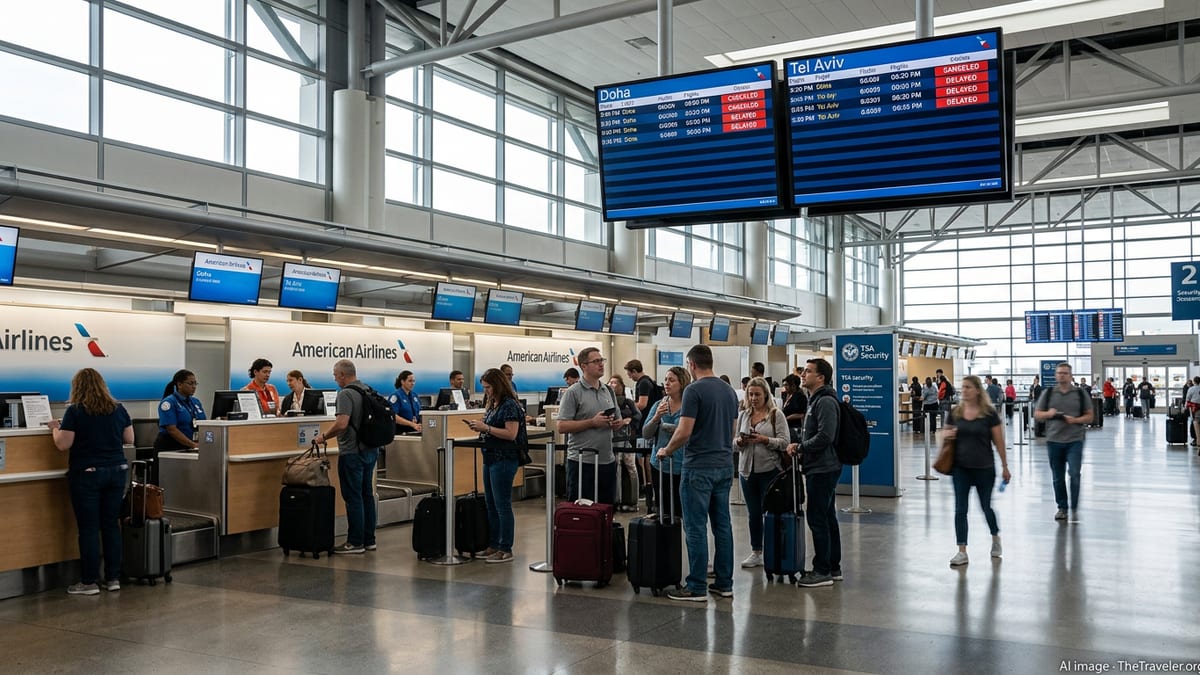
Doha–Sharjah Link Squeezed as Gulf Network Rebuilds
The latest disruption comes just days after carriers across the Gulf began gradually restoring services following weeks of airspace restrictions that have reshaped flight patterns over Qatar and the United Arab Emirates. Publicly available flight data and passenger accounts show that while major airlines have restarted many routes through Doha, schedules remain fragile and short-haul regional services are still vulnerable to late changes.
Qatar-based coverage indicates that Hamad International Airport is still working through a backlog after earlier airspace closures left thousands of travelers stranded in March. With airlines prioritizing long-haul connections and high-demand corridors, secondary routes such as Doha to Sharjah appear to be bearing the brunt of the remaining volatility.
According to recent aviation tracking feeds, multiple Air Arabia rotations on the Doha–Sharjah pairing have been pulled at short notice over the past several days. The cancellations have affected both outbound services from Doha and return legs into Qatar, fragmenting what is normally one of the more frequent low-cost links between the two hubs.
The result is a patchwork schedule in which some Doha–Sharjah flights operate as planned while adjacent departures are listed as cancelled or rescheduled. For travelers who booked months in advance on the assumption of stable regional connectivity, the irregular pattern has created uncertainty that often only becomes apparent on the day of travel.
Three Key Flights Scrubbed, Leaving Passengers in Limbo
Within this broader instability, three specific Air Arabia services on the Doha to Sharjah corridor have emerged as focal points after being cancelled within a short window, stranding passengers at both ends of the route. Flight-status portals and user reports indicate that the affected flights were removed from the operational roster close to departure, leaving limited options for same-day rebooking.
At Hamad International Airport, travelers booked on cancelled Doha–Sharjah services have described waiting for hours in crowded departure areas while monitoring boards toggled between “scheduled,” “delayed,” and “cancelled.” With alternative connections via Dubai or Abu Dhabi already heavily subscribed as airlines rebuild, many passengers have faced overnight delays or forced itinerary changes via third countries.
On the Sharjah side, travelers returning from Qatar or connecting onward on Air Arabia’s extensive low-cost network have encountered similar disruption. Sharjah International Airport serves as the carrier’s primary hub, and when a Doha flight fails to arrive, knock-on effects can ripple through subsequent departures to South Asia, North Africa, and Eastern Europe.
Publicly shared itineraries suggest that some Air Arabia customers on the Doha–Sharjah route have been offered rebooking on later dates, while others have received partial refunds or travel credits. However, inconsistent outcomes and evolving policies have sparked online complaints from passengers who say they are struggling to understand their options after last-minute cancellations.
Stranded Travelers Grapple With Limited Alternatives
The cancellations are particularly disruptive because the Doha–Sharjah corridor is a key budget option for labor traffic, family visits, and short-notice business travel between Qatar and the northern Emirates. When low-cost seats vanish, travelers are often left with premium-fare tickets on full-service carriers or complex multi-stop routings that add both cost and travel time.
Accounts posted on travel and expatriate forums over recent weeks describe travelers camping out at Hamad International Airport overnight, uncertain whether replacement flights would materialize. Others report being advised to pursue ground transport within the UAE after being re-routed to Dubai or Abu Dhabi rather than Sharjah itself, adding border formalities and long road transfers to already extended journeys.
At Sharjah International Airport, Air Arabia’s role as a hub carrier means disruption can cascade quickly. When inbound aircraft and crews from Qatar fail to arrive on schedule, downstream departures may be delayed, swapped to different aircraft, or consolidated, affecting passengers who had no original connection to Doha but find their onward flights altered at short notice.
The situation is further complicated by tight hotel availability around Sharjah and Doha at peak travel periods. Publicly available hotel inventory data and anecdotal reports suggest that some stranded passengers have struggled to secure affordable accommodation, prompting them to remain in terminal buildings for extended periods while awaiting clarity on their flights.
Air Arabia Under Scrutiny as Policies Tested
While the wider backdrop of Gulf airspace disruption is outside any single airline’s control, Air Arabia’s handling of cancellations has come under particular scrutiny. Recent consumer discussions online highlight frustration with perceived gaps between published policies and the actual remedies offered when flights are cancelled on short notice.
Travel guides and advisory documents circulating in early 2026 note that Air Arabia’s standard conditions of carriage provide for rebooking or refunds when the carrier cancels a flight. However, passengers affected by the Doha–Sharjah disruptions report a range of experiences, from automatic reissuance on later dates to partial refunds that do not fully cover original ticket costs.
Some travelers have also raised concerns about limited real-time communication when schedules change rapidly. Instead of early alerts through digital channels, several accounts suggest that passengers learned of their cancellations only after arriving at the airport or when checking in online, leaving little time to arrange alternatives.
Consumer advocates in the region point to the broader context of low-cost carrier operations, where slim margins and dense schedules leave little slack in aircraft and crew rotations. When external shocks such as airspace closures occur, point-to-point networks concentrated on a single hub, as in Sharjah, can struggle to absorb the disruption without visible impact to passengers.
Outlook for Doha–Sharjah Travelers in the Coming Weeks
Despite the current disruption, there are signs that the Doha–Sharjah corridor may gradually stabilize if regional airspace conditions continue to ease. Major Gulf carriers have already announced phased resumptions and increased frequencies on multiple routes, and schedule filings show a cautious rebuilding of short-haul links around Doha.
Industry analysis suggests that low-cost operators such as Air Arabia are likely to refine their schedules once longer-haul and higher-yield routes have been secured. For the Doha–Sharjah market, that may mean fewer abrupt cancellations but potentially a reduced number of daily frequencies compared with pre-disruption levels as airlines rebalance capacity across their networks.
For now, publicly available guidance from airlines and booking platforms continues to emphasize the importance of checking flight status repeatedly in the 24 hours before departure, building extra time into connections, and considering flexible or refundable fares where possible. Travelers on the Doha–Sharjah route are being advised to prepare backup plans, particularly if they have onward connections from Sharjah on the same day.
With regional geopolitics and airspace access still evolving, the experience of Air Arabia passengers on the Doha–Sharjah corridor underscores the fragility of even short, familiar routes in a volatile environment. Until schedules across the Gulf settle into a more predictable pattern, travelers on this key Qatar–UAE link may need to factor a higher risk of disruption into their plans.