


More news on this day
Hundreds of travelers setting off from UK airports have been left facing overnight stays, missed connections and disrupted holidays after a cluster of cancellations by British Airways, Qatar Airways and other carriers hit key long haul and regional routes to New York, Houston, Washington, Doha, Dublin and beyond.
Get the latest news straight to your inbox!
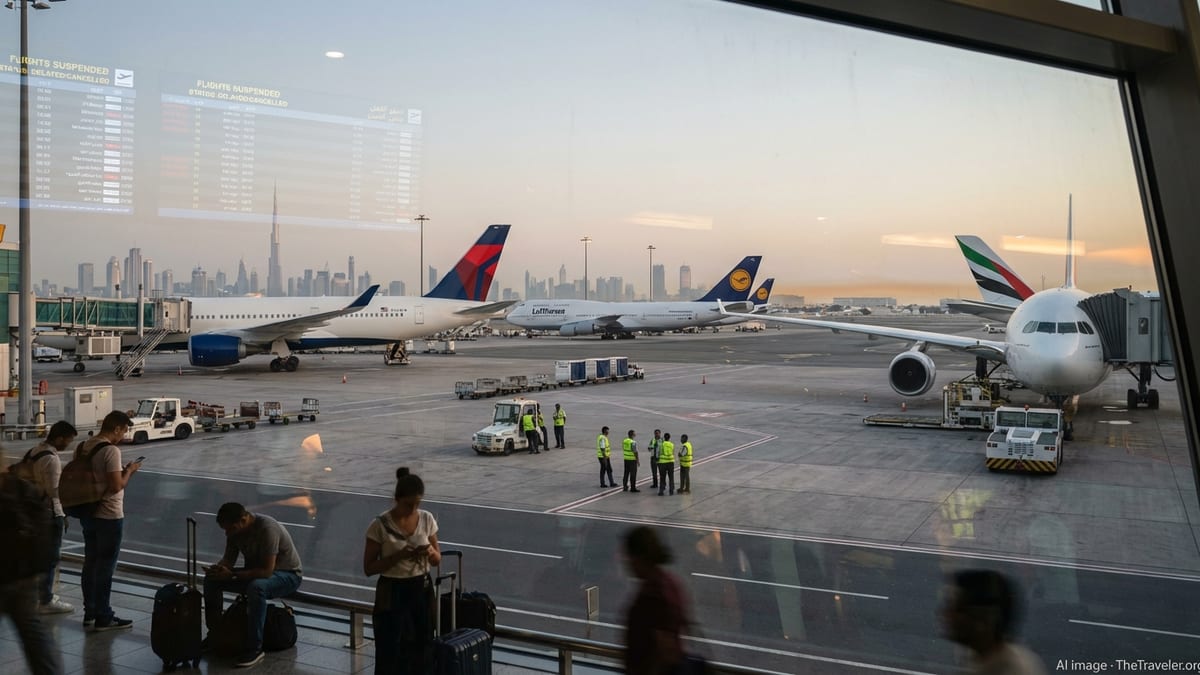
Six Key Flights Scrapped Across Transatlantic and Gulf Networks
Flight-tracking data and airport departure boards for London Heathrow, London Gatwick and regional UK hubs on April 27 indicate at least six heavily booked services to major international gateways did not depart as scheduled. Among the disrupted routes were transatlantic flights serving New York, Houston and Washington, as well as services linking the UK with Doha and Dublin, leaving passengers in terminals scrambling for alternatives.
Publicly available schedules show British Airways operating a dense network from the UK to the United States, including multiple daily departures to New York and regular services to East Coast and Gulf Coast hubs. When even a handful of these flights are pulled from the timetable at short notice, the knock-on effect quickly ripples across connections in both directions, particularly for travelers relying on same-day onward links to cities across North America.
In parallel, Qatar Airways services between the UK and Doha remain under pressure as the airline continues to adapt its schedule in the wake of recent airspace restrictions and a phased rebuilding of its global network. Although the carrier has increased departures from Doha compared with the immediate aftermath of the airspace closure, a number of routes to and from Europe are still seeing cancellations and retimings, which in turn disrupt UK-origin passengers planning to connect in Doha to Asia, Africa and Australasia.
Short-haul passengers have not been spared. Dublin, one of the busiest short-hop international routes from British airports, has also seen scattered cancellations and schedule changes in recent days. While most UK–Ireland flights continue to operate, the removal of selected rotations on busy travel days has forced some travelers into crowded later departures or overnight hotel stays near airports.
Ongoing Fallout From Qatar Airspace Closure Compounds Disruption
The latest issues come against a wider backdrop of prolonged disruption in and around Doha. Aviation analysis outlets report that Qatar Airways and Hamad International Airport spent March dealing with a near-total suspension of flights as Qatari airspace was temporarily closed, prompting a large-scale effort to reroute or pause services and support stranded passengers in the Gulf region and beyond.
Although the airline has since restored dozens of daily departures from Doha, network data shows operations are still short of pre-closure levels. Revised timetables published through mid-April highlighted a reduced schedule and continued suspensions on some routes, as well as the grounding of larger aircraft types such as the A380 for April and May. The lingering imbalance between demand and available seats has meant that any subsequent cancellation on UK–Doha legs immediately affects a pool of travelers already competing for limited rebooking options.
Accounts shared on public forums in recent weeks describe passengers stranded in Doha and other transit points for several days after Qatar Airways cancellations, often struggling to secure rebooking or clear information about onward travel. These experiences underscore how fragile long-haul itineraries can become when a central hub is constrained and alternative routings must be pieced together across multiple airlines and jurisdictions.
The situation is particularly challenging for travelers using Doha as a bridge between the UK and destinations such as Australia, New Zealand and Southeast Asia. When a UK-originating flight to Doha is cancelled, there may be no same-day alternative that aligns with onward long-haul segments, forcing complete itinerary redesigns or delaying travel for days.
British Airways Network Adjustments Hit US and European Links
British Airways has been carrying out a broader reshaping of its 2026 schedule, including adjustments to transatlantic and European routes. Industry analysis of the carrier’s published timetables points to a mix of permanent route withdrawals, frequency cuts and temporary cancellations on certain days, framed as efforts to streamline operations and align capacity with demand.
Previous coverage of the airline’s disruption patterns has highlighted how adverse weather on the US East Coast and staffing pressures in peak periods can trigger waves of short-notice cancellations. When this coincides with structural schedule changes, passengers may experience what appears to be an isolated one-off cancellation that in reality reflects a longer-term trimming of services to cities such as New York or key European hubs.
Separate reporting on recent British Airways incidents has also documented occasions where passengers were left in limbo after diversions or irregular operations on long-haul flights, including services bound for US cities like Houston. In such cases, travelers can find themselves unexpectedly stranded in intermediate locations or facing lengthy delays while aircraft, crew and hotel accommodation are sourced.
For UK-based travelers, the latest cluster of cancellations to New York, Houston, Washington and Dublin underlines how even a relatively minor cut in daily frequencies can feel significant when aircraft are already operating with high load factors at the start of the spring and summer travel season.
Passenger Rights, Rebooking Options and What Stranded Travelers Can Do
The disruption raises pressing questions for affected passengers about refunds, rebooking options and compensation. Consumer rights organizations point to UK and EU regulations that give travelers on qualifying flights certain protections when services are cancelled, including the right to rerouting or a refund, as well as care such as meals and hotel accommodation in some circumstances.
Guidance published by passenger advocacy groups notes that, for flights departing the UK or European Union on carriers such as British Airways, travelers may be entitled to compensation if a cancellation is within the airline’s control and announced at short notice. However, cancellations linked to extraordinary circumstances, including airspace closures affecting Qatar Airways operations, are typically treated differently, with a focus on rerouting and care rather than fixed cash payouts.
Specialist flight-compensation services tracking disruption at major US hubs have recently reported thousands of delays and cancellations in single days at airports including Houston and Washington. This environment can complicate rebooking efforts for UK passengers whose long-haul segments into those cities have been cancelled, as alternative flights may already be heavily booked or subject to their own operational constraints.
Travel advisors commonly recommend that stranded passengers document all expenses linked to the disruption, retain boarding passes and cancellation notices, and use official airline channels or reputable intermediaries to seek refunds or rerouting. Travelers with complex itineraries involving both British Airways and Qatar Airways are also encouraged to check the ticketing carrier responsible for their booking, as this typically determines which company must arrange assistance.
Planning Ahead Amid a Fragile Global Flight Network
The spate of cancellations affecting routes from the UK to New York, Houston, Washington, Doha and Dublin illustrates the continued fragility of the global air travel system in 2026. Even as airlines rebuild capacity and add back routes trimmed during earlier crises, fresh shocks such as airspace restrictions, localized bad weather or staffing shortages can rapidly unravel carefully planned schedules.
Aviation analysts observing recent events around Doha have stressed how disruptions in a single major hub can reverberate far beyond its immediate region, particularly when that hub functions as a critical connector between Europe and long-haul markets in Asia and Oceania. The same principle applies on the transatlantic corridor, where cancellations on a key UK–US city pair can displace passengers onto already crowded services for days.
For travelers planning trips in the coming weeks, the latest disruption is a reminder to build additional flexibility into itineraries where possible, including longer connection times and contingency plans for critical journeys such as relocations or important business travel. While most flights from the UK to New York, Houston, Washington, Doha and Dublin continue to operate, the recent experience of stranded passengers shows how quickly circumstances can change.
As airlines refine their schedules and regulators review passenger protections, those caught up in the latest wave of cancellations will be navigating claims processes, altered plans and, in many cases, an unplanned extra night in or around UK airports. The episode serves as another test of how well carriers like British Airways and Qatar Airways can balance operational challenges with the expectations of an increasingly mobile traveling public.