


More news on this day
Flights are resuming across parts of Indonesia after ash clouds from Mount Anak Krakatau forced widespread airport closures, disrupted nearly 3,000 services and left more than 300,000 travelers stranded over several days.
Get the latest news straight to your inbox!
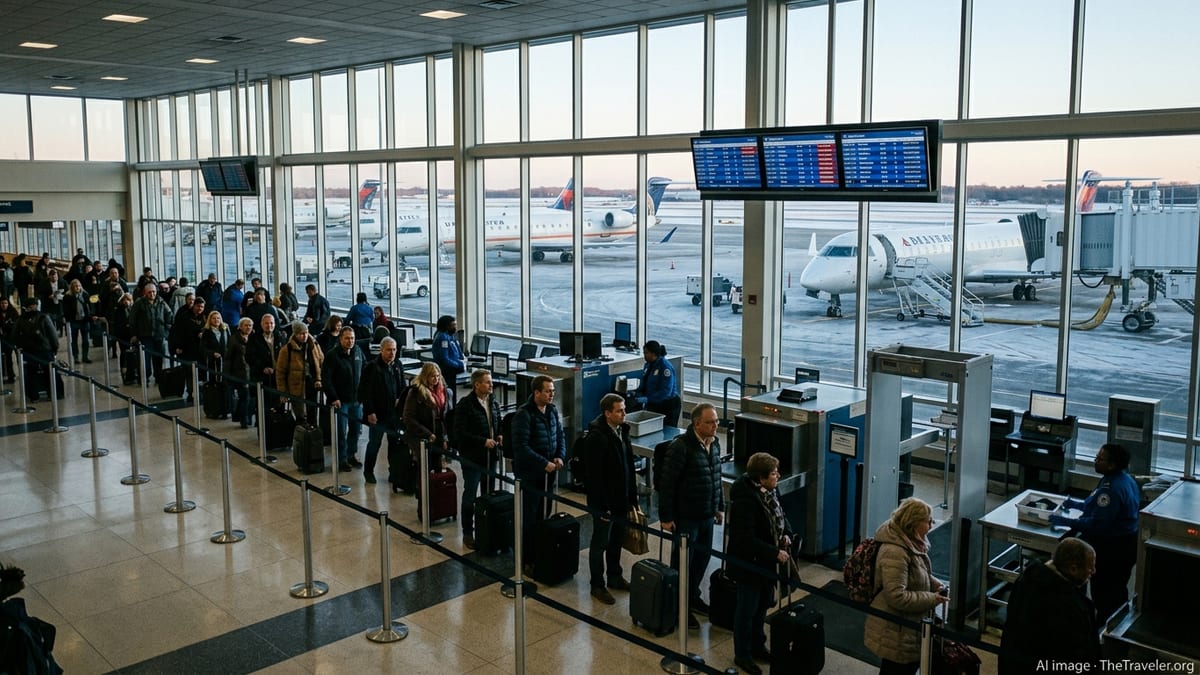
Main Airports Reopen After Days of Disruption
Indonesia’s main international gateway, Jakarta’s Soekarno-Hatta International Airport, reopened to traffic in the early hours of September 8 after a two-day shutdown triggered by volcanic ash from Mount Anak Krakatau in the Sunda Strait. Publicly available information from Indonesia’s Transport Ministry and local media indicates that Halim Perdanakusuma Airport in Jakarta and Husein Sastranegara Airport in Bandung were also cleared to restart operations at the same time.
Regional news agencies report that aviation and meteorological assessments showed a marked improvement in air quality and visibility around the capital region, allowing regulators to withdraw earlier flight restrictions. The reopening followed a series of tests at affected airports that found no ash at ground level, paving the way for aircraft movements to resume on heavily used domestic and international routes.
However, some airports further from Jakarta continue to face intermittent disruption as authorities monitor ash trajectories. Notices to air missions (NOTAMs) and updates from Indonesia’s aviation authorities show that several regional gateways opened in stages, while others remained under partial restrictions as of Tuesday morning local time.
Scale of the Shutdown and Passenger Impact
Data compiled by Indonesia’s Transportation Ministry and cited by national news agency ANTARA indicate that ash from Anak Krakatau affected 2,961 domestic and international flights as of Monday afternoon, disrupting travel for approximately 341,000 passengers. At Soekarno-Hatta alone, earlier figures from regional wire services suggested tens of thousands of travelers were impacted as airlines canceled or rerouted services during the closure period.
The shutdown began on September 6 after Anak Krakatau produced a series of powerful eruptions that sent ash clouds high into the atmosphere and across key air corridors in western Indonesia. Aviation advisories from regional monitoring centers highlighted the risk of ash ingestion by jet engines, prompting Indonesian air traffic authorities to suspend operations at multiple airports as a precaution.
Flight tracking data and local coverage show that carriers diverted services to alternative hubs in Southeast Asia and within Indonesia, while some long-haul flights to and from Jakarta were canceled outright. Social media posts from stranded travelers at Jakarta, Singapore and other regional airports captured crowded terminals, extensive queues at airline counters and last-minute rebookings as carriers tried to manage the backlog.
Airlines Restart Operations With Backlog to Clear
Following the reopening of Jakarta’s main airport, airlines have started restoring schedules on key domestic and international routes, though operations remain in a recovery phase. Public statements from low-cost carrier AirAsia indicate that the airline has resumed most flights to and from Jakarta and other affected destinations after the lifting of airport closures linked to Anak Krakatau’s ash cloud.
According to information published by AirAsia and regional news outlets, some services on September 8 remain canceled or retimed as the carrier reallocates aircraft and crew. Passengers are being advised to monitor airline websites and apps for the latest status, as schedules may change at short notice while operators work through several days of accumulated delays and stranded customers.
Other regional and full-service airlines have announced additional frequencies or larger aircraft on certain Indonesia routes to accommodate disrupted travelers, particularly on high-demand sectors between Jakarta and Singapore. Airport operators and ground-handling companies are preparing for an extended period of heavy passenger volumes as rebooked travelers converge on hubs now coming back online.
Safety Protocols and Ongoing Monitoring
The Anak Krakatau eruption has once again highlighted the sensitivity of Indonesian aviation to volcanic activity, given the country’s position along the seismically active Pacific Ring of Fire. Public information from Indonesia’s volcanology and disaster management agencies shows that Anak Krakatau remains on Level III (Siaga) alert status, the second-highest of the national four-tier system, even as visible ash emissions have eased.
Aviation specialists and regional regulators commonly treat volcanic ash as a severe hazard, with guidance from international civil aviation bodies emphasizing avoidance of any detectable ash in controlled airspace. In the current episode, Indonesia’s transport authorities relied on satellite imagery, ground-based observations and reports from volcanic ash advisory centers to shape rolling decisions on airport closures and reopenings.
Published coverage of recent volcanic events in Indonesia indicates that safety protocols include rerouting aircraft around ash clouds, issuing detailed NOTAMs for pilots and temporarily closing airports when ash concentrations exceed safe thresholds. In this week’s disruption, airports were allowed to reopen only after repeated tests confirmed that ash was no longer present on runways and in critical operating areas.
What Travelers Should Expect in the Coming Days
With major airports in Indonesia now gradually resuming operations, travelers can expect a period of irregular but improving connectivity. Airlines are in the process of rebuilding normal timetables, yet residual delays, schedule changes and occasional cancellations remain likely as volcanic monitoring continues and aircraft undergo inspections after exposure to ash-affected environments.
Regional tourism boards and travel industry observers suggest that visitors planning trips to Indonesia in the coming weeks should allow extra flexibility in their itineraries, factor in potential schedule shifts and maintain close contact with airlines or travel agents. Many carriers are offering fee waivers or flexible rebooking options for passengers whose plans were disrupted by the Anak Krakatau ash cloud.
Forecasts for ash dispersion and updated aviation advisories will shape how quickly full capacity returns on popular routes linking Indonesia with Southeast Asia, Australia and the wider Asia-Pacific region. For now, the reopening of Jakarta’s primary hub and several regional airports marks a significant step toward restoring the country’s air connectivity after one of its most disruptive volcanic events in recent years.
Associated Press: Flights to and from Indonesia’s capital resume after volcanic eruption
Bernama: Three Indonesian airports reopen after volcanic ash disruptions
ANTARA: Anak Krakatau ash disrupts 2,961 flights, strands 341,000 passengers
Bernama: AirAsia resumes flights affected by Anak Krakatau eruption