


More news on this day
American Airlines is drawing renewed attention to its dress code after a recent passenger complaint about being asked to change or cover up sparked debate over what travelers are actually allowed to wear on board.
Get the latest news straight to your inbox!
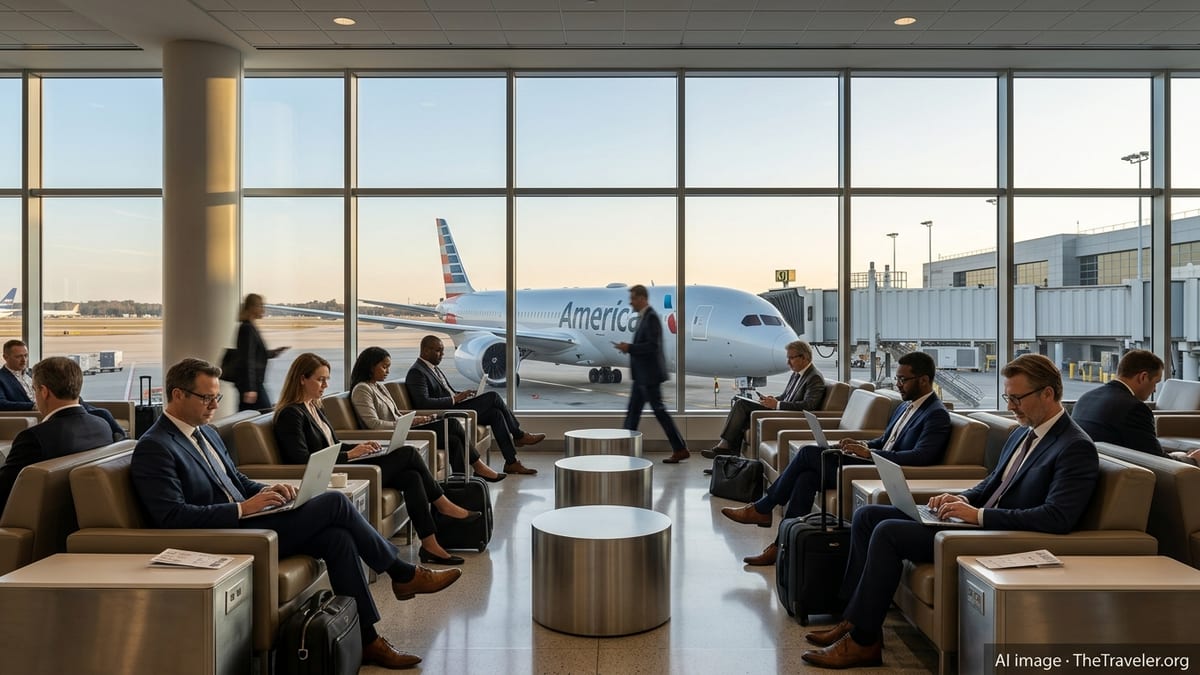
A Quiet Rule Back in the Spotlight
The latest flare up over American Airlines attire centers on a passenger who shared on social media that they were challenged over their outfit before a flight, claiming crew told them to adjust their clothing or risk not traveling. The post quickly circulated among frequent flyers and aviation watchers, prompting many to ask whether the airline has a formal dress code at all.
Publicly available information shows that American does not publish a detailed list of acceptable garments in its marketing materials or booking flow. Instead, the rule appears in the carrier’s conditions of carriage, the contract that governs travel for every ticketed passenger. Buried within a broader section on safety and conduct, the policy instructs customers to “dress appropriately” and notes that bare feet or offensive clothing are not allowed.
The recent complaint has revived long running questions about how that brief clause is interpreted at the gate and on board, and whether some passengers are more likely than others to be challenged over what they wear.
What the American Airlines Policy Actually Says
American’s conditions of carriage, updated in May 2026, outline various reasons a traveler can be denied boarding or removed from a flight. Among language on disruptive behavior, documentation problems and safety concerns, the dress requirement is short but consequential. Passengers are told to be respectful that their odor is not offensive, and to dress appropriately, with an explicit line stating that bare feet or offensive clothing are not permitted.
The wording does not define what counts as “offensive,” leaving room for interpretation by gate agents and cabin crew. Past coverage of similar incidents involving American has highlighted that the carrier does not maintain a separate, itemized dress code that lists specific garments such as crop tops, shorts length or graphic slogans. Instead, decisions tend to hinge on whether clothing is judged to be lewd, obscene or likely to cause offense to other travelers.
Industry analysts note that this approach mirrors policies at several other major U.S. airlines, which also grant staff discretion to act when clothing is viewed as potentially problematic, but stop short of banning particular styles of dress in writing. That structure can give airlines flexibility in unusual situations but can also make enforcement appear inconsistent from one flight to another.
Past Disputes Show a Pattern of Confusion
The most recent complaint is only the latest in a string of public disputes over how American’s clothing rule is applied. Published reports in recent years have described women told to “button up” or cover midriff baring outfits, passengers escorted off aircraft over graphic T shirts, and travelers asked to wear blankets over fitted dresses or shorts.
In several high profile cases, passengers argued that their outfits were common casual wear in airports and that they were singled out because of body type, gender or race rather than the clothes themselves. Online reaction has often been sharply divided, with some social media users backing the airline’s right to set standards, while others accuse carriers of arbitrary or discriminatory enforcement.
According to coverage of internal policy changes, American has in the past adjusted how these decisions are supposed to be made, emphasizing that complaints not tied to safety or security should be prompted by another passenger rather than initiated solely by crew members. Even so, there remains no centralized data tracking how often clothing rules are invoked, leaving observers reliant on viral posts and occasional legal filings to gauge how frequently attire controversies occur.
Broader Debate Over Dress Codes in the Sky
The renewed scrutiny of American’s policy comes amid a wider cultural conversation about what is considered appropriate to wear while flying. Recent features in travel and lifestyle outlets note that U.S. carriers have gradually relaxed expectations since the so called golden age of air travel, when jackets, dresses and polished shoes were the norm for many passengers.
Today, leggings, athleisure outfits and graphic tees are standard airport attire, reflecting the realities of cramped cabins and long security lines. At the same time, airlines and regulators continue to link certain clothing restrictions to safety and security, citing the need for shoes during emergency evacuations and the risk that offensive imagery or slogans could escalate tensions in a confined space.
Advocacy groups and legal experts have questioned whether loosely defined standards such as “offensive” or “not properly clothed” give too much latitude for subjective judgments that may reflect personal bias. Government advisory materials on discrimination in air travel have flagged clothing disputes as a recurring trigger for complaints, while noting that airlines are not required to publish detailed dress codes as long as they apply rules in a nondiscriminatory manner.
What Travelers Should Know Before They Fly
For American Airlines customers, the current controversy underscores how a few lines in a dense contract can suddenly affect a trip. Travel attorneys and consumer advocates generally advise passengers to assume that clothing with explicit profanity, graphic sexual content or hate symbols is likely to draw scrutiny on any major airline. Extremely revealing garments may also attract attention even if not specifically barred in writing.
Because interpretation ultimately rests with staff on the day of travel, some experts suggest taking a conservative approach on days when catching a specific flight is more important than making a fashion statement. Simple backup options such as a lightweight jacket, scarf or T shirt in a carry on can provide a quick fix if an outfit is challenged at the gate.
The latest incident has prompted renewed calls from travelers for clearer communication from airlines about what they expect, whether through more prominent references to dress rules during booking or in pre flight emails. For now, however, American’s guidance remains limited to its long standing instruction to dress appropriately and avoid bare feet or clothing considered offensive, a small clause that continues to generate outsized controversy whenever a passenger publicly objects to how it is enforced.