


More news on this day
Pokhara, Nepal’s gateway to the Annapurna range, is preparing for a major shift in its global connectivity as Flydubai moves toward launching direct flights between Pokhara International Airport and Dubai, a route widely viewed as a catalyst for tourism growth and fresh investment in the country’s western regions.
Get the latest news straight to your inbox!
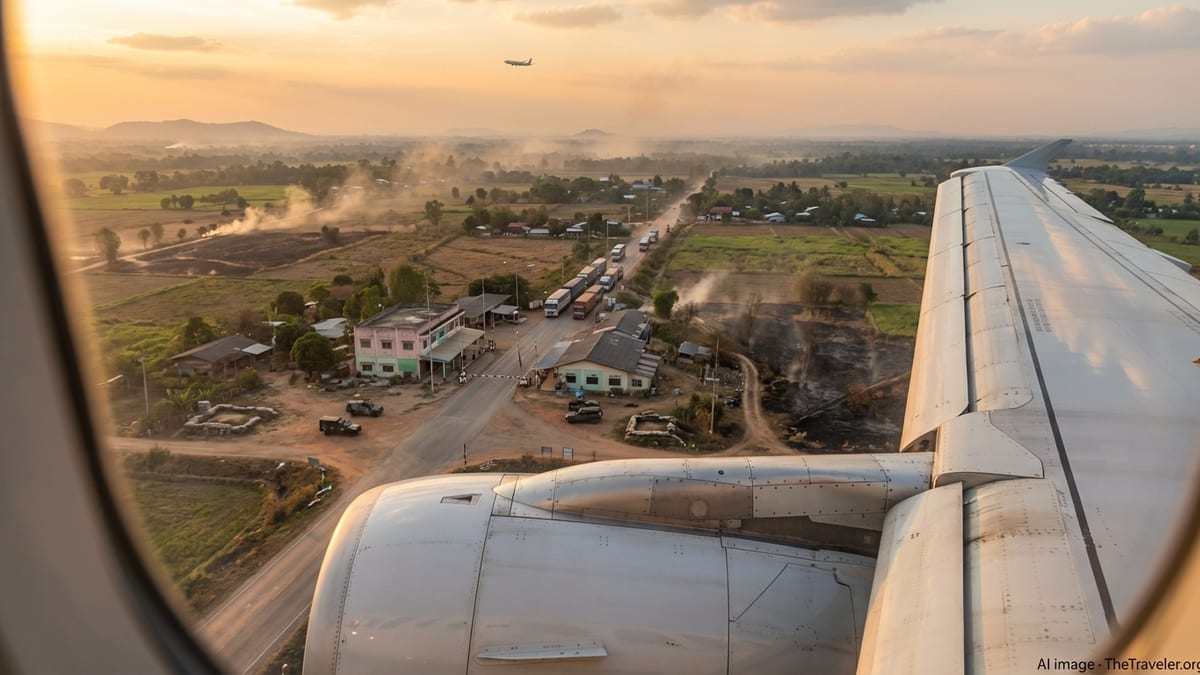
A Long-Awaited International Lifeline for Pokhara
Pokhara International Airport, which officially opened in 2023 as Nepal’s third international airport, has until now largely handled domestic services and occasional charter operations. Publicly available information shows that efforts to attract regular international carriers have been ongoing, with local authorities promoting Pokhara as a tourism and aviation hub for western Nepal.
Recent coverage from Nepali aviation and tourism outlets indicates that Flydubai has agreed to operate a series of daily test or proving flights on the Pokhara–Dubai sector, scheduled to begin in late September. The flights are expected to depart Dubai International Airport and arrive in Pokhara in the early evening, before returning to Dubai roughly an hour later, creating a same-day connection window for onward travel through the Gulf.
Reports describe this as a crucial step toward securing long term scheduled services. If the proving phase proceeds as planned, the route would likely become the first sustained, year round international connection for Pokhara International Airport, finally bringing the facility into the regular global route network after years of underutilization.
For residents and businesses in western Nepal, the ability to fly directly to Dubai without transiting through Kathmandu would mark a significant reduction in travel time and logistical complexity, especially during peak tourism seasons when domestic connections can be congested or weather dependent.
Dubai as a Global Hub Linking Nepal to New Markets
Dubai International Airport has developed into one of the world’s busiest international hubs, with Flydubai and other carriers offering extensive connections to the Middle East, Europe, Africa, and Asia. According to published airline network data, Flydubai serves more than 110 destinations, including major gateways in India, the Gulf states, Russia, Eastern Europe, North Africa, and parts of Central and Eastern Europe.
By tapping directly into this hub, Pokhara would gain one stop access to a wide range of cities beyond the traditional Nepal travel markets. Observers in Nepal’s tourism industry note that this could be particularly significant for emerging visitor segments from the Gulf Cooperation Council states, as well as from Russia, the Balkans, and Eastern Europe, where Flydubai has built a strong presence.
For Nepali migrant workers and expatriates, the link to Dubai also offers practical advantages. Western and mid western districts that have historically relied on long overland journeys to Kathmandu for international travel would gain a closer alternative, potentially reshaping travel patterns for labor migration, medical trips, and education related mobility.
Industry analysis further suggests that cargo capacity on the Pokhara–Dubai route, even in the belly hold of passenger aircraft, could support niche export sectors such as high value agricultural products, handicrafts, and time sensitive goods seeking faster access to Gulf and European markets.
Tourism Windfall for Western and Far Western Regions
Pokhara has long been known as Nepal’s adventure tourism capital, anchoring treks to Annapurna and Mustang, as well as paragliding, rafting, and lake based leisure. Travel and tourism reports consistently describe the city as one of the country’s most visited destinations, yet much of the international traffic still enters Nepal through Kathmandu and then transfers by air or road.
Direct flights from Dubai would enable travelers from the United Arab Emirates, India, Qatar, Saudi Arabia, Lebanon, Russia, Bulgaria and other countries on Flydubai’s network to arrive in Pokhara the same day, without transiting Kathmandu. Tour operators anticipate that this could encourage more short break and high value trips focused on trekking, wellness retreats, and soft adventure, while also distributing visitors more evenly across western and far western attractions.
Local business groups and tourism stakeholders have highlighted the potential for new itineraries linking Pokhara with destinations such as Lumbini, the birthplace of the Buddha, as well as lesser known trekking areas in western Nepal that have historically suffered from limited access. Improved air connectivity is widely viewed as the missing piece needed to turn these regions into internationally competitive products.
With Nepal setting ambitious tourism targets and exploring campaigns to attract higher spending visitors, the Pokhara–Dubai connection is being framed as part of a broader strategy to move beyond a single gateway model centered on Kathmandu and to unlock the economic potential of regional hubs.
Economic and Business Opportunities Beyond Tourism
Economists and infrastructure analysts have long argued that better aviation links are critical for balanced development in Nepal, particularly in areas where difficult terrain and limited road networks restrict movement. Regular international flights to Pokhara would likely encourage investment in hotels, convention facilities, logistics, and service industries that cater to both tourists and business travelers.
Publicly available macroeconomic assessments have pointed out that western Nepal remains comparatively underdeveloped despite its rich natural and cultural assets. Direct connectivity to a global hub such as Dubai could help attract foreign direct investment in sectors like renewable energy, agribusiness, information technology outsourcing, and education, especially as international investors increasingly look for secondary cities with room for growth.
There is also growing discussion about leveraging the new route for regional events and conferences. Easy access for delegates from the Gulf, India, and Europe could position Pokhara as a venue for tourism fairs, mountaineering and outdoor sports expos, and cross border business forums, all of which would inject spending into the local economy and raise the city’s international profile.
Local chambers of commerce and trade groups are expected to push for supporting reforms in customs, digital payments, and business facilitation at the airport so that any new air links are matched by efficient ground services and investor friendly procedures.
Next Steps Before Full Commercial Operations
Despite the excitement surrounding Flydubai’s planned operations, several practical steps remain before full scale commercial service can be launched. Aviation regulators in Nepal and the United Arab Emirates must complete route approvals, safety assessments, and airport readiness checks, while the airline evaluates demand, yields, and operational performance from the test period.
Pokhara International Airport will also need to demonstrate that it can consistently handle evening arrivals and departures of narrowbody jets operating international routes, including reliable air traffic management, baggage handling, runway lighting, and passenger processing for immigration and security. Early charter operations and previous test flights are seen as useful references, but sustained daily service will place new demands on staffing and infrastructure.
Travel trade representatives have emphasized the importance of coordinated marketing so that the new route launches with strong forward bookings. This includes working with tour operators across Flydubai’s network, ensuring alignment with national tourism promotion campaigns, and clarifying visa and entry procedures for key source markets such as the Gulf states, India, Russia, and parts of Eastern Europe.
If these elements align and Flydubai transitions from test operations to a regular schedule, analysts expect Pokhara to move rapidly from a largely domestic node to an international gateway for western Nepal, reshaping travel flows and opening a new chapter in the country’s aviation and tourism story.