


More news on this day
While aviation headlines often focus on record orders and new cabin concepts, a handful of Airbus aircraft have been quietly reshaping the economics beneath global air travel, cutting costs per seat, enabling new route strategies and forcing competitors to rethink their own designs.
Get the latest news straight to your inbox!
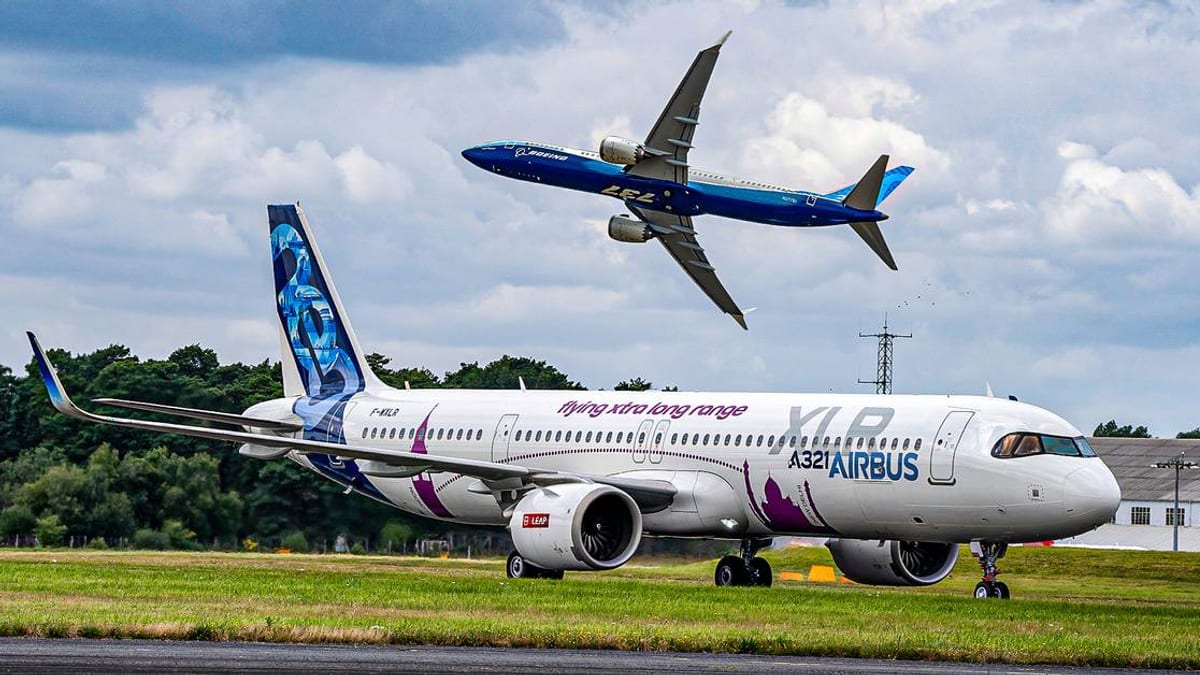
A320 Family: Digital Controls and Commonality at Scale
Launched in the 1980s and entering service in 1988, the A320 family introduced digital fly-by-wire controls and side-stick flight decks to mainstream commercial aviation, technologies that were more commonly associated with advanced military aircraft at the time. Publicly available historical data shows that these innovations allowed Airbus to standardize cockpits across multiple variants, lowering pilot training and transition costs for airlines operating A318, A319, A320 and A321 fleets.
Reports indicate that the A320’s economics were compelling enough to challenge the then-dominant Boeing 737 on short and medium haul routes, in part because airlines could deploy a family of jets with shared parts, procedures and maintenance regimes. Industry analyses describe how this commonality helped cut direct operating costs by spreading training, spares and support across thousands of aircraft, making the family attractive to both full service and low cost carriers.
Over decades of production, Airbus has incrementally improved aerodynamics, engines and cabin layouts on the A320 line, but the underlying economic story has remained constant. The aircraft turned the 150 to 220 seat segment into a high-efficiency workhorse category and gave carriers enough flexibility in range and capacity to redesign networks, upgauge on busy routes and right-size capacity on thinner ones without adding a new pilot type rating.
A320neo: Fuel Savings That Compound Over Time
The arrival of the A320neo family in the mid-2010s quietly deepened that economic advantage by targeting fuel burn, which remains one of the largest single cost items for airlines. Publicly available manufacturer data and independent analyses point to double digit reductions in specific fuel consumption for the new generation engines, supported by aerodynamic refinements such as sharklet wingtip devices and cabin densification options.
Specialist aviation consultancies have compared unit costs between the previous generation A320ceo and the A320neo and report materially lower cost per available seat kilometre for the newer models. These savings, even when measured in single digit percentage points per flight, compound across high utilization, with daily cycles on popular routes turning small improvements into significant annual fuel and emissions reductions.
Industry coverage highlights that these economics have supported aggressive low cost carrier growth in Europe, Asia and North America, where airlines use the A320neo and A321neo to extend stage lengths, open longer thin routes and increase capacity on high demand sectors while preserving margins. The ability to retrofit software and operational upgrades, such as optimized descent profiles, has further tightened fuel and noise footprints without structural changes to the airframe.
A330 and A330neo: Workhorse Widebodies for Long-Haul
Introduced in the 1990s, the A330 became a mainstay twin engine widebody on medium and long haul routes, offering a balance of capacity and range that suited both established intercontinental links and emerging point to point city pairs. Public data on the type’s development shows that it was designed with high aspect ratio wings and efficient engines to offer better fuel economy than four engine rivals of the era.
The A330’s operating economics gave airlines a lower risk alternative to very large aircraft, enabling carriers to serve secondary long haul markets with fewer seats and better load factor prospects. Published fleet data illustrates how many airlines standardized on the A330 for transatlantic and intra Asia services, using cockpit commonality with other Airbus types to limit training and maintenance overheads.
The subsequent A330neo program, entering service in 2018, further sharpened the aircraft’s cost profile with Rolls Royce Trent 7000 engines and aerodynamic updates. Airbus marketing material and independent technical reviews state that the A330neo can deliver around a quarter less fuel burn per seat compared with earlier generation widebodies in similar size categories, a change that has encouraged airlines to extend the life of A330 based fleets instead of switching entirely to all new platforms.
A350 XWB: Long-Range Efficiency for a Point-to-Point World
The A350 XWB, which entered commercial service in the second half of the 2010s, was conceived for an environment shaped by rising fuel costs and growing preference for non stop long haul travel. The aircraft’s extensive use of composite materials, modern wing design and high bypass ratio Trent XWB engines are widely cited in industry literature as key drivers of its lower fuel burn and maintenance requirements compared with older large twin jets.
Analyses by aviation finance firms and specialist media place the A350’s operating cost per flight hour in a range that is competitive with or better than rivals, but note that its real strength lies in cost per seat and range flexibility. Airlines have used the A350-900 and -1000 to operate ultra long haul routes and replace aging four engine jets, effectively shrinking fuel bills while maintaining or increasing capacity.
Publicly available fleet deployment data shows that carriers have leveraged the A350’s economics to shift from hub centric models towards more point to point networks, adding long thin routes that would have been harder to sustain with less efficient aircraft. As global traffic recovers and environmental scrutiny intensifies, the type’s lower emissions per passenger have become an additional factor in airline fleet planning, reinforcing its economic appeal.
A380: High-Capacity Bet That Still Shapes Network Economics
The A380, introduced into service in the late 2000s, is often framed as a commercial disappointment because production ended earlier than first envisioned. Yet research papers and strategic analyses suggest that the aircraft had a significant, if nuanced, impact on airline economics. Designed for a hub-and-spoke world, the A380 aimed to capture congested airport demand by moving more passengers per slot, thereby lowering unit costs on dense trunk routes when high load factors could be achieved.
Academic studies and industry reports have highlighted that, under the right conditions, the A380’s very high seat count allowed airlines to spread fixed operating costs across more passengers, particularly on routes linking major global hubs. At the same time, its size and four engine configuration limited flexibility and made profitability dependent on consistently strong demand, especially as new efficient twin engine widebodies entered service.
Although only a handful of carriers operate the type today, its legacy is visible in how airlines evaluate capacity risk and airport constraints. Experience with the A380 has sharpened focus on balancing seat counts with demand volatility and has influenced subsequent fleet strategies, encouraging many operators to favor slightly smaller, more versatile widebodies that can still deliver strong per seat economics without the same dependence on ultra high load factors.