


More news on this day
Air travel across Europe is facing a new wave of disruption this week, with more than 1,500 flights reportedly delayed and at least 28 cancelled as weather challenges, staffing issues and knock-on congestion hit key hubs in Portugal, Belgium, Norway and beyond, disrupting operations for carriers including British Airways, KLM and easyJet on routes serving Madrid, Rome and other major cities.
Get the latest news straight to your inbox!
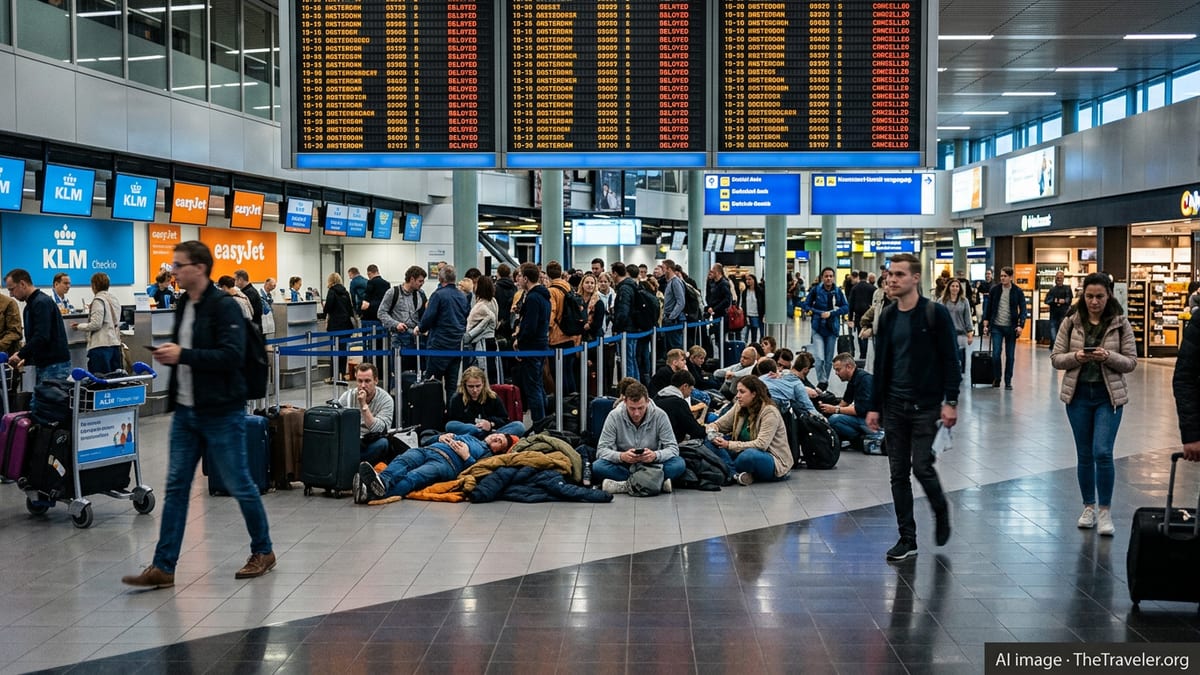
Delays and Cancellations Spread Across European Hubs
Publicly available operational data and travel-industry monitoring suggest that around 1,550 flights have been delayed across Europe in recent days, alongside at least 28 cancellations, as a combination of local bottlenecks and network-wide knock-on effects ripple through airline schedules. The disruption has been most visible at large transfer hubs and popular leisure gateways, where even short hold-ups are feeding into missed connections and rolling delays.
Recent reports highlight cascading problems at airports such as Amsterdam Schiphol, London Heathrow and Gatwick, as well as major Spanish and Italian hubs serving Madrid and Rome. Earlier this week, separate coverage indicated that Schiphol alone had recorded hundreds of delayed flights and dozens of cancellations in a single day, with impacts extending across European and transatlantic routes. Similar patterns of delay have been reported at German hubs and at Portuguese airports, where local issues are quickly spilling over into the wider network.
The scale of the current disruption puts additional pressure on airlines already managing a tight summer schedule. Aircraft and crews are circulating around Europe on back-to-back rotations, meaning a weather or staffing issue in one country can quickly lead to late arrivals or missed slots several sectors later, often in an entirely different part of the continent.
For passengers, the practical effect is a growing risk of missed connections and last-minute rebookings. Even where flights eventually depart, late departures of more than three hours are being recorded often enough to trigger compensation eligibility under European passenger rights rules, according to travel advisory sites and legal-support platforms tracking the situation.
Portugal, Belgium and Norway Emerge as Flashpoints
In Portugal, publicly available airport operations data for early June show several hundred delays and a notable number of cancellations in a single day across the country’s main gateways, including Lisbon, Porto and Faro. Separate local reporting points to additional disruption at Madeira’s Cristiano Ronaldo International Airport, where recent adverse wind conditions forced diversions and led to multiple cancellations and delayed rotations, including on flights involving Iberian and UK connections.
These difficulties in Portugal are especially significant because Lisbon and Porto serve as important transfer points between Europe, North America, Africa and the Atlantic islands. When departures or arrivals fall behind schedule, connecting passengers can struggle to make onward services, prompting airlines to offload bags, rebook itineraries and, in some cases, cancel later legs that are no longer viable.
Belgium has also been a focal point for disruption. Earlier this month, coverage from European news outlets described a sudden air-traffic control stoppage that effectively shut down operations at Brussels Airport for several hours, forcing the cancellation of large parts of the day’s schedule. Airlines serving Brussels, including British carriers and low-cost operators, were reported to have rerouted or cancelled services, with the effects extending into neighboring countries as aircraft and crews ended up out of position.
Further north, reports from Scandinavian and pan-European aviation trackers indicate that Norway’s airports have seen an uptick in delays tied to weather conditions and capacity constraints at certain facilities. While the number of outright cancellations there remains more limited than in Portugal or Belgium, the delays still contribute to the wider network strain, particularly on routes connecting to continental hubs and southern leisure destinations.
Major Airlines and Routes to Madrid and Rome Affected
KLM, British Airways and easyJet are among the carriers most visibly affected by the current wave of disruption, according to airline tracking sites and consumer-rights platforms compiling same-day performance data. KLM has seen multiple days of heavy delay and cancellation activity around its Amsterdam base, including reports of dozens of flights being dropped from the schedule across Europe and the North Atlantic in a single 24-hour period as congestion and resource constraints intensified.
British Airways has contended with a series of operational challenges centered on London Heathrow and Gatwick, with recent data showing hundreds of delayed departures and a number of cancellations across short- and long-haul routes. The carrier’s services into continental hubs, including Brussels, Madrid and Rome, have been affected both directly, through disruption in the UK, and indirectly, as connecting flights are forced to wait for late-arriving aircraft or crews.
Low-cost airline easyJet has also featured prominently in the disruption statistics compiled by travel-industry analysts and passenger advocacy groups. The carrier operates dense schedules linking UK and northern European airports with sun destinations in Spain, Portugal and Italy, which leaves little slack when airports experience capacity reductions or weather holds. Reports from recent days point to easyJet among the airlines registering some of the highest numbers of delayed and cancelled flights at both northern hubs and southern holiday gateways.
Routes to Madrid and Rome are reflecting this wider volatility. Flight status trackers show late departures and arrivals building up through the day on services linking these capitals with London, Amsterdam, Lisbon, Brussels and Scandinavian cities. In some instances, aircraft scheduled to operate evening departures have already lost significant time earlier in the day on different routes, leaving little opportunity to recover punctuality before the final leg into Spain or Italy.
Knock-on Impacts for Passengers and Summer Travel Plans
The immediate impact for travelers is uncertainty around departure times and connection reliability. Social media posts and user-generated reports on travel forums describe passengers waiting for updated departure information, being rebooked onto next-day services or rerouted through alternative hubs after missed connections. In crowded summer terminals, even relatively short waits can translate into long lines at customer-service desks and accommodation desks for those forced to stay overnight.
Consumer advocacy organizations and compensation specialists are reminding passengers to keep boarding passes, booking confirmations and any written notices from airlines, as this documentation can be important when submitting claims for reimbursement or compensation. Under EU and UK passenger rights regulations, travelers on flights departing from the European Union or the United Kingdom, or on EU or UK carriers, may be entitled to meals, hotel accommodation and, in some cases, monetary compensation when long delays or cancellations meet specified criteria.
For the tourism sector, the disruption raises concerns about the resilience of Europe’s air network heading into the peak summer season. City-break destinations such as Madrid and Rome, as well as island and coastal resorts in Portugal and southern Europe, rely heavily on reliable air links from northern markets. Extended periods of irregular operations can affect hotel check-in patterns, cruise departures and tour itineraries, potentially amplifying the economic impact beyond the aviation sector itself.
Travel advisors and industry commentators are encouraging passengers with upcoming trips to build extra time into itineraries, particularly when connecting between separate tickets or planning same-day transfers to cruises or rail journeys. Checking flight status regularly, signing up for airline notifications and considering travel insurance that covers delays and missed connections are being presented as prudent steps in light of the current operational environment.
What Travelers Can Expect in the Coming Days
While the headline figures of 1,550 delayed and 28 cancelled flights underline the intensity of the recent disruption, aviation analysts note that such turbulence often comes in waves. Weather systems, infrastructure issues or labor developments in one country can spark several days of irregular operations before schedules gradually stabilize. However, with airports and airlines already running close to capacity in early summer, recovery windows may be limited.
Operational updates from airlines and airports across Portugal, Belgium, Norway and other affected states indicate that carriers are adjusting schedules on a rolling basis, trimming some frequencies and consolidating flights in an effort to restore punctuality. This can reduce congestion in the medium term but may lead to further short-notice changes for passengers whose flights are merged or removed from the timetable.
Travel-industry coverage suggests that hubs such as Madrid and Rome are likely to remain under pressure as they absorb diverted traffic and late-running services from northern Europe. The situation is particularly fluid on weekends and peak travel days, when tight turnaround times and high passenger volumes leave minimal room for error.
Analysts caution that travelers planning to cross Europe in the coming days should be prepared for possible schedule changes, even if their specific flights are currently listed as on time. Monitoring airline communication channels, staying flexible with connection plans and allowing additional buffers between flights, trains and cruise departures can help mitigate the impact if further delays or cancellations occur.