


More news on this day
The UK Foreign, Commonwealth & Development Office has widened its travel warnings across the Middle East and surrounding region, updating advice for 13 countries including popular winter sun destinations Turkey and Egypt in response to heightened regional tensions and recent cross-border attacks.
Get the latest news straight to your inbox!
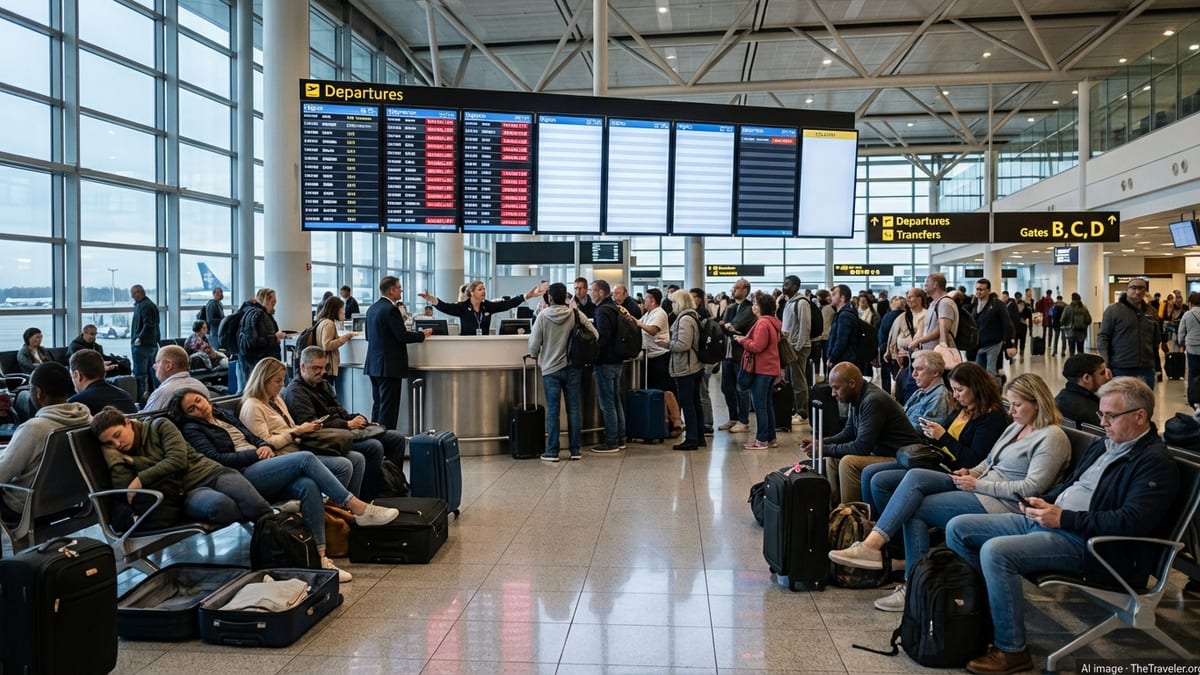
Expanded advisory covers key Middle East and North Africa destinations
According to recent coverage of the updated advice, the Foreign Office has refreshed its guidance for a group of countries spanning the eastern Mediterranean, the Gulf and North Africa, with Turkey and Egypt among the highest profile destinations affected. Reports indicate that the move follows a series of strikes and retaliatory attacks involving Iran and other actors in the region, which have raised concerns over potential spillover risks for nearby states.
The latest changes, reflected in country pages on the UK government’s foreign travel advice service, underline long-standing cautions about specific border regions while drawing renewed attention to the security implications of the wider regional situation. Publicly available information shows that the advisory does not amount to a blanket ban on travel to Turkey or Egypt, but it does tighten language around certain areas and routes that are considered higher risk.
For travellers, the expansion of the warning list means that more destinations in the Middle East and North Africa now carry prominent notices about instability, the threat of terrorism, or disruption linked to regional conflict. Travel insurers and tour operators commonly use these advisories as a reference point when determining cover and operating schedules, so even partial changes in wording can have practical consequences for planned holidays.
Industry commentary suggests that the move is designed to give holidaymakers clearer, more granular guidance rather than to close off whole countries. However, the fact that several traditionally busy winter destinations now appear together within an updated warning matrix is likely to prompt closer scrutiny from both travellers and the travel trade in the weeks ahead.
Turkey: renewed focus on border areas and regional spillover
On the Turkey country page, the Foreign Office reiterates its long-running stance advising against all travel to areas close to the Syrian border. Updated text dated late October 2026 highlights a zone within roughly 10 kilometres of the frontier, where a combination of military activity, terrorism risk and cross-border tensions continues to drive the highest alert level.
The same official advice separates these frontier districts from Turkey’s major tourism hubs. Public information emphasises that key holiday regions such as Istanbul, the Turquoise Coast and Cappadocia remain open to visitors, albeit with a recommendation to stay aware of security developments and avoid political demonstrations. Advisory trackers that compare guidance from multiple governments show a broadly consistent picture, with Western countries urging particular caution in the south and south east while allowing non-essential travel to the country’s primary resort and city destinations.
Regional factors are now more prominently referenced in the narrative around Turkey. Recent Foreign Office text links domestic security concerns to a pattern of strikes and retaliatory attacks elsewhere in the Middle East, warning that shifts in the wider security landscape could affect air routes, border crossings or the perceived attractiveness of certain itineraries at short notice.
Prospective visitors are urged by official materials to check the Turkey travel advice page frequently in the run-up to departure. Travellers are also reminded that package holidays may be adjusted if operators judge that Foreign Office wording creates commercial or logistical challenges in specific regions, even when travel to the rest of the country remains possible.
Egypt: targeted restrictions alongside wider regional caution
Egypt’s travel advice page was also updated in late October 2026, reflecting a mixture of longstanding security concerns and new references to regional instability. The Foreign Office continues to advise against all travel to much of North Sinai and to defined stretches of the border with Libya, including a band extending 20 kilometres inland from the frontier, where security conditions are described as particularly fragile.
In adjacent zones, such as the town of El Salloum and specific parts of the Western Desert, the guidance typically shifts to advice against all but essential travel. In contrast, publicly available information confirms that Cairo, the Red Sea resorts of Hurghada and Sharm el Sheikh, and the main Nile cruise routes between Luxor and Aswan remain accessible for tourism, subject to routine safety precautions and adherence to local regulations.
The latest wording brings regional dynamics to the fore, with references to border closures, potential airspace disruption and pressure on local infrastructure if tensions escalate further. Alongside this, travellers are reminded that standard travel insurance policies may become invalid if individuals choose to enter areas where the Foreign Office explicitly advises against all travel or all but essential travel.
Sector observers note that tour operators serving Egypt are closely monitoring both the national advisory and any operational impacts, such as changes to flight routings or security procedures at key gateways on the Red Sea and in the capital. Travellers with imminent departures are being encouraged through public communications to stay in contact with their airline or tour provider and to review their coverage terms in light of the updated guidance.
Implications for travellers: insurance, itineraries and on-the-ground planning
The widening of the Foreign Office warning list to encompass more countries in the region carries several practical implications for UK travellers. The most immediate concerns relate to travel insurance, as policy documents routinely state that cover may be restricted or void where a traveller enters an area that is subject to advice against all travel or all but essential travel.
Specialist insurance brokers and comparison platforms highlight that some policies offer add-ons or bespoke cover for higher risk regions, but these typically come with tighter conditions and higher premiums. Travellers planning multi-country itineraries through the affected region are advised, in publicly available guidance, to map their routes carefully against the latest Foreign Office country maps and to secure written confirmation from their insurer that their specific plans are covered.
On the ground, the updated warnings point to the need for flexible arrangements. Airlines have, in past periods of heightened tension, adjusted schedules or rerouted flights around sensitive airspace at short notice. While there is no universal pattern of disruption reported across Turkey and Egypt at present, the advisory language makes clear that changes could occur quickly if the regional security picture deteriorates.
Travel commentators also stress the importance of registering contact details with consular services where this option is made available, and of monitoring local news in destination as well as official travel bulletins. Independent travellers in particular are encouraged to build extra time into itineraries that involve internal border crossings or travel through remote areas singled out in the latest Foreign Office text.
Regional picture: 13-country warning reflects shared risk environment
Although Turkey and Egypt are drawing significant attention due to their popularity with UK holidaymakers, they are only part of the broader set of 13 countries referenced in the latest Foreign Office communications. Reports summarising the changes point to a cluster of destinations across the Levant, Gulf and North Africa where existing cautions have been sharpened or reordered rather than introduced from scratch.
This consolidation of warnings reflects an assessment that risks such as missile strikes, drone attacks or retaliatory action could extend beyond the immediate flashpoints of current conflicts. For travellers, that means that itineraries once considered straightforward, such as combining a beach stay in one country with a city break in a neighbouring state, may now sit across multiple advisory categories.
Analysts following official travel advice trends note that governments typically update regional clusters when they want to emphasise the interconnected nature of risks, rather than to signal that any one country has suddenly become unsafe across the board. The new pattern for these 13 countries fits this approach, grouping them within a shared narrative about regional volatility while still making distinctions between safer and higher risk areas inside each border.
For the travel industry, the challenge over the coming weeks will lie in communicating these nuances clearly to customers. With Turkey and Egypt continuing to welcome visitors to most established resort and cultural centres, but with more prominent warnings attached to certain regions and routes, the updated Foreign Office stance is likely to encourage more detailed conversations between travellers, agents and insurers before winter getaway plans are finalised.