


More news on this day
Hundreds of residents on a luxury “endless” world cruise have been ordered to disembark in Cambodia after surging fuel prices forced their ship’s operator to abruptly suspend operations, leaving many long-term passengers searching for last-minute accommodation and flights home.
Get the latest news straight to your inbox!
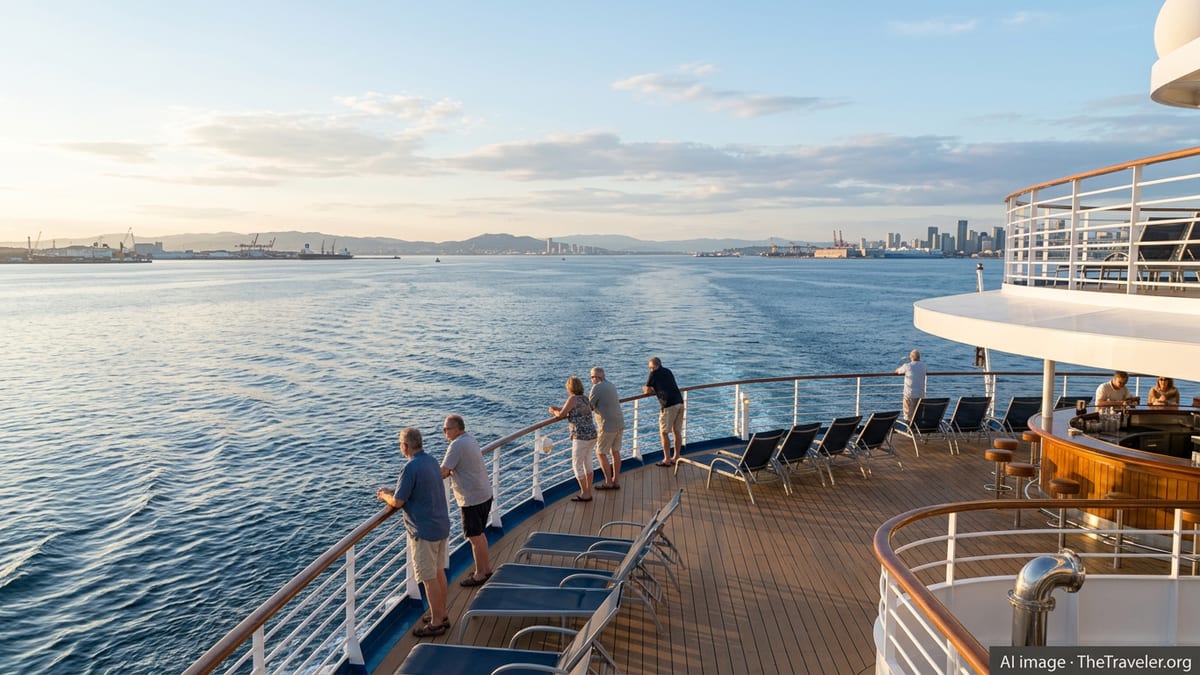
Residential cruise Odyssey comes to a sudden stop
The vessel at the center of the disruption is the Odyssey, operated by Florida based Villa Vie Residences as a residential world cruise that invited passengers to live on board for years at a time. Publicly available information shows that the ship, which originally launched in the 1990s under a different name, was refitted to offer long stay cabins marketed as an alternative to life on land, with promises of continuous global travel and an all inclusive lifestyle.
According to published coverage on 28 October 2026, the Odyssey is currently moored off the coastal city of Sihanoukville in southern Cambodia, where passengers have been told the voyage has effectively ended. Reports indicate that more than 200 residents, many of whom had sold or rented out their homes to finance life at sea, were instructed to pack their belongings and prepare to disembark within hours of receiving notice.
Company statements cited in multiple news reports describe the halt as a suspension of operations rather than a permanent shutdown, but passengers have been informed that the ship will not continue its planned itinerary for the foreseeable future. The abrupt nature of the decision has turned what was billed as a seamless floating lifestyle into a complex emergency relocation for those on board.
Fuel prices and the Iran conflict reshape the business model
Villa Vie Residences has attributed the suspension to what it describes in public updates as “extraordinary increases” in fuel costs across parts of Asia. Coverage drawing on company communications indicates that estimated monthly fuel expenses on certain stretches of the itinerary have risen from around 1,800 US dollars per cabin to between 6,000 and 8,000 dollars, a level that the current pricing structure could not absorb without substantial additional charges.
Analyses in international media link the spike in marine fuel costs to wider energy market volatility following the recent conflict involving Iran, which has disrupted oil flows and pushed up prices for refined products such as diesel and marine gas oil. Cruise and shipping industry disclosures in recent years have repeatedly warned that sharp movements in fuel prices can quickly erode margins, and for a start up residential concept with relatively modest economies of scale, the shock has proved especially difficult to manage.
Publicly available bankruptcy and restructuring coverage suggests that Villa Vie is now seeking new financing or a revised business model that could sustain operations under the current fuel price environment. Until such a plan is in place, the Odyssey will remain laid up in Cambodia, with no confirmed date for any potential resumption of sailing.
Stranded in Sihanoukville with limited support
Reports from international outlets and first hand accounts shared on social platforms describe a tense and uncertain scene in Sihanoukville as residents file off the ship with luggage, pets and in some cases years’ worth of personal possessions. Many passengers had treated their cabins as permanent homes, outfitting them with furniture, electronics and keepsakes on the assumption that the voyage would continue indefinitely.
According to multiple news reports, Villa Vie Residences has committed to covering short term hotel accommodation and local transportation for affected guests in and around Sihanoukville. However, publicly available coverage also indicates that the company is not paying for onward international travel, leaving residents responsible for arranging and funding their own flights from Cambodia to home countries that include the United States, the United Kingdom and various European states.
The sudden need to secure flights out of Phnom Penh or Sihanoukville comes amid wider regional fuel related disruptions, including higher airfares and capacity constraints on some routes. Travel industry reporting notes that Cambodia’s coastal tourism hub has a limited range of international connections compared with major Southeast Asian gateways, which may complicate travel plans for those trying to leave on short notice.
Long term cruise living faces new economic headwinds
The Odyssey incident has drawn attention to the emerging niche of residential cruising, in which guests purchase long term leases or subscriptions instead of booking conventional voyages. Industry observers interviewed in recent years have pointed to this model as a way to smooth seasonal demand and create stable revenue streams, but have also highlighted sensitivity to operational costs such as crew wages, maintenance and fuel.
In financial filings and annual reports, large cruise conglomerates have frequently cited fuel price volatility as a significant risk factor for traditional itineraries. Residential concepts that promise relatively inclusive monthly pricing face the additional challenge of aligning fixed payments with highly variable input costs. When fuel prices more than triple, as reported along portions of the Odyssey’s route, operators may have limited scope to raise passenger charges quickly without provoking backlash or cancellations.
For travelers considering future long duration or residential voyages, analysts quoted across mainstream coverage suggest paying close attention to contract terms related to fuel surcharges, itinerary changes and the operator’s obligations in the event of suspension. Some river and ocean cruise contracts explicitly allow companies to pass on fuel cost increases, alter routes or terminate trips with limited compensation, provisions that can significantly influence the risk borne by passengers during periods of energy market turmoil.
Implications for Southeast Asia’s tourism and cruise sectors
The halt of a high profile luxury vessel in Cambodia comes at a delicate time for Southeast Asia’s tourism economy, which relies heavily on long haul travelers and cruise calls. Regional reporting throughout 2026 has described how rising fuel costs connected to the Iran related oil shock have already led airlines to trim routes and raise fares, while some cruise operators have adjusted itineraries or redeployed ships to reduce fuel intensive repositioning voyages.
Cambodia, which has invested in Sihanoukville’s port and beachfront infrastructure to attract larger cruise ships, now finds one of its most prominent visitors immobilized at anchor. While the presence of hundreds of temporarily stranded passengers brings short term hotel and transport demand, the circumstances underscore the vulnerability of cruise reliant destinations to external energy shocks and operator specific financial stresses.
Travel planners and tourism boards across the region are monitoring how the Odyssey episode unfolds, particularly with regard to passenger protections and the speed at which stranded guests are able to depart. The situation illustrates how macroeconomic factors such as fuel costs and geopolitical instability can ripple quickly through even the most carefully planned luxury travel experiences, leaving travelers dependent on flexible contingency plans and robust consumer safeguards.