


More news on this day
A residential “endless” world cruise marketed as an alternative to life on land has ground to an abrupt halt in Cambodia, leaving around 200 passengers scrambling for flights and temporary housing after the ship’s operator suspended operations, citing a surge in fuel costs linked to the conflict around Iran.
Get the latest news straight to your inbox!
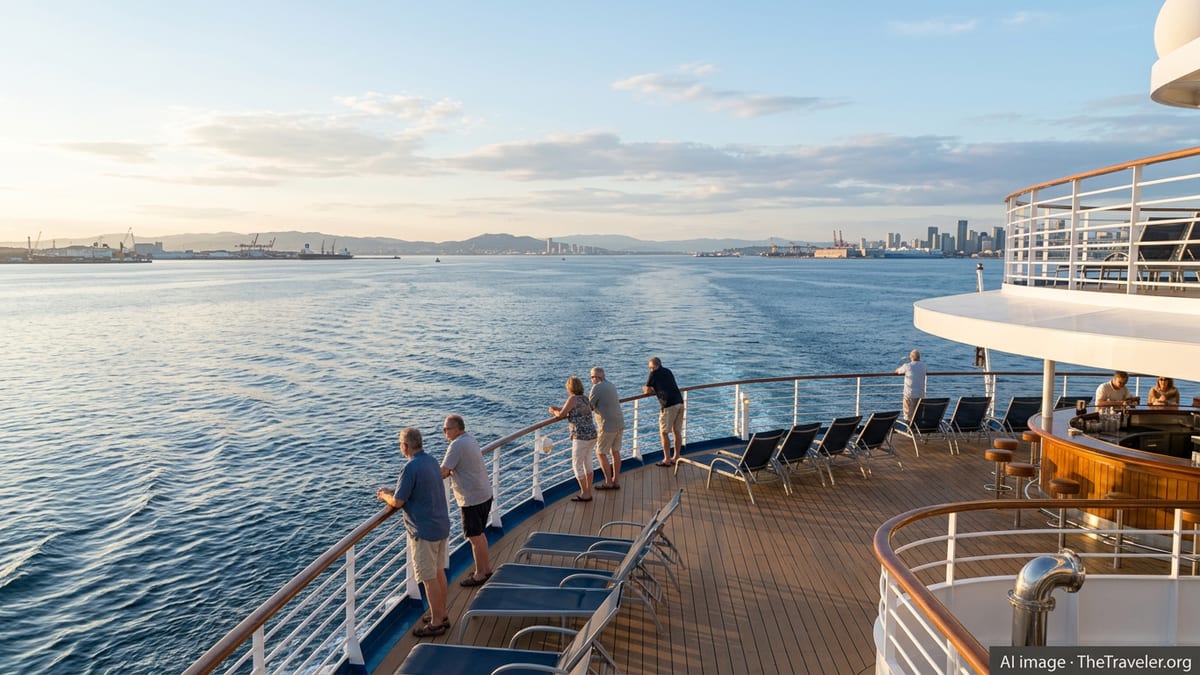
World voyage cut short in Sihanoukville
The Bahamas-flagged Villa Vie Odyssey arrived in the Cambodian port of Sihanoukville on October 23, 2026, after sailing from Thailand as part of a years-long global itinerary. Publicly available information indicates that the ship, which has been operating since October 2024, was designed as a residential vessel where guests could buy, lease or rent-to-own cabins while continuously circling the globe.
Reports describe how the operator, US-based Villa Vie Residences, informed residents this week that the voyage was being suspended and instructed them to leave the ship with their belongings. Coverage from international outlets indicates that roughly 200 to just over 200 passengers, along with more than 150 crew, were on board when the decision was announced in port.
Accounts shared in published coverage and cruise community forums suggest that the disembarkation notice came with only hours of formal lead time, turning what had been sold as a seamless, multi-year journey into an urgent logistical challenge in an unfamiliar city on Cambodia’s southern coast.
The Odyssey was scheduled to continue from Cambodia to Vietnam and onward as part of a three-and-a-half-year itinerary covering close to 150 countries. Instead, marine-tracking data and local reporting show the ship now in lay-up in Sihanoukville as residents leave and the company seeks a path forward.
Fuel costs triple as Iran conflict reshapes economics
In statements cited across news reports, Villa Vie Residences attributed the suspension to what it called “extraordinary increases” in fuel prices in parts of Asia. Publicly available figures from the company indicate that estimated monthly fuel expenses, calculated on a per-cabin basis, have risen from an historical average of about 1,800 US dollars to between 6,000 and 8,000 dollars in recent months.
That jump reflects a broader spike in global oil markets since the escalation of conflict involving Iran and disruptions in and around the Strait of Hormuz, a critical chokepoint for crude and refined products. International economic coverage over recent months has highlighted how higher diesel and marine fuel prices are rippling through sectors from commercial shipping to aviation and tourism.
Cambodia itself has been grappling with higher pump prices and supply strains this year, according to regional business and energy reports. For a ship that effectively functions as a floating apartment building with hotel-style services, the combination of long itineraries and fuel-intensive routing through affected regions appears to have turned underlying financial pressures into an immediate operational crisis.
Analysts quoted in cruise and travel trade publications had previously warned that residential models built on relatively thin margins could be acutely exposed to volatility in energy prices, particularly when residents pay fixed fees while the operator absorbs swings in fuel costs.
Residents lose floating homes and face complex journeys home
Unlike conventional cruise passengers booked on a finite vacation, many of those on board the Odyssey had treated their cabins as primary homes, in some cases selling property on land in order to move aboard. Coverage in outlets including ABC News, wire services and European broadcasters notes that some residents saw the sudden halt as the loss of both a carefully planned lifestyle and their immediate housing.
According to multiple reports, Villa Vie has committed to covering hotel accommodation and local transportation in Cambodia for affected passengers, at least in the short term. However, publicly available information also indicates that the company has not guaranteed or funded international flights, leaving individuals to navigate the cost and complexity of long-haul travel from Phnom Penh or regional hubs.
Travel industry analysis points out that Sihanoukville, while served by domestic and some regional links, offers fewer direct long-haul options than major Asian gateways. Many passengers are now piecing together multi-leg itineraries via cities such as Bangkok, Singapore or Kuala Lumpur, competing for seats at a time when higher fuel costs are already influencing airfares across parts of Asia.
Questions are also emerging over unused portions of multi-year residency contracts and what financial protections, if any, may apply. Insurance specialists quoted in sector publications say that coverage for residential cruise products is still relatively new and can vary widely, leaving some customers uncertain about the prospects of recovering prepaid sums.
Business model under scrutiny amid broader cruise fuel risks
The episode has pushed the residential cruise concept back into the spotlight. The Odyssey was positioned as a more affordable counterpart to ultra-high-end residential ships, with marketing that framed life at sea as a cost-effective alternative to traditional retirement communities or urban apartments.
Industry observers now note that the enterprise combined high fixed costs, exposure to volatile fuel prices and a customer base with expectations of stability and continuity. While conventional cruise lines often hedge fuel purchases, adjust itineraries or add surcharges, a permanent world-cruise model has less flexibility once residents commit to a specific lifestyle and route.
Recent corporate filings and annual reports from major cruise groups have repeatedly flagged fuel price volatility as a material risk, highlighting that even diversified fleets can face pressure when oil prices surge. The Odyssey’s abrupt halt underscores how a smaller, single-ship operator with a residential promise may have even less room to maneuver when operating costs spike faster than revenue can be adjusted.
Commentary in maritime forums also points to the challenges of financing and maintaining older vessels repurposed for long-term residential use, particularly when capital-intensive upgrades for efficiency or alternative fuels are out of reach. In that context, the fuel shock tied to geopolitical tensions appears to have accelerated underlying financial strains that had been building for months.
Regulators and future residents weigh next steps
As passengers leave Cambodia, attention is turning to the regulatory and legal landscape that surrounds novel cruise products. Because Villa Vie Odyssey is Bahamas-flagged, owned by a US-based company and currently laid up in a Cambodian port with a multinational resident base, any restructuring or insolvency process is expected to involve several jurisdictions.
Consumer advocates quoted in travel insurance and legal journals have previously urged would-be buyers of long-term cruise residencies to scrutinize contract terms, flag-state protections and dispute resolution mechanisms before committing substantial sums. The sudden halt in Cambodia is likely to intensify calls for clearer disclosure around financial reserves, contingency plans and the allocation of fuel and operating risks between operator and residents.
For now, publicly available statements from Villa Vie indicate that the company is seeking options to stabilize its finances, but there is no confirmed timeline for any potential resumption of sailing. Analysts suggest that any restart would require either significantly lower fuel costs, new capital or a fundamental change to the pricing and routing model.
Prospective residents watching events in Sihanoukville may pause before embracing similar “endless cruise” offerings. Yet specialists note that demand for extended time at sea remains strong among affluent retirees and remote workers. The fate of the Odyssey is therefore likely to shape not only the immediate fortunes of its former residents, but also the design and regulation of the next generation of residential ships.