


More news on this day
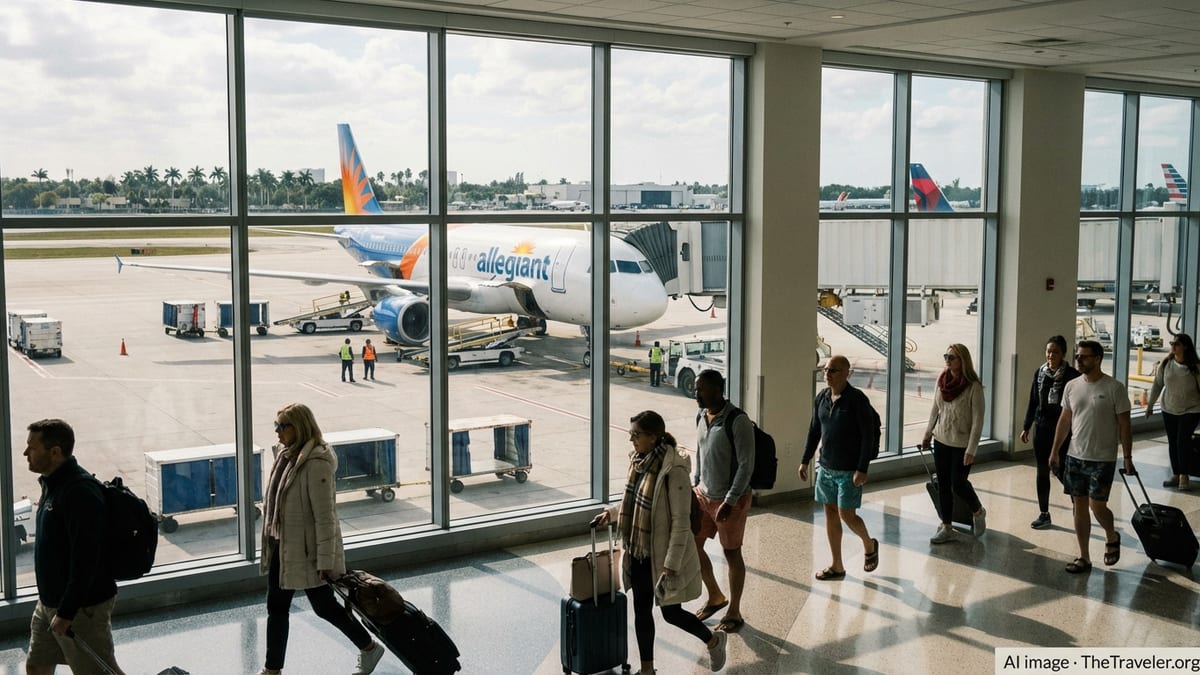
Fort Lauderdale–Hollywood International Airport faced severe travel disruption on June 20 as a cluster of delays and cancellations across American Airlines, Delta Air Lines, and JetBlue rippled through key Caribbean routes at the height of the summer getaway period.
Get the latest news straight to your inbox!
Widespread Operational Disruptions at a Major Caribbean Gateway
Publicly available flight-tracking data for Saturday indicates that at least 15 departures and arrivals involving American Airlines, Delta, and JetBlue were canceled at Fort Lauderdale, alongside more than one hundred additional delays affecting the broader schedule. The disruption concentrated in the mid-morning to late-afternoon peak, when aircraft typically cycle between South Florida and high-demand Caribbean destinations.
Fort Lauderdale functions as a critical gateway for travel to the Bahamas, Jamaica, the Dominican Republic, Puerto Rico, and Central America, with JetBlue and American operating dense schedules into the region and Delta feeding its wider network through hubs to the north. When flight rotations falter at this airport, knock-on effects are quickly felt in both directions, affecting holidaymakers heading south as well as returning cruise passengers and visiting friends-and-relatives traffic.
While the precise trigger for the latest wave of disruptions was not immediately clear, operational data shows extended turnaround times, late inbound aircraft, and scattered cancellations across multiple carriers rather than an isolated problem at a single airline. That pattern suggests a combination of factors, such as crew-availability challenges, aircraft reassignments, and regional weather or air-traffic constraints, compounding at one of the busiest airports for leisure travel in the United States.
The impact is especially acute because Fort Lauderdale has assumed even greater importance in the low-cost and hybrid-carrier segment following the recent withdrawal of Spirit Airlines from the market, which has shifted more demand toward remaining players including JetBlue and American on overlapping routes.
Caribbean Routes Hit as Peak Season Ramps Up
The timing of the disruption is particularly unwelcome for travelers bound for the northern Caribbean, where June marks the transition into a busier summer leisure period. Fort Lauderdale hosts a dense web of flights to regional hubs such as San Juan, Santo Domingo, Montego Bay, and Nassau, as well as secondary island airports that rely on a limited number of daily services.
When departures from South Florida run late or are canceled, many passengers have limited alternatives on the same day, especially on thinner routes that see only one or two frequencies. A cancellation from Fort Lauderdale can mean a lost vacation day, a missed cruise departure, or an unplanned overnight stay in South Florida for visitors who had planned tight connections to ships or inter-island flights.
Airline operations specialists often describe Fort Lauderdale, along with Miami and Orlando, as a “pressure point” for Caribbean connectivity, because a significant share of regional capacity is funneled through these Florida airports. The current episode of disruption at Fort Lauderdale therefore reverberates disproportionately through the Caribbean network compared with irregular operations at a more domestically focused airport.
According to published coverage of recent schedule trends, carriers have been gradually rebuilding and expanding Caribbean networks from South Florida, with JetBlue in particular positioning Fort Lauderdale as a key international gateway. When that increasingly complex schedule meets limited slack in aircraft and crew resources, recovery from even modest disruption can be slow.
American, Delta, and JetBlue Among Most Affected
American Airlines, Delta Air Lines, and JetBlue featured prominently among the delayed and canceled operations at Fort Lauderdale on Saturday, reflecting their strong presence at the airport rather than a single-carrier failure. Flight-status boards showed a mixture of late departures, extended ground holds, and outright cancellations on regional and medium-haul services.
JetBlue, which has been expanding at Fort Lauderdale with new Caribbean and Latin American destinations, relies on high aircraft utilization and tight turnarounds. When one or two early flights in the rotation are delayed, the effect can cascade through the day, leading to schedule compression, rolling delays, and, eventually, strategic cancellations to restore some stability.
American and Delta, though more diversified across multiple Florida and East Coast hubs, also face operational challenges when irregular operations develop at Fort Lauderdale. Aircraft and crews positioned in South Florida are often tightly scheduled between domestic, Caribbean, and Latin American services. If one link in that chain breaks, it may not be possible to substitute spare aircraft or crew on short notice, particularly on weekends, prompting last-minute changes that leave passengers scrambling.
Public timetable information and airline network updates show that all three carriers have been adjusting their Fort Lauderdale schedules in recent months to capture demand displaced from ultra-low-cost competitors and to strengthen connectivity to cruise markets, which can make the operation more complex and more sensitive to disruption.
Knock-on Effects for Passengers and the Wider Network
For travelers, Saturday’s disruption translated into long lines at check-in and customer service counters, extended waits at departure gates, and uncertainty over missed connections. Passengers on multi-leg itineraries through Fort Lauderdale to Caribbean islands and Central American destinations faced particular risk of misconnecting, as relatively few later flights were available to complete the journey the same day.
According to travel-industry analyses of similar disruption events, the financial and practical burden for passengers can be substantial. Out-of-pocket expenses for hotels, meals, and replacement tickets often mount quickly when travel plans fall apart close to departure time. Some travelers may be protected by airline-controlled rebooking policies or travel-insurance coverage, but others can find themselves absorbing significant costs, especially when disruptions are linked to factors considered outside an airline’s direct control.
The irregular operations at Fort Lauderdale also create ripple effects across the broader U.S. network. Aircraft that fail to depart on time from Florida may arrive late into northern hubs, potentially affecting onward flights unrelated to Caribbean travel. Crews reaching duty-time limits during prolonged delays can further constrain the ability to recover the schedule, leading to additional cancellations later in the day on different routes.
Aviation analysts note that such events highlight how concentrated U.S.–Caribbean traffic has become through a handful of Florida gateways. When those airports encounter operational turbulence, the consequences are felt not only by leisure travelers but also by regional economies that depend heavily on reliable air links for tourism revenue and essential travel.
Airlines Adjust and Travelers Seek Workarounds
As the day progressed, schedule adjustments at Fort Lauderdale suggested airlines were prioritizing certain departures in an effort to restore some predictability. Publicly visible changes included consolidation of lightly booked flights, retiming of selected services, and the use of larger aircraft on specific departures to accommodate stranded passengers where possible.
Travel advisors monitoring the situation reported that many affected passengers turned to alternative airports, such as Miami or West Palm Beach, or accepted rerouting via other hubs including Atlanta, Charlotte, or New York to salvage their Caribbean plans. Others opted to delay their trips by a day or more, particularly when traveling to destinations with frequent service and flexible accommodation options.
Consumer guidance from aviation and travel organizations generally recommends that passengers transiting Fort Lauderdale and other Florida gateways during the busy summer period build additional time into connections, monitor flight status closely through airline apps and airport information channels, and consider flexible booking options that allow same-day changes when schedules begin to unravel.
With the Atlantic hurricane season and peak summer demand now under way, the latest disruption at Fort Lauderdale underscores the fragility of tightly scheduled Caribbean operations and the importance for both airlines and travelers of planning around potential bottlenecks at key gateway airports.