


More news on this day
European airports are heading into another turbulent peak season as France joins Germany, Italy, Spain, Greece, Portugal and the Netherlands in fully rolling out the European Union’s new Entry/Exit System, raising the prospect of fresh queues and missed connections for non-EU travellers.
Get the latest news straight to your inbox!
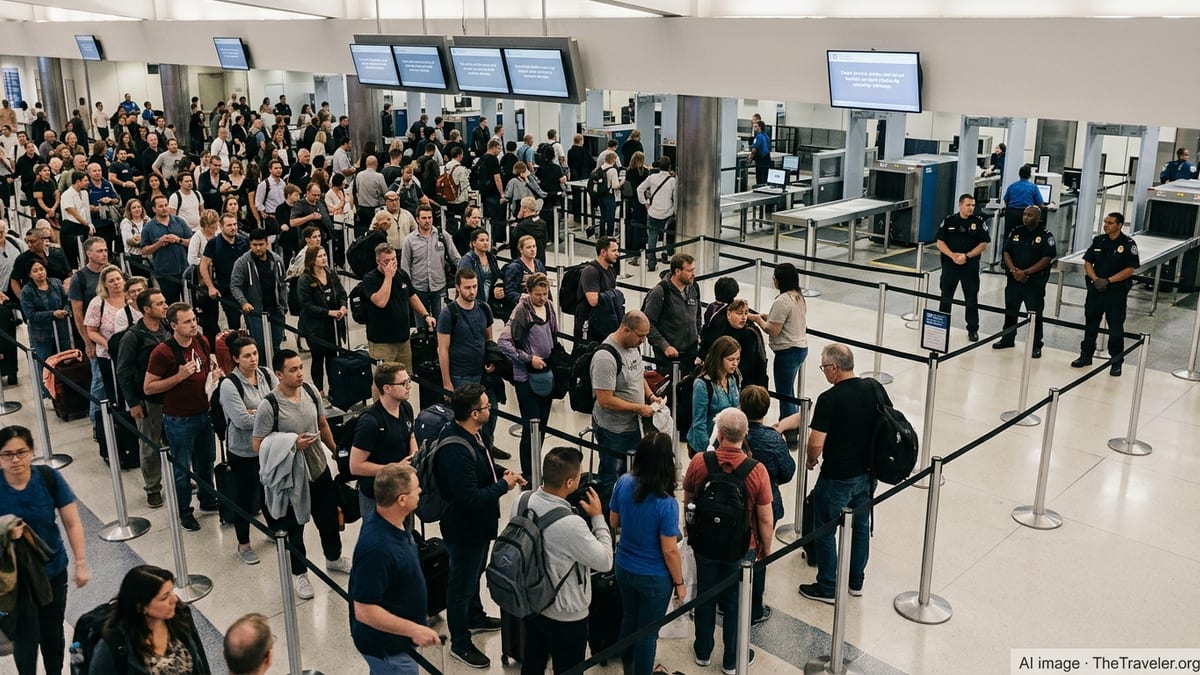
What the EES Is and Why It Matters This Summer
The EU’s Entry/Exit System, or EES, is a large-scale biometric border database designed to register non-EU and non-Schengen nationals every time they cross an external Schengen frontier. Instead of relying on passport stamps, border officers now record facial images, fingerprints and entry and exit details in a shared electronic system used by 29 European countries, including France, Germany, Italy, Spain, Greece, Portugal and the Netherlands.
Publicly available information from EU institutions describes EES as a security and migration management tool intended to make border checks more consistent and to automate the calculation of how long visitors stay in the Schengen zone. In practice, however, the change also represents a major operational shift for airports and land crossings, particularly at busy hubs that receive large volumes of travellers from the United States, the United Kingdom and other visa-exempt countries.
The system has been phased in progressively since late 2025, but the 2026 high season is the first in which EES is in use across all major external-air-border states mentioned in this guide. Travel industry reports and passenger accounts indicate that the learning curve for both travellers and border staff is still ongoing, contributing to longer processing times at peak periods.
How EES Is Affecting Key Holiday Gateways
In France, the rollout is most visible at Paris Charles de Gaulle and Orly, as well as at major ferry ports and international rail terminals where Schengen entry actually occurs. Travellers arriving from the UK and other non-Schengen points report that initial registration under EES, especially for first-time visitors after the go-live date, can take several minutes per person at automated kiosks or manual booths.
Germany’s main hubs, including Frankfurt and Munich, are also adjusting operations around the new system. Airlines and airport operators have issued advisories recommending that non-EU passengers allow extra time before departure and during transfers, particularly if their first point of Schengen entry is in Germany. Anecdotal accounts from early-season travellers suggest that queues lengthen sharply when multiple long-haul flights land within a short window.
Italy and Spain, both heavily reliant on leisure traffic, are seeing a similar pattern. Airports such as Rome Fiumicino, Milan Malpensa, Madrid Barajas and Barcelona are handling significant volumes of British and North American visitors who must enrol in EES before entering the Schengen area. Passenger experiences vary: off-peak arrivals often move relatively quickly, while weekend and midday bank-holiday waves can produce extended waits at passport control.
Greece, Portugal and the Netherlands occupy a special place in the current disruption map because they host popular seasonal gateways where infrastructure was already under strain. Islands and regional airports handling point-to-point flights from the UK have reported bottlenecks when a high proportion of passengers on a single flight require first-time biometric capture. At Amsterdam Schiphol, which has previously struggled with long security and passport queues, aviation updates note that EES adds another layer of complexity at already busy border-control zones.
Why Delays Are Happening and Who Is Most Affected
Several structural factors are contributing to the present wave of EES-related delays. First-time registration requires more time than a traditional manual passport stamp, particularly when kiosks need to capture high-quality facial images and fingerprints. Any technical glitches, user errors at self-service machines or issues with document readability can quickly ripple into longer lines during peak arrival banks.
Staffing and infrastructure are a second pressure point. Some airports have reconfigured arrival halls and installed new kiosks, but travel trade associations and consumer groups note that upgrades have not always kept pace with surging demand. Where only a limited number of EES-enabled booths are available, or where officers are still becoming familiar with new procedures, throughput can drop below pre-EES levels.
The travellers facing the greatest impact are typically non-EU visitors entering the Schengen area for the first time since the system went live. This includes many tourists from the United States, Canada, the United Kingdom, the Gulf region and parts of Asia. Once a traveller is enrolled, subsequent crossings should in theory be faster, but early-season reports suggest that actual wait times still depend heavily on local staffing and airport layout.
Transit passengers are another vulnerable group. Travellers connecting from a non-Schengen flight to an onward service inside Schengen must clear EES controls at their first point of entry. Where airlines have scheduled tight connections of 60 to 90 minutes, even moderate delays at passport control can lead to missed flights and rebooking queues at airline desks.
Practical Steps Travellers Can Take Right Now
While individual experiences will vary by airport and time of day, several practical measures can reduce the risk of serious disruption. Travel-industry advisories generally recommend arriving earlier than before for flights that involve crossing into or out of the Schengen zone. For long-haul departures to Europe, checking in at least three hours ahead, and even earlier at known congestion points, gives a buffer for unexpectedly long security or document checks.
For travellers planning connections, booking longer layovers at the first Schengen airport is becoming a common piece of advice. A minimum of two and a half to three hours between arrival and onward departure is increasingly viewed as prudent, particularly at large hubs such as Paris Charles de Gaulle, Frankfurt, Amsterdam or Madrid that funnel many non-Schengen arrivals into a limited number of border-control areas.
Preparedness at the border itself can also make a difference. Keeping passports open to the photo page, removing hats and glasses when approaching kiosks, and following local instructions about whether to use self-service machines or staffed booths all help reduce processing time. Travellers should be ready to answer routine questions on itinerary, accommodation and length of stay, as these may still be asked while officers verify electronic records.
Families and groups may want to discuss in advance how to proceed if some members clear border control faster than others. Parents travelling with children should allow additional time, as younger passengers may need assistance with kiosks and may be routed to manual positions even when automated options are available.
Looking Ahead: What to Expect for the Rest of 2026
Publicly available planning documents from EU bodies describe 2026 as a period of stabilisation for EES, with airports and border agencies expected to fine-tune staffing models, signage and passenger flows. As more travellers complete their first registration, subsequent trips should theoretically involve quicker verification rather than full enrolment, easing some of the pressure seen in the initial months.
However, the immediate outlook for the peak summer period in France, Germany, Italy, Spain, Greece, Portugal and the Netherlands still points to intermittent disruption. Airlines and airport operators warn that any spike in traffic, technical outage or staffing shortage at border points can lead to sudden queues. Weather events, strikes or airspace restrictions may compound the impact by bunching arrivals into tight windows.
Beyond summer, attention is turning to how EES will interact with the forthcoming European Travel Information and Authorisation System, which will add a separate pre-travel authorisation requirement for many visa-exempt visitors. Industry observers suggest that communication around these overlapping changes will be crucial to maintaining passenger confidence and avoiding further bottlenecks.
For now, travellers heading to or through France and its fellow Schengen gateways are advised to treat EES as a new normal at Europe’s borders. Allowing generous time, choosing itineraries with more forgiving connections and staying informed through airline and airport updates remain the most reliable strategies for navigating the transition with minimal disruption.