


More news on this day
France is reclaiming the spotlight in European wine travel, now grouped alongside eleven neighboring countries increasingly marketed as a single belt of vineyard-focused escapes where regional cuisine, heritage towns and immersive tastings are drawing record numbers of visitors.
Get the latest news straight to your inbox!
A Twelve‑Country Arc of Wine Tourism Growth
The concept of Europe’s “greatest wine escapes” is evolving from a handful of classic regions into a broader arc that now takes in twelve countries: France, Italy, Spain, Portugal, Germany, Austria, Hungary, Greece, Slovenia, Croatia, and Switzerland. Together they form a continuous corridor of vineyards stretching from the Atlantic to the Adriatic, and north from the Mediterranean to the foothills of the Alps.
Recent wine tourism research and booking platforms highlight how these destinations increasingly appear side by side, rather than in competition, as travelers plan multi-country itineraries focused on cellar visits, countryside stays and regional food. Industry reports on global wine tourism participation list Italy, Germany, France and Spain among the leading bases of wineries receiving visitors, with Austria, Portugal, Switzerland, Hungary, Greece, Slovenia and Croatia following as smaller but fast-developing players.
Travel brands and specialist tour operators have responded by curating cross-border journeys that link classic names such as Bordeaux, Tuscany or Rioja with lesser-known areas in countries like Slovenia and Hungary. This blending of flagship regions and emerging appellations is repositioning Europe as a single, diversified wine touring destination, rather than a set of competing national offers.
The result is a more interconnected landscape for visitors. A traveler might now pair a week in France’s Loire Valley with a rail journey to Germany’s Mosel, or combine Spain’s Rioja with Portugal’s Douro and then continue overland to coastal vineyards in northern Croatia or the alpine valleys of Switzerland, all within a single extended holiday.
France’s Renewed Pull: From Bordeaux to Hidden Countryside
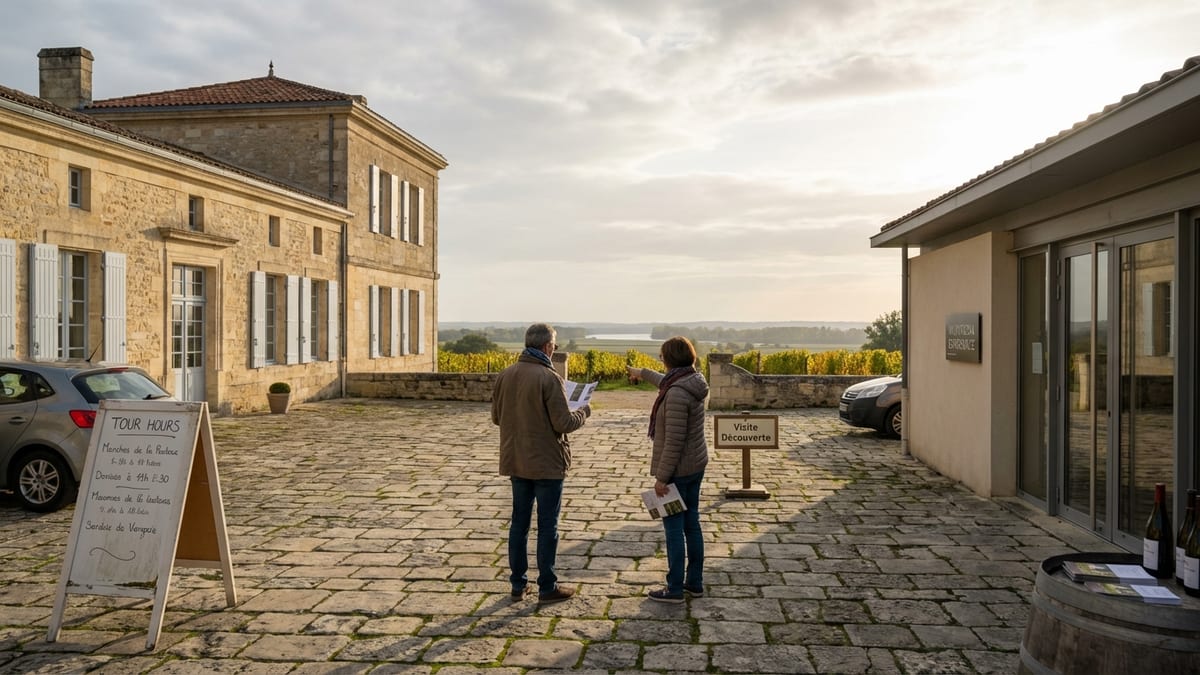
France’s inclusion in this twelve-country constellation is no surprise, but the nature of its appeal is shifting. While Bordeaux, Burgundy and Champagne remain powerful draws, recent travel coverage underlines renewed attention to secondary regions such as Bergerac, the Loire, Provence and the Southwest, where visitors find less crowded tasting rooms, countryside cycling routes and a closer link between vineyards and local food culture.
French regional tourism campaigns have increasingly framed wine not as an isolated attraction, but as part of a broader lifestyle experience that includes markets, bistros, riverside walks and heritage villages. This aligns with a wider European pattern in which wine tourism is marketed around a triad of vineyards, gastronomy and culture, rather than technical tastings alone.
France also serves as a gateway and reference point for many international travelers, particularly visitors from North America and Asia. Published trade data continue to show France among the world’s largest wine exporters by value, which reinforces the visibility of French labels abroad. When travelers later plan trips to Europe, familiarity with those labels often steers them toward French regions as an anchor, before they branch out to Italy, Spain or newer destinations such as Portugal and Greece.
Within the overall European wine tourism picture, France now functions both as a benchmark and a bridge, introducing visitors to classic châteaux experiences while being increasingly tied into cross-border itineraries that extend to the Iberian Peninsula, Central Europe and the Balkans.
Southern Europe: Iberian Icons and Mediterranean Islands
In southern Europe, Italy, Spain and Portugal remain dominant in visitor numbers, but they are increasingly promoted in tandem with Greece and coastal Croatia as part of a Mediterranean belt of wine and food destinations. Travel features commonly spotlight Portugal’s Douro Valley, Spain’s Rioja and Catalan regions, and Italy’s Tuscany and Piedmont as anchors for trips that also take in seaside towns and historic cities.
Portugal in particular has climbed rapidly in travel rankings in recent years, often recognized in European destination awards and highlighted for the way its wine tourism is integrated into urban centers. Cities such as Porto place cellars, museums and tasting rooms within walking distance of riverside hotels and traditional restaurants, encouraging short breaks that combine port lodges with contemporary dining and cultural visits.
Italy and Spain, long established in the public imagination as culinary destinations, continue to broaden their offer by linking vineyards with cycling routes, village festivals and art-focused itineraries. Travelers are as likely to organize a stay around local food markets or coastal hiking as around specific denominations, illustrating how wine is increasingly one ingredient in a wider lifestyle-led escape.
Greece and Croatia, once more niche in the international wine conversation, are gaining visibility through coverage of islands and coastal peninsulas where local varieties accompany seafood and traditional recipes. This positions them as complementary to the better-known Italian and Spanish regions, particularly for travelers seeking quieter landscapes and smaller-scale producers.
Central Europe’s Cool‑Climate Vineyards Come Into Focus
Germany, Austria, Hungary, Slovenia and Switzerland form a second cluster within the twelve highlighted countries, characterized by cooler climates, steep river valleys and alpine or pre-alpine settings. These destinations are attracting interest from travelers who associate wine holidays with scenic drives, hiking and historic towns as much as with tastings.
Tourism and wine publications frequently underscore Germany’s Mosel, Rheingau and Pfalz, Austria’s Wachau and Styria, and Hungary’s Tokaj and Balaton regions as emblematic of this style of wine travel. These areas offer terraced vineyards, castle views and compact wine villages where visitors can stay in guesthouses or small hotels, often within walking distance of cellars and traditional taverns.
Slovenia and Croatia stand out as emerging destinations within this group. Coverage of Istria, where Croatia, Slovenia and Italy meet, emphasizes how visitors can cross borders in a short drive, pairing truffle-focused cuisine and coastal towns with tastings of local white and red varieties. In Slovenia, wine hills near Maribor and the country’s eastern regions are increasingly described as under-the-radar alternatives to more crowded western European routes.
Switzerland, with its terraced vineyards overlooking lakes and mountains, rounds out the twelve-country collection as a higher-cost but visually striking option. Here, wine is frequently combined with rail journeys, lake cruises and alpine hiking, reinforcing the broader trend in which viticulture is woven into multisport and outdoor-focused itineraries rather than treated as a stand-alone activity.
From Single‑Region Trips to Pan‑European Wine Itineraries
The rise of specialized wine travel platforms has made it easier for visitors to compare experiences across borders and to book tastings, vineyard stays and food pairings in multiple countries in a single trip. These sites often list wineries in France, Italy, Spain, Portugal, Germany, Greece, Slovenia and Switzerland side by side, reflecting a consumer shift toward flexible, self-curated itineraries.
At the same time, guided tour operators and high-end hotel groups are promoting themed routes that link several of the twelve countries. Sample itineraries might begin in Portugal, continue through northern Spain, cross into southern France and finish in northern Italy, or trace a path from Austria through Hungary and Slovenia to coastal Croatia. Such journeys are marketed as ways to compare grape varieties, cellar traditions and regional cuisines within one extended holiday.
Industry analyses describing Europe as a global center of wine tourism note that the majority of participating wineries offering visitor experiences are concentrated in this band of twelve countries. The effect is to create a dense network of destinations where travelers can easily combine short-haul flights, rail connections and road trips to experience a wide range of landscapes and wine styles without leaving the continent.
For regions seeking to attract higher-spending, longer-stay visitors, wine tourism is seen as a strategic focus because it typically involves off-season travel, rural accommodations and strong links to local producers and restaurants. As France is increasingly framed within this twelve-country story, its classic châteaux routes are being reimagined as one chapter in a broader European narrative where vineyards, food and culture intersect to create enduring travel experiences.