


More news on this day
France enters the mid-2020s as a country of contrasts, pairing record-breaking visitor numbers and global sporting attention with a period of intense political fragmentation and social debate.
Get the latest news straight to your inbox!
A Major European Power with Global Reach
France remains one of Europe’s largest and most influential states, with an estimated population of around 69 million residents and the second-highest population in the European Union. The country stretches from the English Channel to the Mediterranean and from the Atlantic coast to the Alps and Pyrenees, combining dense urban regions with vast agricultural and rural areas. Its overseas departments and territories in the Caribbean, Indian Ocean and Pacific further extend French presence across multiple continents.
The country’s capital, Paris, continues to serve as a central hub for diplomacy, culture and business. Other major metropolitan areas such as Lyon, Marseille, Toulouse, Lille and Bordeaux underpin regional economic life, with strong transport connections via high-speed rail and an extensive motorway network. France’s diversified economy encompasses advanced manufacturing, agriculture, services, technology and a globally significant luxury and aerospace sector.
France is a founding member of the European Union and the euro area, a permanent member of the United Nations Security Council and a leading participant in NATO and G7 forums. Publicly available information shows that French governments in recent years have emphasized industrial competitiveness, energy transition and digital innovation, while also facing persistent debates over welfare reform, taxation and public services.
Socially, France is marked by a strong tradition of secularism, known as laïcité, and a republican model that stresses civic equality. At the same time, public discussion continues over questions of identity, immigration and regional disparities, which can influence both domestic politics and the visitor experience in major cities.
Political Fragmentation and Institutional Strain
France’s political system is a semi-presidential Fifth Republic, where executive power is shared between a directly elected president and a government led by a prime minister who must be able to secure support in the National Assembly. In normal circumstances, legislative elections align with the presidential mandate, reinforcing executive authority. Recent years, however, have brought a more divided parliamentary landscape.
Published coverage of the 2024 legislative elections indicates that no single bloc secured an outright majority in the 577-seat National Assembly, leaving the lower house sharply fragmented between centrist, left-wing and far-right forces. This has complicated the process of forming durable governing coalitions, raising the prospect of frequent confidence votes and limiting the scope for sweeping reforms. Analysts describe the resulting configuration as an unprecedented test for the institutions of the Fifth Republic.
The broader context includes prolonged social mobilisations over pension reform and cost of living pressures. Demonstrations and strikes have periodically disrupted public transport and services, particularly in major cities. While such actions are typically announced in advance and tend to be time-limited, they underline how economic and social policy remain highly contested in public life.
For travellers and external observers, the political situation translates into a degree of uncertainty over economic and regulatory policy, rather than day-to-day instability. Routine security measures remain in place at transport hubs and major attractions, reflecting a longstanding emphasis on counterterrorism and public safety, but international connectivity and core tourism infrastructure continue to function at scale.
Tourism Powerhouse Reinforced by Paris 2024
France retains its status as the world’s most-visited country, with recent government data and tourism studies indicating that the country welcomed around 100 million international visitors in 2024. Receipts from foreign tourism have risen in the wake of the pandemic recovery, reinforcing travel as a key pillar of the national economy alongside manufacturing and services.
The Paris 2024 Olympic and Paralympic Games provided a high-profile showcase for the country’s transport system, sports venues and cultural heritage. Official assessments and independent analyses suggest that the Games delivered a surge in visitor numbers to the capital region during the competition period, even if patterns varied between central Paris and other French destinations. Early economic evaluations point to several billion euros in long-term benefits linked to infrastructure upgrades, international exposure and business investment tied to the event.
Beyond the Olympics, France’s tourism appeal remains anchored in its diversity. Paris offers world-renowned museums and monuments, while regions such as Provence, the Côte d’Azur, Brittany, Normandy, the Loire Valley and the Alps attract visitors for landscapes, gastronomy and outdoor activities. Domestic and European travellers continue to account for a significant share of overall stays, but long-haul markets from North America and Asia have also rebounded strongly according to recent statistical releases.
Industry reports highlight ongoing efforts to spread visitor flows beyond peak months and iconic hotspots. Initiatives promoting lesser-known towns, wine routes and rural experiences aim to manage pressure on major sites and encourage more sustainable forms of travel. At the same time, debates continue over short-term rentals, housing costs and environmental impacts, particularly in historic city centres and fragile coastal areas.
Economic Profile and Structural Challenges
France stands among the world’s largest economies, with a high level of per capita income and a comprehensive social protection system. Publicly accessible data from international organisations show that services account for the majority of economic output, followed by industry and agriculture. French producers hold strong positions in sectors such as aerospace, rail, nuclear energy, luxury goods, agri-food and tourism-related services.
Successive governments have promoted reforms to encourage investment, support innovation and reduce unemployment, while trying to maintain core elements of the welfare state. Policies addressing labour market flexibility, pension sustainability and public spending have often triggered vigorous public debate and protest, reflecting the central role of social protections in the French model.
Structural challenges include moderate economic growth, regional inequalities and the need to accelerate the transition to low-carbon energy. France benefits from an existing nuclear-heavy electricity mix that limits power-sector emissions, but transport and housing remain significant sources of greenhouse gases. Urban regions are expanding programmes for public transit, cycling infrastructure and building renovation to meet national and European climate objectives.
For investors and travel-related businesses, the country offers extensive infrastructure, a large consumer market and access to the wider European Union. However, the current political fragmentation and budgetary constraints may influence the pace of regulatory change and public investment, particularly in areas such as transport upgrades, digital connectivity and green technologies.
Travel Practicalities and Outlook for Visitors
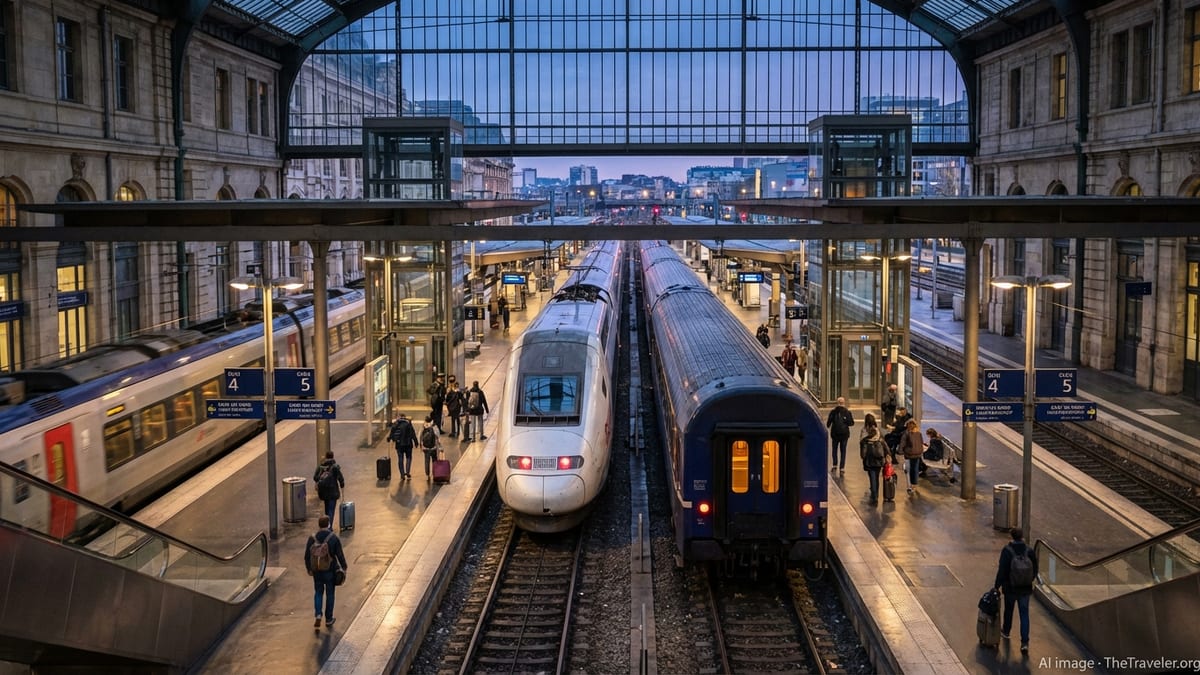
France’s transport network is built around Paris, with major international airports, high-speed rail links and motorways connecting the capital to regional cities and neighbouring countries. The TGV network reduces travel times between key destinations, enabling visitors to combine urban stays with rural or coastal trips within a single itinerary. Regional airports and long-distance trains also support direct links to other European hubs.
Entry requirements for France follow European Union and Schengen rules for most foreign nationals, with ongoing adjustments to digital entry systems and border controls. Travellers are advised, via official advisories in their home countries, to monitor any changes in documentation, biometric requirements or health regulations before departure. Within France, routine security screening at museums, stadiums and major events remains part of the travel landscape.
Recent tourism statistics and industry commentary suggest that demand for trips to France remains robust, supported by cultural events, wine and food tourism, business travel and educational exchanges. The legacy of the Paris 2024 Games is expected to keep global attention on the country’s cultural offer and sporting infrastructure, although some regions continue to manage the side effects of high visitor volumes.
Looking ahead, the main factors shaping France’s appeal as a destination include the evolution of its political landscape, the resilience of its economy in a more uncertain global environment and the country’s capacity to reconcile large-scale tourism with environmental and social concerns. For now, the combination of iconic heritage, regional diversity and extensive connections keeps France at the forefront of world travel planning.