


More news on this day
Germany enters the second half of the decade balancing modest economic growth, shifting political dynamics and a robust tourism rebound, as Europe’s largest economy adapts to new global and domestic pressures.
Get the latest news straight to your inbox!
Geography, population and role in Europe
Germany sits in the heart of Europe, bordered by nine countries and linking Northern and Central Europe through a dense network of rail, road and river corridors. Its varied landscapes span the North and Baltic Sea coasts, lowland plains, central uplands and the Bavarian Alps, creating a mix of major cities and nature destinations that remain central to its appeal for both residents and visitors.
With a population estimated at around 83.5 million in 2026, Germany is the most populous member of the European Union and one of its key decision makers. Publicly available European Union data describe it as a parliamentary federal republic with strong regional governments and a central role in EU policy making, from climate and energy to fiscal rules.
German is the official language, although English is widely spoken in larger cities and tourism hubs. Demographic data indicate a society that is both aging and increasingly diverse, with Christianity no longer a majority when counted against growing numbers who report no religious affiliation. These shifts underpin current debates about labor shortages, social cohesion and long term competitiveness.
Germany’s position inside the Schengen area means that for many international visitors, particularly from other European countries, cross border travel is relatively seamless once entry requirements are met. This integration helps sustain high levels of business travel and short city breaks, which combine with longer leisure stays in regions such as Bavaria, the Black Forest and the North Sea coast.
Political landscape and federal structure
Germany is a federal parliamentary democracy, with power shared between the national government in Berlin and 16 federal states, known as Länder. Each state has its own parliament and government, with significant authority over education, policing and some economic policies, which results in regional variation that visitors can experience in everything from school holidays to public transport offers.
At the national level, the Bundestag is the main legislative body, elected at regular federal elections and complemented by the Bundesrat, which represents the states. The current federal government, led by Chancellor Friedrich Merz, took office in May 2025 following the Bundestag election held in September 2025, marking a shift from the previous coalition that had governed since 2021.
Recent political discussion has focused on managing economic headwinds, funding the green transition and addressing concerns about migration and internal security. Polling and commentary highlight a fragmented party landscape, with support spread across several parties and heightened scrutiny on democratic resilience in the face of rising populist actors. These dynamics influence policy on everything from energy prices to rail investment, which in turn shapes the travel environment.
State elections continue through 2026, testing support for the national government and sometimes producing mixed political maps across the country. For travelers, the federal structure can mean variations in local public holidays, regulations and tourism marketing priorities, especially in city states such as Berlin and Hamburg compared with more rural Länder like Mecklenburg Western Pomerania or Saxony Anhalt.
Economic outlook and key sectors
Germany remains one of the world’s largest economies, heavily oriented toward manufacturing, exports and advanced services. Official projections in the 2026 federal economic report point to modest real gross domestic product growth of around 0.2 percent in 2025 and about 1 percent expected in 2026, after a period of stagnation linked to weak global demand, high energy prices and industrial adjustment.
Automotive, machinery, chemicals and electrical engineering continue to dominate Germany’s export profile, but policy efforts are pushing investment into digital infrastructure, semiconductors, green technologies and energy transition projects. Government and international assessments describe a mixed outlook, with strong balance sheets and low unemployment but persistent pressure on productivity and investment.
Inflation has eased from its post pandemic peaks, with recent figures indicating consumer price growth in the low single digits. Wage agreements and energy subsidies have helped stabilize household consumption, though surveys suggest that many consumers remain cautious. For visitors, this environment translates into relatively predictable price levels by Western European standards, but with noticeable differences between major cities such as Munich or Frankfurt and smaller towns.
Publicly available analyses of the labor market show stable employment and unemployment rates among the lowest in the European Union, albeit with shortages in sectors such as health care, construction, hospitality and engineering. These shortages can occasionally affect service levels in tourism heavy regions but also support continued demand for skilled migrants and international students.
Tourism rebound and travel patterns
Germany’s tourism sector has staged a strong recovery from the pandemic period, with national statistics showing record overnight stays in 2024 and further gains into 2025. Domestic travel remains a major driver, as residents continue to favor trips within Germany, while inbound tourism from Europe, North America and Asia is rebuilding, supported by expanded air connections and intensive destination marketing.
Recent analysis from tourism bodies points to city breaks in Berlin, Munich, Hamburg and Cologne as key demand engines, alongside classic scenic regions such as the Rhine and Moselle valleys, the Baltic Sea islands and the Alpine foothills. Cultural events, Christmas markets and major trade fairs in cities like Frankfurt and Hanover continue to attract international visitors, particularly business travelers who often extend stays for leisure.
Policy discussions around tourism emphasize sustainability, digitalization and spreading visitor flows beyond the most popular hotspots. Initiatives include promoting rail based itineraries, encouraging visits to lesser known regions and benchmarking accommodation and attractions against environmental standards. For urban destinations, managing short term rentals and preserving neighborhood character remain central themes.
Available visitor surveys suggest that safety perceptions and public transport convenience are significant strengths for Germany as a destination, although some travelers report concerns about price increases and capacity constraints on popular routes during peak seasons. The continued rollout of digital ticketing and information platforms aims to streamline navigation for international guests.
Infrastructure, transport and practical considerations
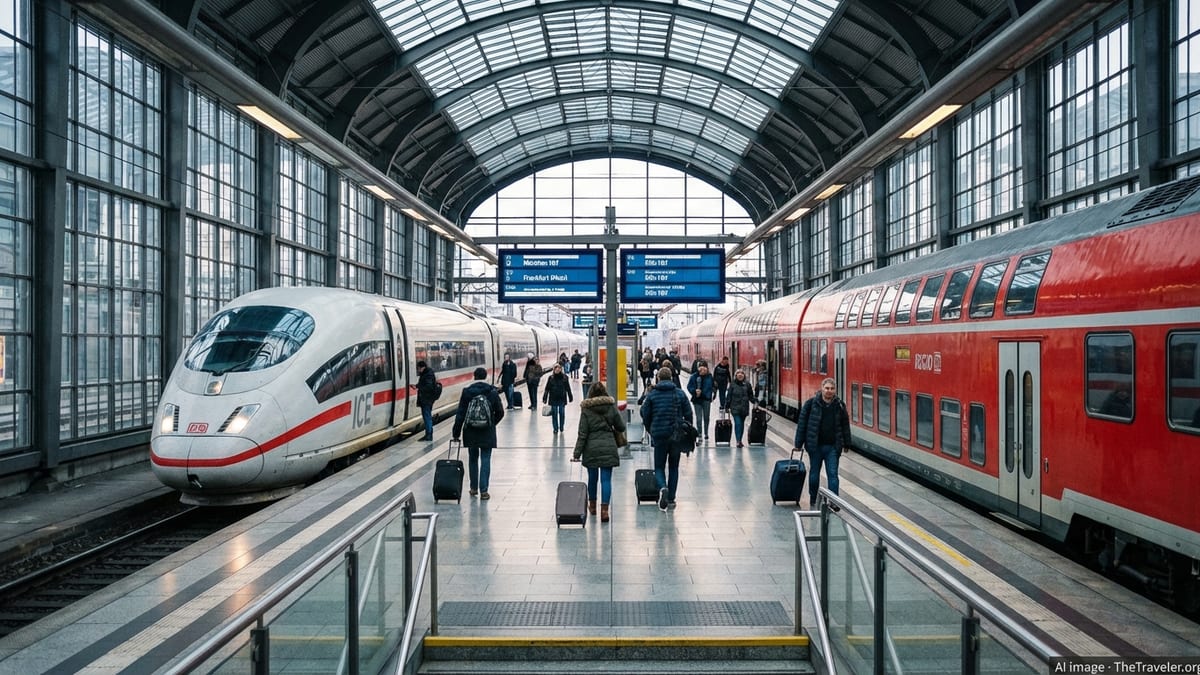
Germany’s transport network is among Europe’s most extensive, combining high speed intercity rail, regional trains, urban transit systems and the well known Autobahn motorway network. Despite criticism over punctuality issues in recent years, long distance rail remains a backbone for both domestic and international travel, linking major cities with frequent connections and increasingly integrated cross border services.
Since 2023, a nationwide monthly public transport ticket has provided flat rate access to most local and regional services, and by 2026 it continues to shape mobility behavior and tourism planning. While details of pricing and coverage differ by region and over time, the pass encourages rail based exploration of smaller cities and rural areas that were previously more reliant on cars.
For air travelers, major international gateways include Frankfurt, Munich, Düsseldorf and Berlin, supported by a network of regional airports. Many long haul routes connect Germany directly with North America, Asia and the Middle East, while low cost carriers and rail air partnerships expand options for multi city itineraries. Climate policy debates are increasingly influencing discussions around short haul flights and potential shifts to rail.
Travelers are advised to pay attention to regional differences in school holidays and public holidays, which can affect crowding and pricing, particularly in coastal and alpine areas. Publicly available guidance from federal and state authorities also highlights Germany’s continued focus on energy efficiency and climate adaptation measures, which may periodically influence building standards, city planning and infrastructure works visible to visitors.