


More news on this day
France is examining the introduction of a new levy on high-speed rail services to help safeguard socially important TGV routes, as rising infrastructure costs, looming competition and climate targets intensify pressure on the country’s flagship trains.
Get the latest news straight to your inbox!
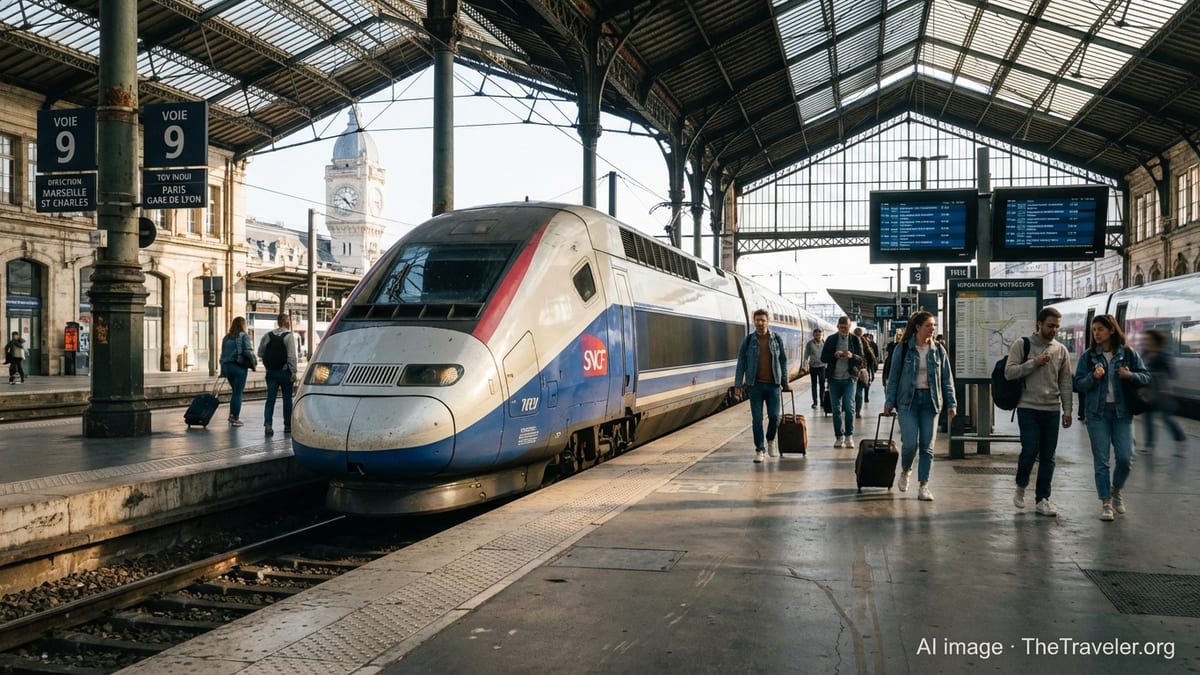
A new funding tool for an aging but essential TGV network
According to recent French transport policy discussions and published media coverage, the proposed levy would apply to high-speed rail operations using the national high-speed network, with revenue earmarked to support TGV services deemed socially desirable but not commercially self-sustaining. These include routes serving intermediate cities and off-peak connections that play a significant role in territorial cohesion but tend to generate thinner profit margins.
Publicly available information indicates that the initiative is being framed as a way to rebalance how the benefits and costs of France’s high-speed system are shared. The TGV has become a backbone of national mobility since the 1980s, reducing journey times between Paris and major regional centers and offering a lower-carbon alternative to domestic air travel. Yet infrastructure charges, energy prices and the need to renew rolling stock have increased significantly, creating financial strains.
The levy would sit alongside existing track access charges paid by operators to the national infrastructure manager. Supporters argue that a targeted contribution from profitable high-density routes could sustain services on lines where tickets alone do not cover full economic costs but where rail remains crucial for regional development and environmental policy.
Balancing market opening with public service goals
The idea of a high-speed levy is emerging as France’s rail market continues to open to competition under European Union rules. New and potential entrants, including foreign state-backed operators and private open-access companies, are focusing on dense corridors linking Paris with major cities such as Lyon, Bordeaux or Lille. These routes typically offer strong demand and yield management opportunities, making them more attractive than thinner markets.
Analysts of the French rail sector have long noted that a purely commercial approach risks concentrating investment and services on the most profitable axes while leaving smaller cities and less-trafficked regions dependent on slower, less frequent trains. The proposed levy is therefore being presented as one tool to ensure that liberalisation does not undermine broader public service objectives that have historically shaped the TGV network.
Public debate in France often highlights concern that high-speed services must serve more than just the busiest city pairs. Some regional authorities have pressed for better integration between TGV lines and conventional networks, arguing that high-speed access can be a powerful lever for tourism, business travel and population retention in medium-sized urban areas. A dedicated funding stream could offer reassurance that these interests will not be sidelined as competition intensifies.
Environmental and fiscal pressures driving the debate
The discussion around a high-speed levy is unfolding against a wider backdrop of climate policy and public finance constraints. France has committed to cutting transport emissions and has already introduced restrictions on certain short-haul domestic flights where a rail alternative of under two and a half hours exists. High-speed rail is central to these plans, but maintaining and expanding the network requires sustained investment.
Recent studies of high-speed rail in France emphasise that while TGV services can significantly reduce emissions compared with aviation, the infrastructure itself is capital intensive to build and maintain. Civil engineering structures, track systems and power supply equipment all carry substantial lifecycle costs. In a context of tight state budgets, policymakers are looking for mechanisms that can generate stable funding without overburdening taxpayers.
A targeted levy on high-speed operations is being considered as one way to align fiscal and environmental goals. By asking profitable high-speed services to contribute more, proponents argue that it becomes easier to maintain frequencies on routes that divert passengers from road and air, even if those lines are less lucrative in pure financial terms.
Implications for passengers and operators
Publicly available reporting suggests that any levy would need to be carefully calibrated to avoid undermining the competitiveness of high-speed rail compared with budget airlines and long-distance coaches. Ticket prices on popular TGV routes are already a recurring topic of public debate in France, and both national and regional authorities are sensitive to the risk of pushing fares higher at a time when households face broader cost of living pressures.
For incumbent and prospective operators, the details of the levy’s design will be critical. Questions include whether the charge would be flat or graduated by distance, capacity or profitability, and how it would interact with existing track access fees. Companies planning to launch new open-access services will be examining whether the measure could affect business models that rely on high seat density and aggressive yield management on a small number of corridors.
Consumer groups and transport specialists are expected to scrutinise how much of any additional cost might be passed on to passengers and whether safeguards will be put in place to protect advance-purchase and discounted fares. The way revenue is earmarked and reported will also influence public acceptance, with some observers calling for transparent criteria to determine which routes qualify as socially desirable and how much support they receive.
Next steps in France’s evolving rail policy
The potential high-speed levy forms part of a broader rethinking of how France finances and governs its rail system. Authorities are working on long-term investment plans for both high-speed and conventional lines, including projects aimed at improving regional services and enhancing connections between major cities beyond Paris. The debate over the levy could shape decisions on which routes are prioritised for future upgrades.
Observers note that France’s decisions may resonate beyond its borders, as other European countries confront similar questions about how to sustain extensive rail networks under competitive market conditions while meeting climate objectives. The TGV, long seen as a symbol of national technological ambition, is again at the center of discussions about the role of the state, the responsibilities of operators and the expectations of travellers.
As proposals are refined in the coming months, stakeholders across the travel industry will be watching closely. For now, the high-speed levy under consideration highlights the complex balance between profitability, public service and environmental responsibility that defines modern rail policy in France.