


More news on this day
France has moved to strengthen air passenger protections in step with Germany and Spain just as airlines, through the International Air Transport Association (IATA), warn that Europe’s new generation of compensation rules could unintentionally deepen travel chaos, push carriers to cancel more flights preemptively and strain operations at major hubs this summer and beyond.
Get the latest news straight to your inbox!
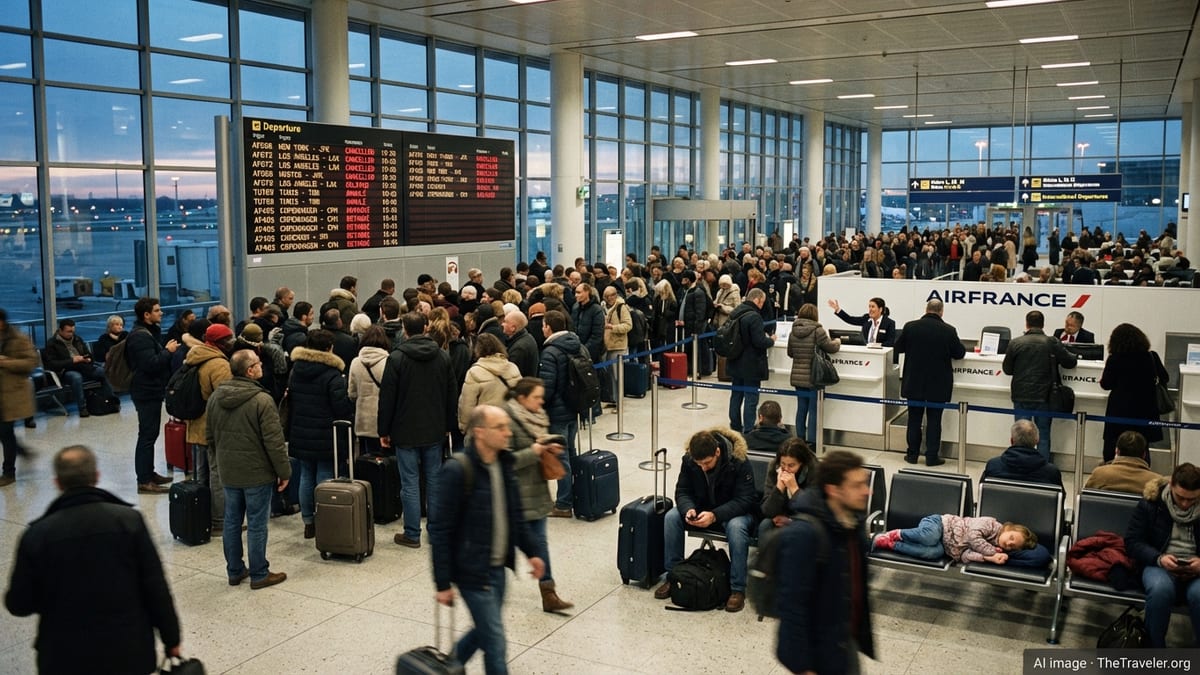
A New Wave of Passenger Protections in Europe
Across the European Union, lawmakers are finalizing an overhaul of air passenger rights that builds on the long-standing EU261 framework. Recent negotiations in Brussels have focused on clarifying compensation thresholds, standardizing cabin baggage rules and extending time limits for passengers to claim redress after delays and cancellations. Published coverage of the talks indicates that member states agreed in mid June 2026 on a political deal that keeps strong protections in place while updating procedures and definitions intended to make enforcement more consistent across the bloc.
France is aligning itself closely with this emerging standard. Government portals dedicated to passenger rights highlight the continued application of EU261 for flights departing from French airports, including compensation for cancellations, long delays and denied boarding, as well as assistance such as meals, hotel stays and rerouting when disruptions occur. Recent French guidance also reminds travelers of their rights under the Montreal Convention in cases of injury and baggage issues, reinforcing a multilayered protection regime that applies on domestic, intra-EU and many long haul routes.
Germany and Spain, home to some of Europe’s busiest hubs, are moving in the same direction. Industry commentary notes that large network carriers based in Frankfurt, Munich, Madrid and Barcelona will be subject to similar compensation rules, particularly on short and medium haul flights within Europe. With France now clearly in step with these major markets, airlines face an increasingly harmonized but demanding regulatory environment across the core of Western Europe’s aviation network.
Advocates for travelers argue that the reforms are long overdue, pointing to years of disputes over when compensation is owed and how quickly refunds must be processed. Consumer groups say clearer obligations could reduce the need for legal action by passengers and encourage airlines to resolve claims more quickly, especially during peak travel periods when thousands of customers can be affected by a single disruption.
IATA Warns of Perverse Incentives and Rising Cancellations
Airlines, represented at European level by associations including the International Air Transport Association, have reacted with growing alarm. In a media briefing around its 2026 annual meeting, IATA singled out passenger rights as a major concern, arguing that some of the proposed thresholds and obligations do not reflect the operational realities of running a flight network. The group contends that when compensation rules are tightly linked to delay durations, carriers can face strong financial incentives to cancel flights rather than operate them with significant lateness.
IATA and allied airline groups say that this logic is already visible under the current EU261 regime. Industry analyses cited by these organizations suggest that, in some cases, a cancellation followed by rerouting can be less costly than carrying out a long delayed departure that would trigger automatic cash compensation for every passenger on board. As regulators in France, Germany, Spain and other member states move to reinforce passenger entitlements, airlines warn that the risk of such so called perverse incentives will increase.
In its latest European briefing, IATA emphasized that stronger compensation should not come at the expense of schedule reliability. The association argues that heavy financial penalties tied to delays can prompt airlines to thin out marginal routes, reduce spare capacity and cancel flights earlier in a disruption cycle, potentially leading to longer travel times and more complex rebookings for passengers. Network carriers, which rely on tight connections through hubs such as Paris Charles de Gaulle, Frankfurt and Madrid Barajas, are seen as especially exposed.
Publicly available analysis from airline trade bodies also points to the cost impact on fares. With inflation and fuel prices already pressuring balance sheets, carriers hint that they may need to pass part of the additional regulatory burden on to consumers. That could mean higher average ticket prices on routes touching France, Germany and Spain, particularly at peak times when rebooking alternatives are limited and compensation liabilities can mount quickly.
Major Hubs Brace for Summer Strain
The warning from airlines comes at a sensitive moment for Europe’s big hubs. In parallel with the passenger rights overhaul, the European Union is rolling out its new Entry/Exit System for non EU nationals, a biometric border scheme that has already prompted concerns about bottlenecks. Earlier this year, French airport operators and travel organizations publicly called for flexibility in the deployment of the system after initial phases produced long queues at passport control in several countries.
Reports from European media describe fears of congestion at border checkpoints at Paris, Frankfurt, Munich, Madrid and Barcelona as EES infrastructure scales up. Industry groups have highlighted what they describe as chronic understaffing at border agencies and unresolved technology issues that could slow screening times. Airlines argue that if longer border processing is combined with stricter compensation rules for delays and missed connections, the risk of cascading disruption across the network will grow.
French government information on air travel rights stresses that in the event of long delays or cancellations, passengers departing from or arriving in France on EU carriers are entitled to care and assistance, including accommodation when necessary. While these safeguards are designed to protect travelers caught in disruption, airport and airline planners warn that providing such support at scale during a major operational event, such as storms or air traffic control outages, can stretch resources and complicate recovery.
Travel demand heading into the 2026 peak season is expected to remain robust, with leisure and family visits driving high load factors on intra European and long haul flights. Capacity constraints at key airports, from limited runway slots to terminal expansion works, leave limited slack in the system. Under these conditions, any shock, whether from weather, strikes or technical problems at border control, can quickly propagate, turning isolated incidents into broader episodes of travel chaos.
What the New Rules Mean for Passengers
For travelers using France, Germany and Spain as departure points or transit hubs, the strengthened rights regime offers both reassurance and new complexities. On the positive side, passengers facing cancellations or substantial delays retain access to fixed compensation bands tied to flight distance, along with the choice between a refund and rerouting. Clearer guidance at national level in France and other countries explains how to file claims, what documentation to keep and the time limits for seeking redress.
The reforms being finalized in Brussels also aim to clarify grey areas that have led to disputes, such as what constitutes an extraordinary circumstance that can exempt airlines from paying compensation. Legal and consumer guidance in France increasingly references recent court decisions and European Commission interpretations that narrow the scope of such exemptions, making it harder for carriers to deny payments when disruptions are linked to factors within their control.
At the same time, passenger advocates caution that stronger rights on paper do not guarantee smooth journeys. If airlines respond to higher potential payouts by canceling flights more aggressively during periods of strain, travelers could face more frequent last minute schedule changes, especially on smaller or less profitable routes. Rebookings might involve longer layovers at large hubs or overnight stops when seats on alternative flights are scarce.
Experts following the debate suggest that savvy travelers should pay close attention to connection times and routing choices in the months ahead. Flights with tight transfers at major European hubs could be particularly vulnerable when weather or air traffic control issues arise. Booking slightly longer connections, traveling with carry on luggage where possible and monitoring airline notifications closely may offer a degree of protection, even as formal rights to compensation and assistance expand.
Balancing Consumer Protection and Network Resilience
The clash between policymakers and airlines over Europe’s new passenger rights framework ultimately reflects a broader question about how to balance consumer protection with the operational resilience of a highly interconnected aviation system. France’s decision to align itself closely with Germany, Spain and other member states in reinforcing EU261 style protections signals a political choice to prioritize passengers after years of high profile disruption episodes.
Industry groups argue that a more flexible approach, with clearer distinctions between avoidable and unavoidable disruptions and greater emphasis on insurance or mutual funds, would better support investment in capacity and reliability. They point to experiences in other jurisdictions, such as North America and parts of Latin America, where compensation regimes differ and cancellations follow different patterns. For now, however, Europe appears set on a path that keeps direct financial responsibility for disruption largely on the shoulders of airlines.
For travelers, the immediate effect is a rights landscape that is stronger and more uniform across key markets, but also one that may contribute to changing airline behavior. As the summer 2026 peak approaches, passengers moving through France, Germany and Spain will be at the center of a live test of whether tougher compensation rules can coexist with stable operations at some of the world’s busiest airports.
How that test unfolds will shape the next phase of the debate. If the new regime coincides with smoother handling of inevitable disruptions and timely payouts when things go wrong, pressure for further change may ease. If, instead, Europe’s hubs experience repeated waves of cancellations and long queues, calls from airlines and some governments to rethink the balance between passenger rights and network efficiency are likely to intensify.