


More news on this day
Air travel across the United States faced another day of disruption on June 17, with a cluster of delays and a smaller number of flight withdrawals reported at major hubs including Chicago, Atlanta, Miami, Philadelphia and Toronto Pearson, affecting operations at SkyWest, Delta Air Lines, Air Canada, United Airlines and American Airlines.
Get the latest news straight to your inbox!
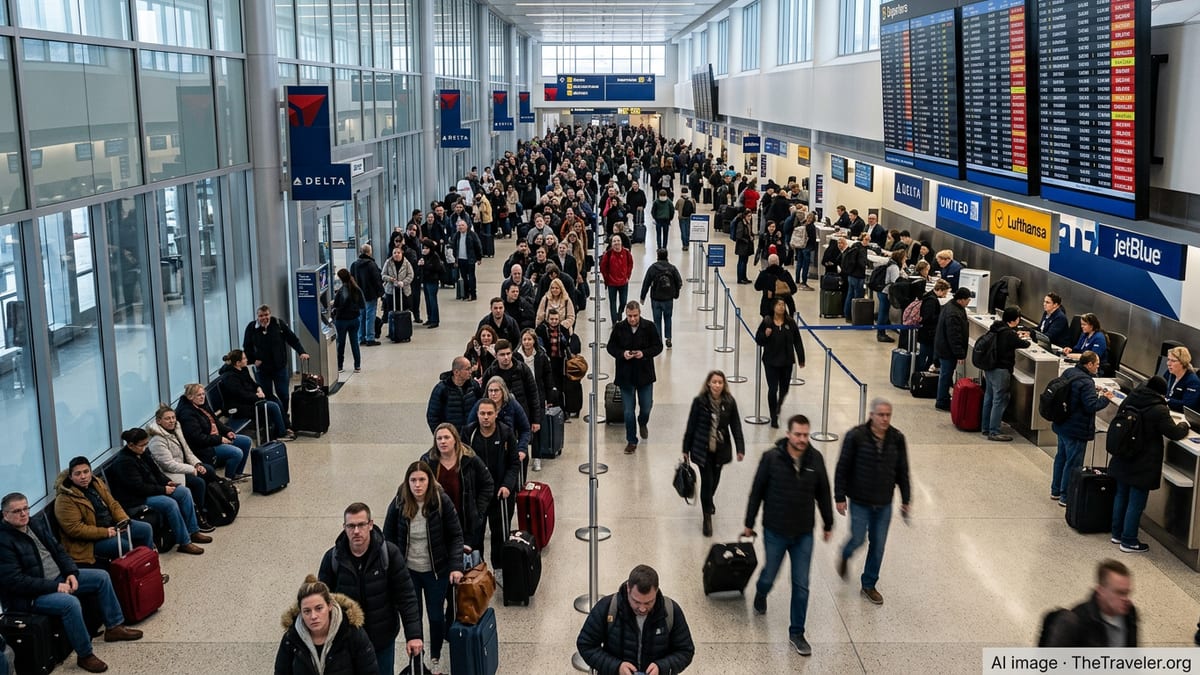
Major Hubs See Concentrated Delays and Limited Cancellations
Tracking data for June 17 shows more than 500 delays and a few dozen cancellations spread across the Chicago, Atlanta, Miami, Philadelphia and Toronto Pearson hub network, creating significant pressure on the late-morning and afternoon departure banks. The numbers point to a system under strain rather than a wholesale shutdown, with most flights still operating but many running behind schedule.
Publicly available airport dashboards and third-party trackers indicate that Chicago O’Hare and Atlanta Hartsfield-Jackson once again feature prominently among airports with elevated delay totals, a pattern that has emerged repeatedly during the current busy summer travel period. Miami and Philadelphia, important connecting points for American Airlines, and Toronto Pearson, a primary hub for Air Canada with substantial United and Delta activity, also showed elevated disruption levels.
Despite references to 24 withdrawn flights and 526 delays, the precise distribution of cancellations across the five airports is not uniform. Data reviewed on June 17 indicates that the majority of affected flights experienced schedule slippage rather than outright cancellation, underscoring how capacity constraints can ripple through the network without necessarily triggering mass flight removals.
The picture for passengers has nonetheless been challenging. Even modest pockets of cancellations at major hubs can strand travelers when seats on later flights are already heavily booked during peak summer weeks, and long delay totals can convert what would have been standard connections into missed onward departures.
Regional and Network Carriers Feel the Strain
The disruption has been particularly visible at the airlines most active at these hubs. Network carriers Delta Air Lines, United Airlines and American Airlines, together with regional operator SkyWest and Air Canada to and from Toronto Pearson, have all seen a share of delayed departures and arrivals tied to the June 17 irregular operations.
SkyWest, which operates flights on behalf of several major U.S. airlines, is especially exposed when congestion builds at multiple hubs simultaneously. Government consumer reports on earlier months show that SkyWest already contends with elevated tarmac and on-time performance pressure compared with some larger network carriers, meaning that fresh bouts of congestion can quickly translate into longer gate and taxi waits for regional passengers.
Delta’s operation, anchored at Atlanta and with an important presence in both Chicago and Miami, has recently navigated several high-profile disruption days during the late spring and early summer travel period. Independent passenger-rights analyses for Memorial Day weekend, for example, documented hundreds of delayed Delta flights systemwide, with Atlanta at the core of that pattern. The current round of delays appears more geographically dispersed but still highlights how sensitive large hub-and-spoke systems are to even modest weather or traffic constraints.
United Airlines, with its major hub at Chicago O’Hare and strong schedule into Toronto Pearson and Philadelphia, and American Airlines, which leans heavily on Miami and Philadelphia as connecting points, are likewise seeing schedules bunch and shift as aircraft cycle late into and out of the affected airports. Air Canada’s Pearson-based network, including cross-border services to U.S. hubs like Chicago and Atlanta, is also exposed when those partners’ hubs encounter day-of-operations challenges.
Weather, Congestion and Summer Demand Combine
While the exact mix of causes varies by flight, publicly accessible aviation data and recent regulatory reporting point to a familiar combination of ingredients: localized thunderstorms, air traffic control flow restrictions at busy hubs, and persistent high demand that leaves little slack in airline schedules.
Earlier federal Air Travel Consumer Reports offer context for the June 17 pattern by showing how weather-related and volume-related delays have risen as airlines have rebuilt capacity. Those data indicate that airlines such as Delta, United, American and SkyWest have all recorded notable shares of late arrivals and occasional extended tarmac delays in recent seasons, often clustered at major connecting points like Chicago, Atlanta and key East Coast airports.
Travel-industry analysts note that when storms brush a hub airport at the wrong time of day, the resulting sequence of ground stops, reroutes and missed departure windows can reverberate for hours. By the time skies clear, aircraft and crews are often out of position, turning what might have been a one- or two-hour weather event into a daylong operational challenge. On June 17, the distribution of delays across morning and afternoon banks suggests that recovery has been incremental rather than immediate.
Toronto Pearson’s role as both an international gateway and a North American connecting point adds additional complexity. Flights linking Pearson with U.S. hubs such as Chicago and Atlanta rely on tightly coordinated schedules across multiple carriers and regulatory regimes. When U.S. hubs reduce arrival or departure rates because of weather or congestion, those restrictions often cascade into the cross-border schedule, leaving Pearson with banks of delayed arrivals and departures.
Knock-On Effects for Passengers Across the Network
The operational story translates into a familiar set of headaches for travelers. Delays in Chicago, Atlanta or Miami often lead to missed connections in Philadelphia or Toronto, while passengers originating in Canada may find themselves stuck at a U.S. hub overnight if their first flight into the system runs late. Even when overall cancellation counts remain relatively low, heavy delay totals can significantly disrupt trip plans.
Passenger-rights organizations stress that travelers facing long delays or cancellations should review airline policies and applicable national regulations to understand what support may be available. Recent consumer guidance linked to earlier disruption days has highlighted options such as rebooking on later flights, refunds when services are not provided, food vouchers during extended waits and, in some cases, hotel accommodation when irregular operations stretch into the night.
Given the multi-carrier nature of the current disruption, passengers on regional affiliates such as SkyWest-operated services may also need to pay attention to which airline is responsible for handling assistance. In most cases, the airline that sold the ticket provides customer service and any compensation or goodwill gestures, even if another carrier’s aircraft and crew operate the flight.
With the busy summer period still gathering pace, the June 17 pattern serves as another indication that the North American air travel system is operating close to its limits on peak days. Travelers using Chicago, Atlanta, Miami, Philadelphia and Toronto Pearson over the coming weeks are likely to benefit from monitoring flight status closely, building extra time into connections and preparing for the possibility that even minor schedule changes at one hub can create outsized knock-on effects across the network.