


More news on this day
Social media posts and speculative commentary are circulating claims that Australia has joined the United States, United Kingdom, Canada, New Zealand, Japan and South Korea in issuing urgent “do not travel” red alerts for 15 European countries, allegedly triggering a mass exodus from Paris, Berlin and Rome. A review of publicly available government advisories and reputable news coverage indicates no evidence of such a coordinated, continent‑wide warning or large‑scale evacuation of major European capitals.
Get the latest news straight to your inbox!
Official Travel Advisories Do Not Match Viral Claims
Publicly accessible travel advisory portals from Australia, the United States, the United Kingdom, Canada, New Zealand, Japan and South Korea continue to describe much of Europe at lower alert levels, typically advising travelers to exercise normal precautions, increased caution or a high degree of caution depending on local security and crime conditions. These systems reserve their highest “do not travel” categories for locations affected by active conflict, state collapse or severe and targeted security threats, rather than for the Schengen area as a whole.
Recent policy updates from several governments focus primarily on regions such as the Middle East and parts of Africa and Asia, where armed clashes, missile strikes or political instability have disrupted airspace and infrastructure. Publicly available information on Australian and North American advisory sites, for example, highlights conflict‑affected states and specific provinces but does not elevate France, Germany, Italy or a block of 15 European countries to blanket “do not travel” status.
Cross‑referencing multiple advisory platforms and independent travel‑risk summaries further undercuts the notion of a synchronized Level 4 or equivalent warning across major Western capitals. While some European cities have periodic cautions related to terrorism, protests, petty crime or crowd safety, those notices fall well short of an instruction to avoid all travel, and are typically framed as guidance for vigilance rather than a prohibition on visiting.
In addition, media monitoring across established outlets such as Reuters, the Associated Press and other international desks shows no corroborated reporting of emergency evacuations from Paris, Berlin or Rome triggered by new joint directives from these seven governments. Coverage of recent geopolitical developments instead concentrates on ceasefire talks, regional military escalations and localized security incidents outside the core European Union tourist circuit.
How Travel Warning Systems Actually Work
Travel advisory systems in countries like Australia, the United States, Canada, Japan and South Korea are structured around multi‑tier scales that are updated as conditions change. These frameworks generally distinguish between advice such as “exercise normal security precautions,” “exercise a high degree of caution,” “reconsider your need to travel” and the highest “do not travel” category, which is applied relatively sparingly.
In practice, reaching the top tier usually requires persistent or extreme risks, including open warfare, systemic kidnapping, widespread terrorism targeting foreigners, government collapse or a complete absence of functioning emergency services. Even in crisis situations, some states apply that rating to specific regions within a country while leaving other areas at lower levels, recognizing that risk is often highly localized.
By contrast, Europe’s major tourism hubs are still depicted within these systems as comparatively stable environments, albeit with the usual urban concerns around crowded transport hubs, demonstrations and opportunistic crime. Some advisory pages note that protests in European capitals can flare with little warning and occasionally turn confrontational, and they recommend monitoring local news and avoiding large gatherings if tensions rise. Such language reflects routine risk management rather than evidence of sudden geopolitical breakdown.
Experts in risk and insurance who contribute to publicly available analytical briefs emphasize that travelers should pay closer attention to the specific wording of advisories instead of headlines or social media summaries. They point out that incremental updates, such as adding information about demonstrations or raising a city from “normal precautions” to “increased caution,” can be misrepresented online as a leap to “do not travel,” even when the underlying text does not support that interpretation.
Geopolitical Tensions Versus Verified ‘Flashpoints’
The rumor of synchronized red alerts references “sudden geopolitical flashpoints” in Europe but does not clearly identify a triggering incident. Recent European security discussions have centered on issues such as defense spending, cyber activity, disinformation campaigns and the spillover effects of nearby conflicts, yet these concerns have not translated into formal government instructions to halt all tourist and business travel across most of the continent.
Published situation reports and think‑tank briefings describe a more nuanced reality: elevated alert postures around key events, heightened monitoring of critical infrastructure and intelligence cooperation between allies, but continued operation of airports, rail systems and hotels in major European cities. Where security services have raised national threat levels, the emphasis has been on visible policing, crowd management and protection of symbolic sites, rather than closures or mass departures.
Isolated security scares, including occasional evacuations of transport terminals or cordons around incident scenes, regularly attract attention online and may contribute to a generalized impression of instability. However, these episodes are typically resolved within hours and are part of the background risk that has accompanied international travel for years. Government advisories, which synthesize longer‑term trends rather than moment‑to‑moment headlines, have not been revised to depict Europe as uniformly unsafe.
Observers also note that the phrase “geopolitical flashpoint” is often used loosely in online discourse to describe diplomatic disputes, trade disagreements or contentious elections. While such developments can influence market sentiment and media narratives, they rarely justify the highest level of travel warning absent a clear, acute threat to visitors on the ground. As of mid‑June 2026, publicly available documents do not show a reclassification of 15 European countries into a shared red‑alert category by the seven governments named in the viral claim.
Reports of ‘Mass Exodus’ From Major Cities Lack Evidence
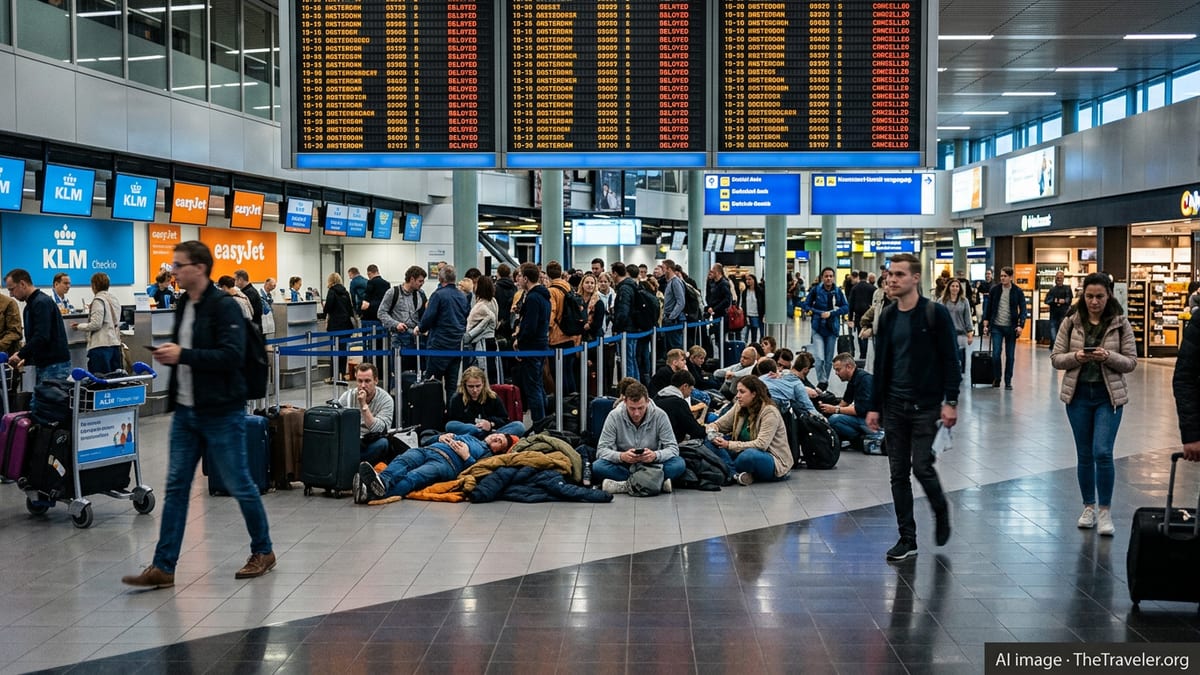
The assertion of a “mass exodus” from Paris, Berlin and Rome suggests scenes of airports overwhelmed with emergency departures and streets rapidly emptying of visitors. Monitoring of airline schedule data, tourism statistics and mainstream news coverage reveals no indication of such an abrupt, continent‑wide outflow. Instead, analysts describe familiar summer‑season patterns, including busy airports, high hotel occupancy rates and periodic disruption linked to strikes, weather events or local security operations.
Some travelers have chosen to reroute or postpone trips in response to particular demonstrations, transport strikes or personal comfort levels with regional tensions, and travel forums feature individual accounts of changing plans. These adjustments, however, resemble the kind of incremental shifts seen around previous election cycles, protest waves or health scares, rather than a coordinated retreat driven by shared “do not travel” orders from multiple allied governments.
Available imagery and eyewitness descriptions from European capitals in recent days show crowded landmarks, cultural events and sporting fixtures proceeding largely as scheduled, even as authorities maintain visible security presences. Travel industry commentary notes that booking behavior remains sensitive to headlines, with some short‑term cancellations in response to security incidents, but overall demand for European city breaks and cultural tourism continues to be robust.
Claims of empty hotels and abandoned city centers therefore appear inconsistent with the data and with the operational posture of airlines, rail networks and tour operators. In the absence of documentation from governmental or industry bodies confirming emergency evacuation measures, these narratives are best understood as exaggerations or fictional scenarios rather than factual reports.
What Travelers Should Do When Confronted With Alarmist Narratives
For travelers attempting to make decisions amid confusing or sensational online content, specialists in travel risk management recommend returning to primary sources and cross‑checking multiple advisories. Official portals from foreign ministries and consular services are updated as conditions change and typically include both overall risk levels and detailed guidance for individual cities or regions. Comparing entries from several countries can help travelers form a balanced view of relative risk.
Travelers are also encouraged to distinguish between general geopolitical tension and specific, localized threats that may affect their itineraries. Even in relatively calm periods, large public gatherings such as protests, football matches or cultural festivals can draw heavy crowds and occasionally become focal points for unrest or opportunistic crime. Sensible precautions, such as staying informed about planned demonstrations, keeping copies of travel documents, and maintaining flexible plans, can mitigate many of these risks without requiring the cancellation of entire trips.
Insurance policies, airline change rules and hotel cancellation terms remain important tools for managing uncertainty. Reviewing these conditions before departure can provide options if the security or political environment were to deteriorate significantly. Industry analysis suggests that travelers who build flexibility into their plans are better able to respond calmly to changing circumstances, rather than reacting solely to alarming posts on social platforms.
Ultimately, the contrast between viral claims of continent‑wide “do not travel” red alerts and the comparatively measured language of official advisories illustrates the need for careful verification. While global security dynamics remain fluid and some regions face genuine and serious dangers, the picture painted by publicly available information in mid‑2026 is not one of a sudden, coordinated shutdown of travel to 15 European countries or a dramatic evacuation of Paris, Berlin and Rome.