


More news on this day
A fresh bout of operational turmoil at two of Europe’s busiest hubs, Frankfurt and Milan, has unleashed a wave of roughly 295 cancellations and severe delays, leaving Lufthansa, easyJet and Ryanair passengers facing widespread disruption at the height of early summer travel.
Get the latest news straight to your inbox!
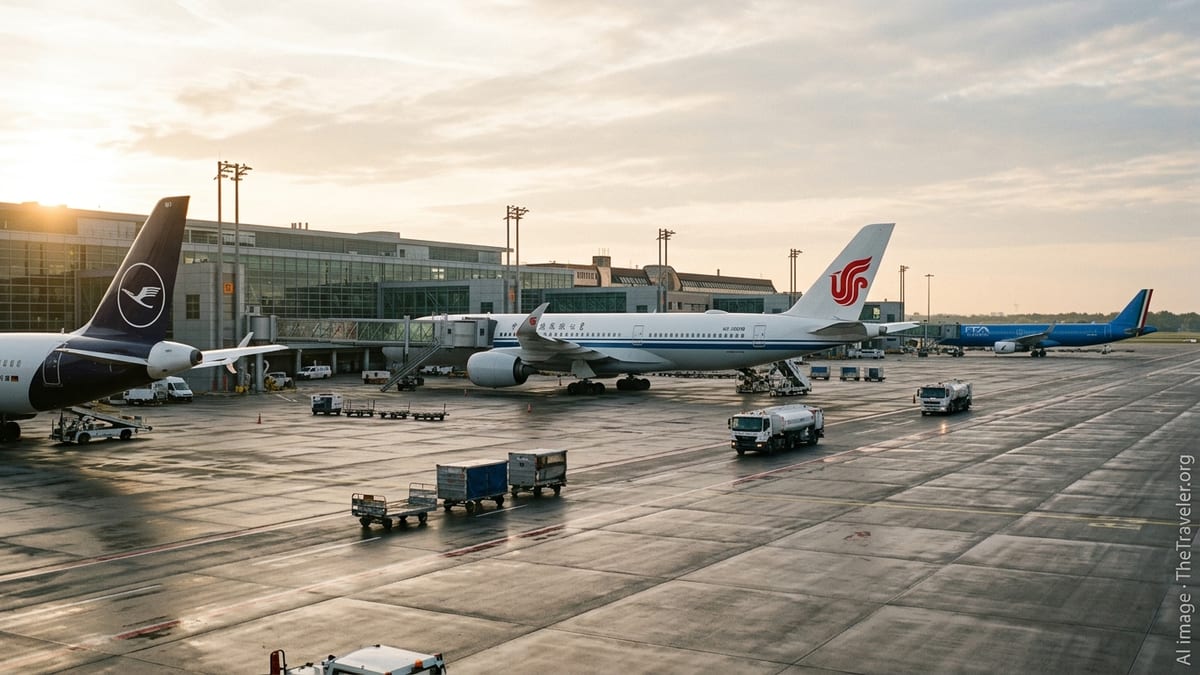
Frankfurt Gridlock Ripples Across the European Network
Frankfurt Airport, the primary hub for Lufthansa and a major connection point for North American and Asian traffic, has once again emerged as a focal point of disruption. Recent tracking data and industry reporting point to a dense cluster of cancellations and heavy delays, with Frankfurt repeatedly ranking among Europe’s worst affected hubs for on-time performance in June.
The latest turmoil comes on top of earlier disruption this month, when Lufthansa registered well over a hundred cancellations and several hundred delays in a single day across Frankfurt and Munich, according to independent aviation analytics. Compounded by local strikes earlier in the season and an already stretched summer schedule, the cumulative effect has been a rolling backlog of missed connections and last minute rebookings.
Frankfurt’s role as a classic hub and spoke gateway means relatively small operational shocks can quickly snowball. When short haul feeders from across Germany and neighboring countries are delayed or scrubbed, long haul departures to North America, the Middle East and Asia lose critical connecting passengers, prompting aircraft swaps, downgauging or outright cancellations. Travelers connecting through Frankfurt are reporting longer minimum connection times in practice than their tickets suggest, with even modest delays triggering missed onward flights.
Meanwhile, infrastructure and staffing strain remain underlying concerns. Publicly available disruption trackers and passenger accounts highlight security bottlenecks, gate changes and ramp congestion, which collectively increase turnaround times. The result is a fragile operating environment where each new disruption, whether a storm cell or a technical snarl, can push dozens of flights off schedule.
Milan Cancellations Add Pressure on easyJet and Ryanair
In northern Italy, Milan’s airports are adding another layer of volatility. Linate and Malpensa together handle a dense web of European low cost and legacy services, with easyJet and Ryanair among the most exposed carriers. Data from recent days show multiple Frankfurt–Milan rotations being cut from schedules or re-timed, undermining the reliability of one of the key north–south corridors in the European network.
easyJet’s point to point model, which depends on high aircraft utilization and quick turnarounds, is particularly vulnerable when inbound flights arrive late from congested hubs such as Frankfurt. A late arriving aircraft into Milan can cascade into delays across several subsequent sectors, especially on shorter sectors into southern and eastern Europe. Flight status records already indicate selective suspensions on some Frankfurt–Milan services and tighter spacing on others in an attempt to restore reliability.
Ryanair, which uses Milan as an important base for pan European operations, is facing its own pressures. The airline has been in the midst of network readjustments in Germany and Italy as costs and airport charges shift, and fresh operational turbulence at Milan risks undermining its aggressive turn time model. High frequency routes from Milan into Spain, Greece and eastern Europe are particularly susceptible, as aircraft assigned to these rotations may be pulled or retimed when earlier sectors run late.
For passengers, the combined effect is stark: as Frankfurt’s hub operations falter and Milan’s point to point links come under stress, travelers can find once straightforward two leg itineraries stretching into improvised multi stop journeys or overnight stays.
Lufthansa’s Summer Cuts and Safety Incident Deepen the Strain
The German flag carrier is entering this disruption wave with less slack in its system than usual. Lufthansa has already announced wide ranging summer capacity reductions, including the removal of tens of thousands of flights from its schedule through the end of June and beyond, largely in response to high fuel prices and constrained resources. Those structural cuts mean fewer backup aircraft and tighter crew rotations at precisely the moment disruption is peaking.
Complicating matters further, a high profile ground incident at Frankfurt in early June, when a Lufthansa Boeing 787 suffered a nose landing gear collapse while parked at a gate, has removed a long haul aircraft from the fleet for an extended period. Investigations are ongoing and the aircraft remains out of service, tightening long haul capacity. While only a single airframe, its grounding has knock on effects, forcing schedule swaps and making the operation more sensitive to delays and cancellations elsewhere in the network.
On top of these structural challenges, passengers are still feeling the legacy of earlier strikes by Lufthansa staff and related industrial actions in the wider German aviation sector earlier this year. Each wave of cancellations has forced extensive rebooking, with some travelers reporting multi day delays before they could secure alternative routings. That history has eroded confidence among frequent flyers who rely on tight Frankfurt connections for intercontinental journeys.
For travelers caught in the current 295 flight disruption wave, this backdrop matters. A reduced and reshuffled schedule, combined with limited spare capacity, means that when a flight is canceled out of Frankfurt or Milan, alternative options may be fewer, and reaccommodation may involve circuitous routings or overnight stops in third country hubs.
Weather, Strikes and System Fragility Behind the 295 Flight Wave
The figure of roughly 295 disrupted flights across Frankfurt and Milan in the current episode reflects not just a single cause but an accumulation of stress factors. Recent weeks have already seen severe weather fronts roll across western and northern Europe, triggering widespread disruptions at major hubs including Frankfurt, Munich, Madrid and London. When storms or low visibility conditions return, they hit an already fragile system that has little margin for recovery.
Industrial tensions also remain close to the surface. Earlier walkouts among cabin crew and pilots at major European airlines, including Lufthansa, have demonstrated how quickly hundreds of flights can be pulled from schedules in a single day. Even when no active strike is underway, the threat of renewed action, coupled with tight staffing and sickness levels, can prompt airlines to preemptively trim frequencies or consolidate rotations.
European air traffic control capacity adds another layer of uncertainty. Reports have repeatedly highlighted how staffing constraints and sector congestion can lead to en route delays that ripple into airport operations. On a day when Frankfurt and Milan are both handling strong holiday traffic, even modest flow restrictions can cascade into late arrivals, missed slots and eventually cancellations, particularly for short haul sectors that are scheduled with minimal buffers.
The result is a “perfect storm” dynamic where weather, labor relations, infrastructure bottlenecks and high demand interact. Once a series of flights is delayed or canceled out of Frankfurt, the aircraft and crews that would otherwise cycle through Milan or other regional airports are out of position, amplifying disruption far beyond the original trigger point.
What Stranded Passengers Are Experiencing on the Ground
For passengers caught in the disruption, the statistics translate into long queues, uncertain information and scrambling for alternatives. Travelers report extended waits at service desks in Frankfurt’s terminals as Lufthansa staff work through rebooking backlogs, with some customers handed itineraries that involve multiple changes of aircraft and overnight layovers far from their original routes.
At Milan’s airports, easyJet and Ryanair customers are experiencing a different but equally frustrating pattern. When point to point services are canceled, there is often no onward connection to salvage, leaving passengers racing to secure replacement seats on other low cost carriers or even turning to rail and long distance buses to complete their journeys. Some travelers are also discovering that same day alternatives are significantly more expensive due to dynamic pricing during disruption peaks.
Across both hubs, passenger rights under European regulation remain a central concern. Specialists in air passenger compensation note that eligibility for refunds, rebooking and fixed sum payouts depends heavily on the cause of the disruption, the operating carrier and the length of delay. Where cancellations stem from airline operational issues such as crew shortages or internal scheduling decisions, financial compensation may be due, while disruptions caused by severe weather or air traffic control restrictions often fall under the “extraordinary circumstances” exemption.
With the early summer holiday period now under way, the latest disruption wave at Frankfurt and Milan serves as another warning that Europe’s aviation network is still operating close to its limits. For travelers planning upcoming trips, publicly available trackers and schedule updates indicate that allowing longer connection times, avoiding last departures of the day and building in contingency plans may be essential strategies as the season progresses.