


More news on this day
A sudden surge in global jet fuel prices is rippling through transatlantic aviation, with Boston to London services emerging as a key flashpoint where higher operating costs and strong demand are combining to push fares sharply higher and raise fresh doubts about summer capacity.
Get the latest news straight to your inbox!
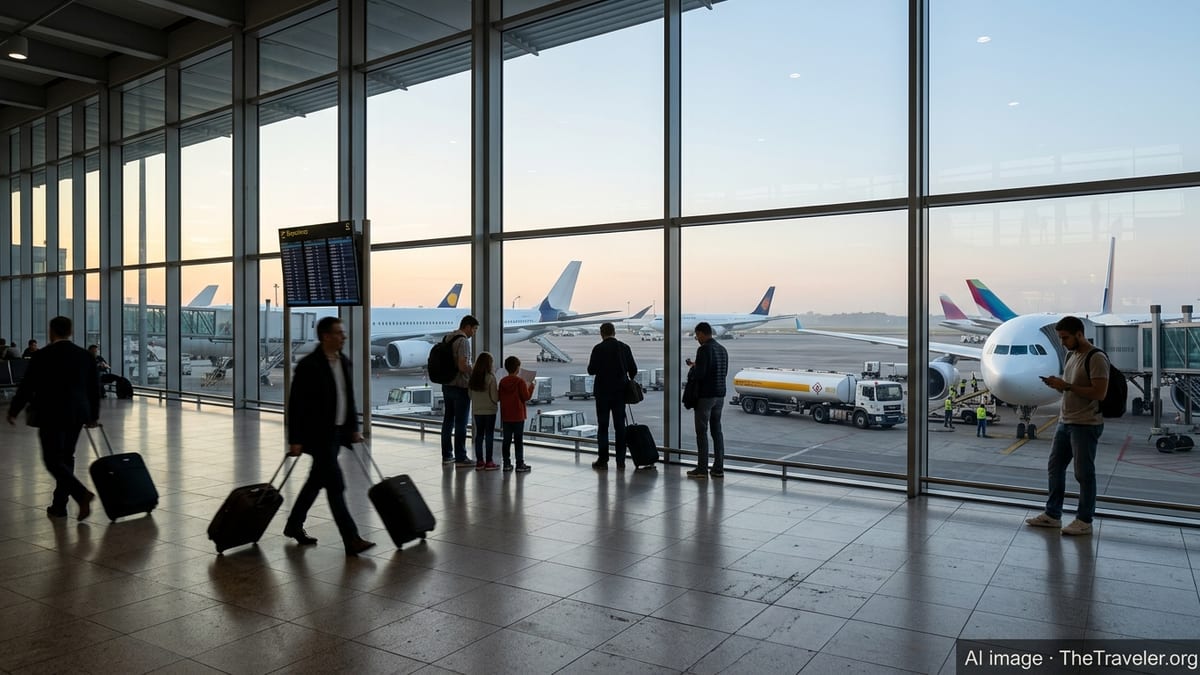
Jet Fuel Shock Deepens as Costs Jump by Double Digits
Industry data compiled by the International Air Transport Association and other market trackers show jet fuel prices climbing at one of the fastest clips since the immediate post‑pandemic rebound. Recent weekly fuel monitors point to double‑digit percentage gains in a matter of weeks, with some analytics firms flagging increases of more than 60 percent compared with late winter averages as geopolitical disruption in the Middle East tightens global oil supplies.
Reports from energy and airline economics research groups indicate that for 2026, average jet fuel prices are now projected to be dramatically higher than in 2025, with some forecasts pointing to year‑on‑year gains of well over 50 percent. This represents a severe shock for an industry where fuel already accounts for roughly a quarter to a third of total operating costs and is often the single largest line item on an airline’s profit and loss statement.
Economic outlook briefings released in early June underline that fuel is once again the dominant variable driving airline profit revisions. Global airline profit projections for 2026 have been cut back significantly in the past two weeks, with higher fuel bills cited as the main reason. Analysts note that many carriers hedged only part of their 2026 fuel needs, leaving them exposed to the sudden spike now flowing through spot and near‑term contract prices.
Travel and consumer finance coverage in the United States and Europe is already warning passengers that this fuel shock is different in scale to earlier run‑ups. Commentators describe a pricing environment in which airlines cannot fully absorb the increase, making fare hikes on long‑haul routes all but inevitable.
Transatlantic Routes Face Acute Pressure
Long‑haul international services are feeling the brunt of the shock, and Boston to London has quickly become an emblematic corridor where the new economics are playing out. Aviation market analyses explain that fuel burn on a transatlantic crossing is many times higher than on a domestic hop, magnifying the impact of every dollar increase in the price per gallon of jet fuel.
Network planning commentary suggests that airlines will concentrate scarce capacity on higher‑yield city pairs and premium‑heavy flights, especially where corporate and high‑spending leisure demand remains robust. Boston to London fits that profile, serving both business travelers and a growing premium leisure segment. As a result, airlines operating this corridor are expected to prioritize revenue over volume, even if that means trimming marginal frequencies while pushing prices higher on remaining departures.
Industry pricing trackers referenced in recent economic and consumer reports show international airfares running roughly 15 to 20 percent higher year over year, with some transatlantic sectors rising even more quickly in the last quarter as fuel surcharges have been layered on top of already elevated base fares. Analysts caution that published averages can understate the pain for peak‑season departures, where constrained capacity and strong demand pair with the fuel shock to produce substantially higher ticket prices.
Some carriers serving North Atlantic routes have already publicly signaled the need for double‑digit percentage fare increases to offset fuel costs. Aviation consultancies note that additional rounds of pricing action are likely if current fuel levels persist into late summer and early autumn, a scenario that would keep pressure on Boston to London returns booked for the rest of 2026.
Fees, Surcharges and Shrinking Discounts
Beyond headline fares, travelers on the Boston to London corridor are encountering a growing array of additional charges that industry observers link directly to rising fuel bills. Coverage in travel and personal finance outlets notes that major U.S. airlines raised checked‑bag fees and other ancillary charges earlier this year, explicitly citing higher fuel and operating costs in public commentary.
On long‑haul international services, airlines are increasingly turning to fuel surcharges, often labeled as carrier‑imposed fees, which sit on top of the base fare. Recent analyses of transatlantic tickets show round‑trip economy surcharges adding tens or even hundreds of dollars to itineraries between North America and Europe. For premium cabins, some European carrier disclosures indicate that long‑haul surcharges have climbed by several hundred euros over the course of the spring.
Because these surcharges are often embedded within the overall ticket price in booking engines, passengers shopping Boston to London itineraries may simply see a higher all‑in fare rather than a clearly itemized fuel line. Consumer advocates and travel analysts caution that this makes it harder to distinguish between demand‑driven price increases and those specifically tied to fuel.
At the same time, the traditional pattern of aggressive fare sales is weakening. Reporting from airline economics specialists suggests that higher fuel costs are raising the “floor” under ticket prices, limiting how low carriers can afford to go even during promotions. Discount economy seats on popular dates between Boston and London are becoming scarcer, and when they do appear, they tend to sell out quickly, reflecting a market where capacity is tight and every seat must contribute more to cover costs.
Capacity Adjustments and Schedule Risks
While airlines are reluctant to give up hard‑won slots at congested airports such as London Heathrow, publicly available schedule filings and expert commentary indicate that carriers are actively reshaping transatlantic networks in response to the fuel spike. Strategies range from substituting more fuel‑efficient aircraft on certain rotations to consolidating lightly booked off‑peak flights into fewer, fuller departures.
For Boston to London, this could translate into subtle but meaningful changes: shifting some departures to time bands that better capture premium demand, downguaging aircraft on weaker days, or trimming shoulder‑season frequencies if forward bookings do not justify operating at current fuel prices. Analysts point out that even small capacity reductions on a high‑demand route can produce noticeable fare increases, as fewer seats chase the same number of travelers.
Operational resilience is another concern. With margins compressed by fuel, airlines may be less inclined to operate marginally profitable flights in the face of disruptions such as weather or airspace restrictions. Industry observers warn that passengers on transatlantic routes could see a higher risk of same‑day consolidations, where two lightly booked flights are merged into one, or of last‑minute equipment swaps that reduce the number of premium seats available.
These dynamics add an extra layer of uncertainty for travelers planning critical trips between New England and the United Kingdom. Without necessarily canceling routes outright, airlines can still reduce effective capacity through tactics that are difficult for consumers to anticipate when they first book.
What Travelers Can Expect Next on Boston–London
Forecasts from airline economics units and independent travel‑data firms converge on a few short‑term expectations if fuel remains elevated. First, fare pressure on long‑haul routes is unlikely to ease quickly, particularly on nonstop services such as Boston to London that offer clear time and convenience advantages. Second, carriers are expected to continue adjusting surcharges and ancillary fees in increments rather than through a single, easily identifiable increase.
Analysts also highlight the growing divergence between nonstops and connecting itineraries. With fuel and other costs rising, some airlines may price one‑stop options via secondary hubs more aggressively to attract price‑sensitive travelers, while holding nonstop fares higher for customers willing to pay for shorter journeys. For Boston‑area passengers, this could mean a widening gap between direct flights to London and routings that connect through other U.S. or European cities.
Finally, industry commentary suggests that the path of fuel prices will be the decisive factor in how the situation evolves into 2027. If geopolitical tensions ease and jet fuel retreats, airlines could gradually rebuild margins without further dramatic fare hikes, potentially restoring some promotional activity. If prices instead remain elevated or spike again, further rounds of network reshaping and ticket inflation on key transatlantic routes, including Boston to London, are likely.
For now, the combination of a fuel shock, resilient demand and constrained capacity has set the stage for an unusually expensive and unpredictable period on one of North America’s most important transatlantic corridors.