


More news on this day
Commuter rail service on the South Shore Line between Chicago and northwest Indiana was abruptly halted after a freight train derailment and power loss near East Chicago and Gary, disrupting travel for thousands of passengers at the height of the weekday rush.
Get the latest news straight to your inbox!
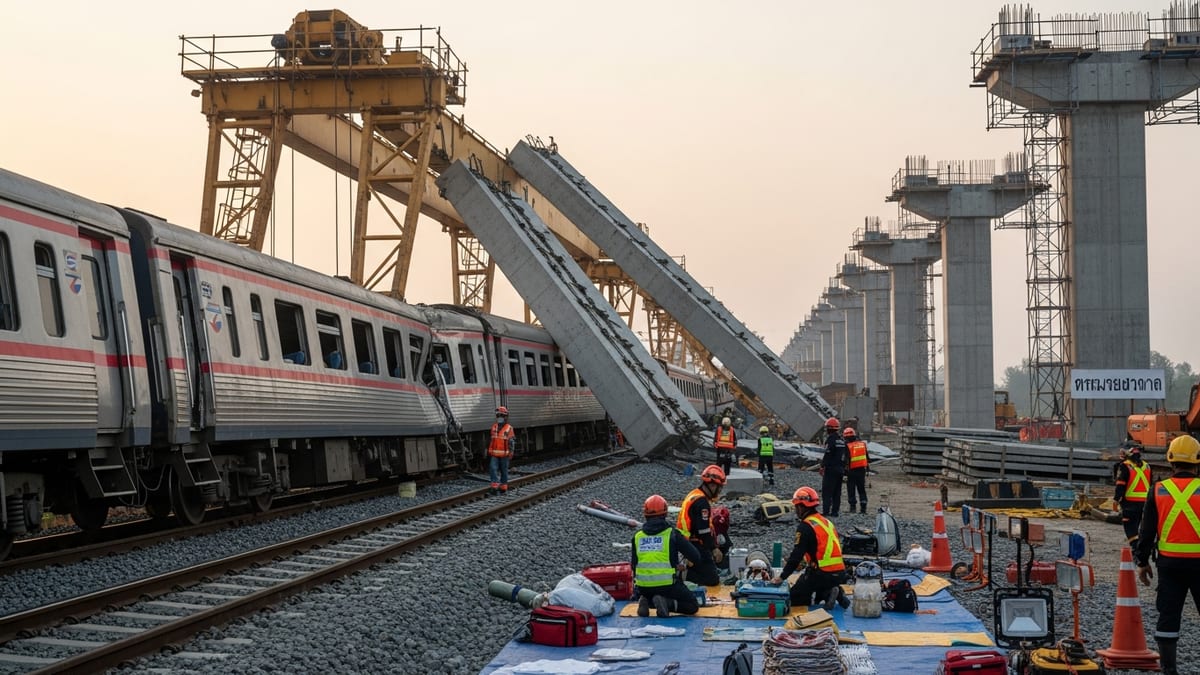
Derailment Near East Chicago Freezes Commuter Corridor
Published coverage indicates that a freight train left the tracks on Wednesday night, June 24, near the busy rail corridor between East Chicago and the Gary Metro area. The incident occurred along a critical stretch shared by freight operations and the South Shore Line’s electric commuter trains, creating a cascading disruption to passenger service.
Reports describe the derailment as significant enough to damage infrastructure and knock out power to the overhead system used by South Shore Line trains. The combination of derailed freight cars and de-energized wires effectively sealed off the main route used by commuter trains linking downtown Chicago with cities across northwest Indiana.
There were no immediate public reports of injuries connected to the incident, but the location and timing of the derailment sharply amplified its impact. The affected section sits on one of the few east west rail arteries available to the South Shore Line, leaving limited options for rerouting trains around the obstruction.
Publicly available information shows that rail crews and utility teams were dispatched overnight to assess track conditions, clear derailed cars and evaluate the electrical system. The complexity of the work and safety inspections required meant that the service suspension extended into the following morning’s peak travel period.
South Shore Line Service Suspended Through Morning Rush
According to service advisories and local broadcast reports, all remaining South Shore Line trains were pulled from service on Wednesday evening following the derailment and power loss. The operator subsequently announced that Thursday morning rush hour commuter service would also be suspended along the Monon and Lakeshore segments of the line.
Riders who typically rely on the railroad for daily travel between communities such as Hammond, East Chicago, Gary, Michigan City and South Bend into downtown Chicago faced sudden uncertainty. Many commuters turned to highway routes, ride sharing and local bus networks as they scrambled to find alternate ways to reach jobs, schools and medical appointments.
Coverage of the disruption indicates that the shutdown affected trains in both directions, essentially isolating several Indiana communities from their usual direct rail link to Chicago’s Millennium Station. Stations that normally see heavy early morning crowds instead saw reduced activity as display boards showed widespread cancellations.
Public communications from the rail operator emphasized that safety inspections, debris removal and restoration of reliable power supply were prerequisites for any gradual return to normal operations. No firm timeline for full service restoration was immediately available, leaving passengers to monitor advisories for incremental updates.
Impact on Regional Mobility and Local Communities
The South Shore Line is one of the Midwest’s key commuter rail corridors, connecting Chicago to a string of industrial and residential communities across northern Indiana. The derailment’s effect on this line highlights how a single freight incident can quickly ripple through a much wider transportation ecosystem.
Northwest Indiana communities have invested heavily in recent years to enhance commuter rail options, including extensions and modernized stations designed to increase ridership and support economic development. A sudden, systemwide suspension, even if temporary, disrupts this progress by complicating daily travel patterns for workers and visitors and by stressing parallel road networks already burdened by congestion.
Local news reports describe heavier than usual traffic on tollways and arterial roads as former rail riders turned to cars and carpools. Longer door to door travel times, coupled with uncertainty over when trains would resume, posed challenges for hourly workers and those with rigid schedules.
The disruption also underscores the close interdependence between freight and passenger rail in the region. Freight carriers supply factories, ports and distribution centers throughout northern Indiana and the Chicago area, while commuter trains move residents and visitors. When an incident affects shared track or adjacent infrastructure, the resulting interruption can simultaneously limit freight flows and halt passenger service.
Safety, Infrastructure and Ongoing Recovery Efforts
While detailed investigative findings had not yet been released, the derailment has renewed attention on the condition and capacity of rail infrastructure across the corridor. Publicly available background information on the South Shore Line and associated freight routes shows a complex network of electrified passenger tracks, freight spurs and shared right of way, all of which require close coordination between multiple operators.
In the wake of the incident, rail and utility crews have been working to remove damaged freight equipment, inspect rails and ties, and repair or replace any compromised overhead systems. Recovery efforts typically involve staged steps, beginning with stabilizing the site and restoring basic power before test trains can verify that tracks and signaling equipment are safe for regular passenger use.
Industry practice in similar events points to a careful balance between restoring service quickly and preventing secondary incidents. Each element of the infrastructure, from switches and crossovers to substations supplying traction power, must be checked for both visible and latent damage after a derailment involving electrical systems.
Observers across the region are watching for updates on how long it will take to return trains to their full schedule and whether the incident will prompt any additional infrastructure improvements or operational changes. For now, the derailment near East Chicago and Gary has become the latest reminder of how critical rail safety and resilience are to everyday mobility in northern Indiana.