


More news on this day
More than a dozen freight cars from an eastbound CSX train derailed near the Neshaminy Falls station in Bensalem, Pennsylvania, on Tuesday afternoon, triggering hazmat concerns, temporary evacuations and transit disruptions before public information indicated no hazardous material leaks were found.
Get the latest news straight to your inbox!
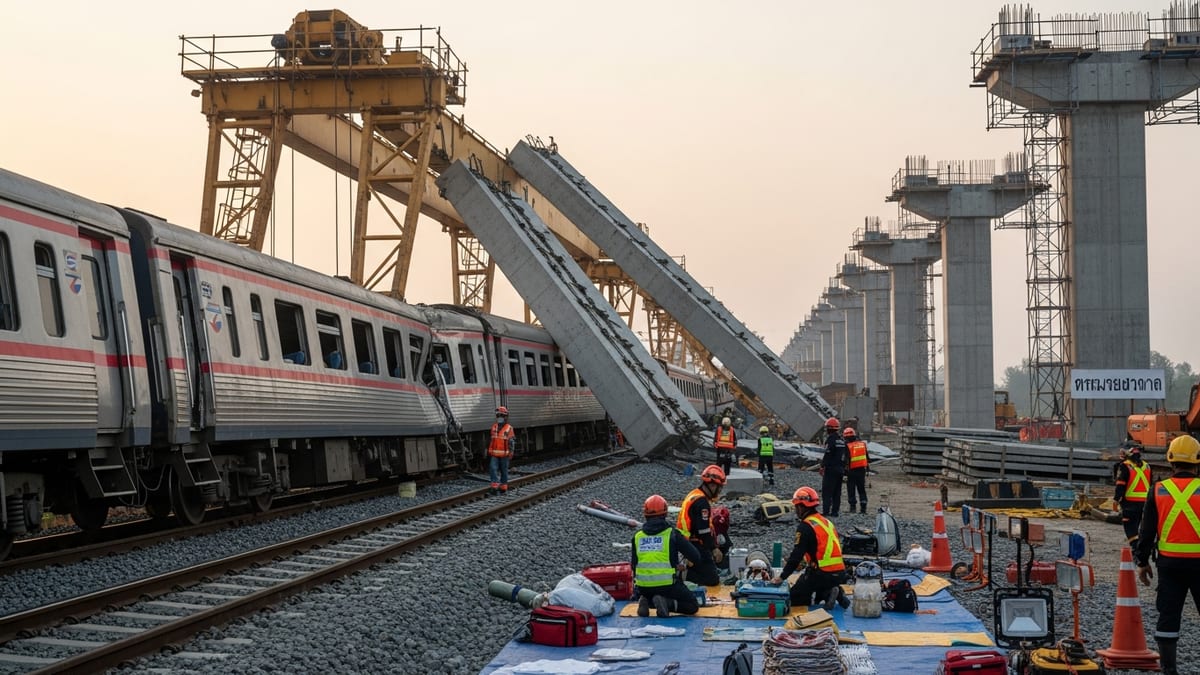
Derailment Near Busy Bucks County Rail Corridor
The derailment occurred on the afternoon of June 30, 2026, along a freight corridor running between Street Road and the Neshaminy Falls train station in Bensalem Township, Bucks County. Reports indicate the eastbound CSX train was hauling 72 cars when a portion of the consist left the tracks, sending a cluster of freight cars into disarray alongside the rail line.
Initial estimates from multiple local outlets suggested between 5 and 10 cars were off the tracks. Later reporting based on updated information from Bensalem public safety briefings revised that number upward, indicating that 13 cars ultimately derailed out of the train’s overall consist.
The accident unfolded in a developed suburban area with a mix of residential neighborhoods and commercial properties, increasing concern about the potential impact of any hazardous cargo. Aerial images published by regional broadcasters showed several overturned and jackknifed cars scattered across the rail bed and adjacent ground.
Despite the dramatic scene, early public information and subsequent coverage indicated there were no reported injuries among train crew or nearby residents. The focus quickly shifted to assessing the condition of specific tank cars and boxcars that were believed to be carrying industrial materials.
Hazmat Concerns Prompt Shelter Orders, Then All-Clear
Because several of the derailed cars were believed to be carrying hazardous substances, emergency responders treated the incident as a potential hazmat event. Published reports indicate that at least one car was loaded with an alcohol-based substance and another carried an acid, prompting added caution while the cars were stabilized and inspected.
Publicly available information from local news coverage shows that Bensalem emergency agencies requested residents and workers near the derailment to shelter in place as hazmat teams conducted air monitoring and visual inspections around the wreckage. Some nearby homes and businesses were also temporarily evacuated as a precaution while crews moved in closer to evaluate the derailed cars.
By Tuesday evening, updated statements cited in regional and national reporting indicated that hazmat specialists had completed their checks and found no evidence of leaks from the cars of concern. Evacuation and shelter-in-place advisories were lifted, and public safety communications stressed that there was no ongoing threat to air quality or public health in the immediate area.
The absence of confirmed leaks eased fears of a larger environmental emergency similar to higher-profile derailments elsewhere in the United States. Nonetheless, the incident underscored ongoing sensitivity in many communities to freight movements involving chemicals and fuels, particularly where tracks run close to homes, schools, and shopping districts.
Travel and Transit Disruptions for Commuters
The derailment’s location near major local roads and a busy regional rail corridor caused short-term disruptions for drivers and transit users. Local coverage reported that Bristol Road was closed between Old Lincoln Highway and Brownsville Road as emergency crews and large recovery vehicles staged around the site and heavy equipment was brought in to begin clearing the tracks.
Although the SEPTA West Trenton Line does not operate directly on the affected CSX freight tracks, the proximity of the derailment to Neshaminy Falls station prompted the suspension of service on the line for a period on Tuesday. Commuters traveling between Bucks County and Philadelphia faced delays and detours as rail operations were temporarily halted while inspectors ensured adjacent infrastructure remained safe.
Motorists in the area were advised through public reports and local traffic alerts to avoid the corridor around Street Road and the Neshaminy Falls station. Congestion built on surrounding arterial routes as police redirected vehicles away from the incident zone, a familiar scenario for residents in a township already known for busy roadways and heavy commuter flows.
For travelers and visitors passing through Bucks County, the derailment served as a reminder that freight infrastructure sits close to key commuter rail and roadway links. While the disruption was limited to several hours, the combination of road closures and suspended rail service highlighted how quickly an incident on a freight line can ripple across broader regional travel patterns.
Cleanup Operations and Rail Safety Context
Responsibility for clearing the wreckage and restoring service on the freight line falls to CSX and its contractors, according to information published by local outlets. Recovery efforts are expected to involve rerailing or dismantling overturned cars, inspecting track and signal infrastructure, and removing any damaged equipment before full freight operations can resume.
In similar derailments, cleanups can take anywhere from a day to several days, depending on the complexity of the scene and the availability of heavy lifting equipment. Given the lack of reported hazardous material release in Bensalem, the work is expected to focus primarily on mechanical recovery and infrastructure repair rather than extensive environmental remediation.
The Bensalem derailment arrives amid ongoing national attention to freight rail safety and community risk along rail corridors. Federal Railroad Administration data show that while overall train accident and derailment rates have trended downward in recent years, incidents involving hazmat loads continue to receive heightened scrutiny from regulators, lawmakers, and residents who live near tracks.
For travelers, the episode highlights how closely freight and passenger networks are intertwined, particularly in densely developed parts of the Northeast. Even when a derailment does not result in injuries or leaks, the combination of emergency response, investigations, and equipment recovery can disrupt both local mobility and longer-distance journeys for hours or days.
What the Bensalem Derailment Means for Local Communities
The incident has renewed conversation in Bucks County about how freight traffic intersects with everyday life in suburban communities. The tracks near Neshaminy Falls run alongside neighborhoods, retail centers, and office parks, illustrating the proximity of rail infrastructure to spaces where people live, shop, and work.
Public commentary captured in local coverage and social media discussion reflects a mix of relief and concern: relief that no leaks or injuries were reported, and concern about what might have happened if hazardous material releases had occurred on a warm weekday afternoon. Questions about notification systems, shelter-in-place guidance, and long-term safety investments are likely to continue as the community digests the episode.
For visitors to the Philadelphia region who may pass through Bucks County by train or car, the Bensalem derailment is a case study in how quickly conditions can change along a travel corridor. Rail incidents remain statistically rare compared to the volume of freight moved each day, but when they do occur, they can temporarily reshape traffic and transit patterns over a wide area.
As CSX crews work to restore the line and investigators examine what caused the freight cars to leave the tracks, residents and travelers in Bensalem are adjusting back to normal routines. The swift lifting of shelter orders and confirmation of no hazardous leaks helped limit the derailment’s impact, yet the sight of overturned cars near a familiar station is likely to remain in the local memory as a stark reminder of the risks that accompany heavy freight traffic.