


More news on this day
A downtown Richmond freight train derailment sent multiple rail cars off elevated tracks and into the Kanawha Canal on Friday, disrupting rail traffic and canal-front access in one of the city’s busiest riverfront districts.
Get the latest news straight to your inbox!
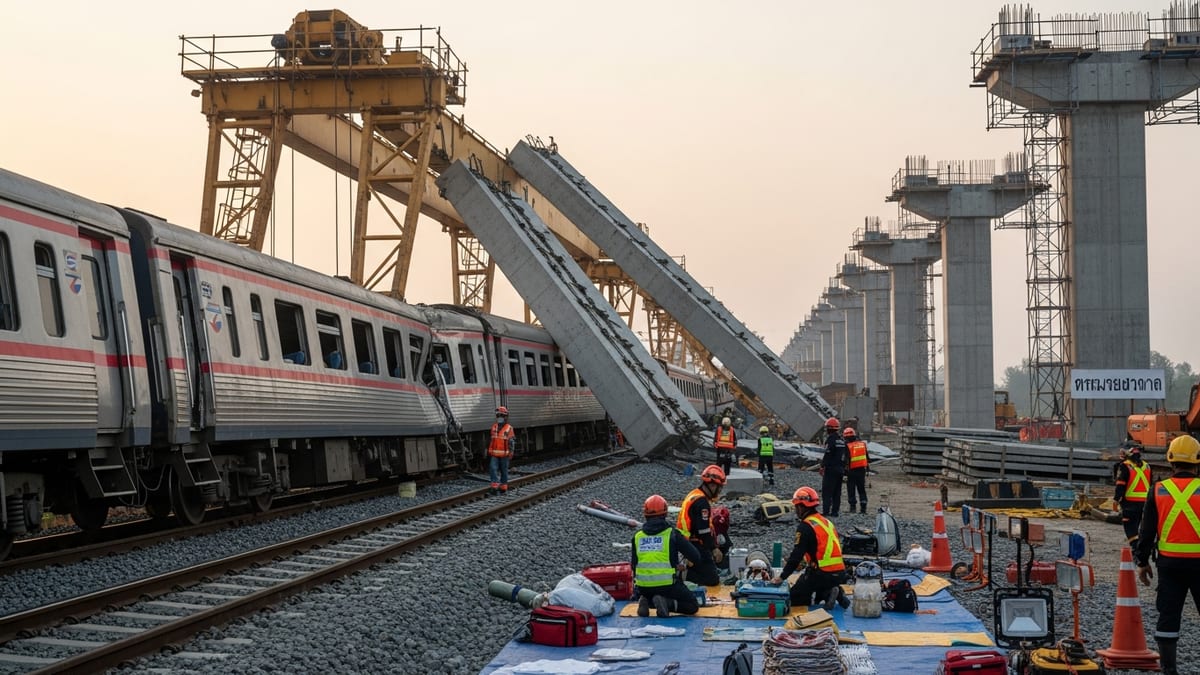
Freight Cars Topple From Elevated Tracks Into Canal
Publicly available information and images shared on local platforms on July 3 indicate that a freight consist traveling through Richmond’s Shockoe area derailed near East Cary Street and the Canal Walk, where rail lines run on a raised structure above the Kanawha Canal and James River corridor. Several posts describe at least one car coming off the trestle and landing in the canal, with additional cars leaning at angles above the water.
Early accounts from the scene suggest the derailment occurred along a section of track that parallels the popular Canal Walk, a mixed-use path frequented by commuters, runners, and visitors. Photos circulating locally show a freight car resting partially submerged, with detached wheels and trucks left on the elevated line, and other equipment halted on the tracks overhead.
Initial public details do not indicate any immediate fires or large-scale debris fields beyond the rail right of way and the canal itself. Several observers note that the incident unfolded adjacent to Dock Street and riverfront parking areas, raising concern about what might have happened had the cars fallen toward nearby roads or pedestrian spaces instead of into the water channel.
Rail traffic through this central Richmond corridor appears to have stopped in both directions while responders and railroad personnel assess damage to the bridge structure, track, and derailed equipment. Passenger services that rely on the same corridor may also be affected, and travelers planning rail journeys through Virginia’s capital are being advised in public discussions to check for delays or cancellations.
Injuries, Hazards and Environmental Risks Under Review
As of Friday afternoon, information available from local reporting and community feeds did not reference confirmed injuries associated with the derailment. The incident occurred in a dense urban environment that includes apartments, offices, entertainment venues, and riverfront recreation areas, where freight trains often pass close to sidewalks and gathering spots.
Questions remain about the train’s cargo and any potential environmental impact on the Kanawha Canal and nearby James River. Some accounts circulating online suggest the derailed equipment may be carrying bulk commodities rather than hazardous chemicals, and no widely shared images show smoke, fire, or extensive emergency evacuations. However, the full manifest of the train and results of any hazardous-materials screening had not been comprehensively detailed in early public summaries.
The canal, which sits just below the elevated tracks, forms part of Richmond’s historic navigation system and connects directly to the larger James River. Any significant spillage from a derailed train into the waterway would likely draw scrutiny from environmental regulators and local conservation organizations. Previous derailments in other regions involving hazardous cargo have prompted temporary closures of waterways, fishing advisories, and multi-day cleanup efforts.
In this case, visible activity around the canal appears to center on securing the derailed cars and assessing structural integrity, while onlookers have been kept at a distance. Travel-news readers planning walks, bike rides, or paddling outings in the downtown riverfront area may encounter temporary closures along portions of the Canal Walk and adjacent river access points while assessments and recovery work continue.
Impact on Downtown Access and Visitor Experience
The derailment has immediate implications for mobility and tourism in central Richmond. The elevated freight corridor passes directly above the Canal Walk, which anchors a popular stretch of the city’s riverfront with public art, interpretive signs, restaurants, and access to nearby attractions such as Shockoe Slip and Brown’s Island.
Images from the scene show emergency vehicles and rail maintenance trucks clustered near the trestle, likely requiring partial or full closures of nearby streets, including segments of Dock Street and Riverfront access roads. For visitors, that can translate into detours, limited parking, and restricted views or access to the canal and river while heavy equipment is in place to stabilize and eventually remove the derailed cars.
Businesses that rely on canal-front foot traffic, including cafes, bars, and tour operators, may experience a temporary drop in visitors if sections of the path remain blocked. Riverfront venues hosting holiday weekend events could also need to adjust logistics, from load-in routes to crowd flow, depending on how long rail and safety crews remain at work above the canal.
At the same time, the derailment is drawing onlookers to the district, with many residents and visitors documenting the unusual sight of a railcar lodged in the canal. Travel-oriented observers are noting that while the scene is dramatic, it highlights the close proximity of heavy freight infrastructure to Richmond’s most scenic public spaces and the way an unexpected rail disruption can ripple quickly through the city’s tourism economy.
Ongoing Recovery Efforts and Rail Corridor Safety Questions
Railroad recovery operations after an incident like this typically unfold in stages, beginning with securing the train, inspecting tracks and bridges, and clearing any immediate hazards. Heavy cranes or specialized rail equipment are often required to lift derailed cars from waterways or steep embankments, a process that can take many hours or days depending on access, weight, and structural damage.
Public discussion around Friday’s derailment is already touching on the long history of freight trains threading through downtown Richmond and across the Kanawha Canal, where elevated structures move rail traffic directly above popular walking routes and entertainment spaces. Previous freight incidents elsewhere in the United States have spurred debate about rail maintenance, train length and weight, inspection regimes, and investment in corridor upgrades, especially where tracks interface with dense urban areas.
Travelers and residents following the Richmond event are raising familiar questions about the condition of rail infrastructure along the canal, the frequency of freight movements through the district, and whether longer or heavier trains amplify risks in constrained urban corridors. While formal investigations typically take months, early attention often focuses on track conditions, train handling, equipment performance, and any extreme heat or weather factors that might affect rail alignment.
For now, the derailment underscores how closely Richmond’s modern transport system is woven into its historic waterways and public spaces. Visitors arriving over the coming days should anticipate an evolving scene, with portions of the Canal Walk and adjacent streets periodically closed to allow cranes, barges, and rail crews to work safely above and around the Kanawha Canal.
What Travelers Should Expect in Richmond This Weekend
Given the timing of the derailment at the start of a busy summer travel period, visitors to Richmond may wish to build extra time into itineraries that include downtown rail, road, or riverfront segments. Rail passengers using services that pass through the city can expect potential knock-on delays as freight traffic is rerouted or held while damage is assessed and repairs are made.
Motorists heading for riverfront events or dining near Shockoe Bottom may encounter barricades, redirected traffic, or reduced parking availability immediately adjacent to the canal. In many cities, rail incidents of this scale prompt traffic-management measures that can last beyond the initial emergency phase, particularly when large cranes or barges are brought in to remove equipment from waterways.
Pedestrians and cyclists using the Canal Walk and nearby trails should watch for posted closures and follow detour signage where provided. While the incident is drawing curiosity and a desire for close-up views, travel-safety guidance circulating locally encourages people to stay outside cordoned areas, both to avoid hazards near the derailed train and to allow responders room to work.
Despite the disruption, most of Richmond’s core attractions, museums, and neighborhoods remain accessible by alternate routes, and many itineraries can be adjusted with only minor changes. For travelers, the derailment serves as a reminder that in rail-centric cities, flexibility and attention to local advisories are essential parts of planning a smooth visit.