


More news on this day
Domestic air travel in Argentina faced significant disruption this week as Buenos Aires’ Aeroparque Jorge Newbery saw a wave of cancellations and delays affecting thousands of passengers on key cabotaje routes.
Get the latest news straight to your inbox!
Weather and Labor Turbulence Converge at Aeroparque
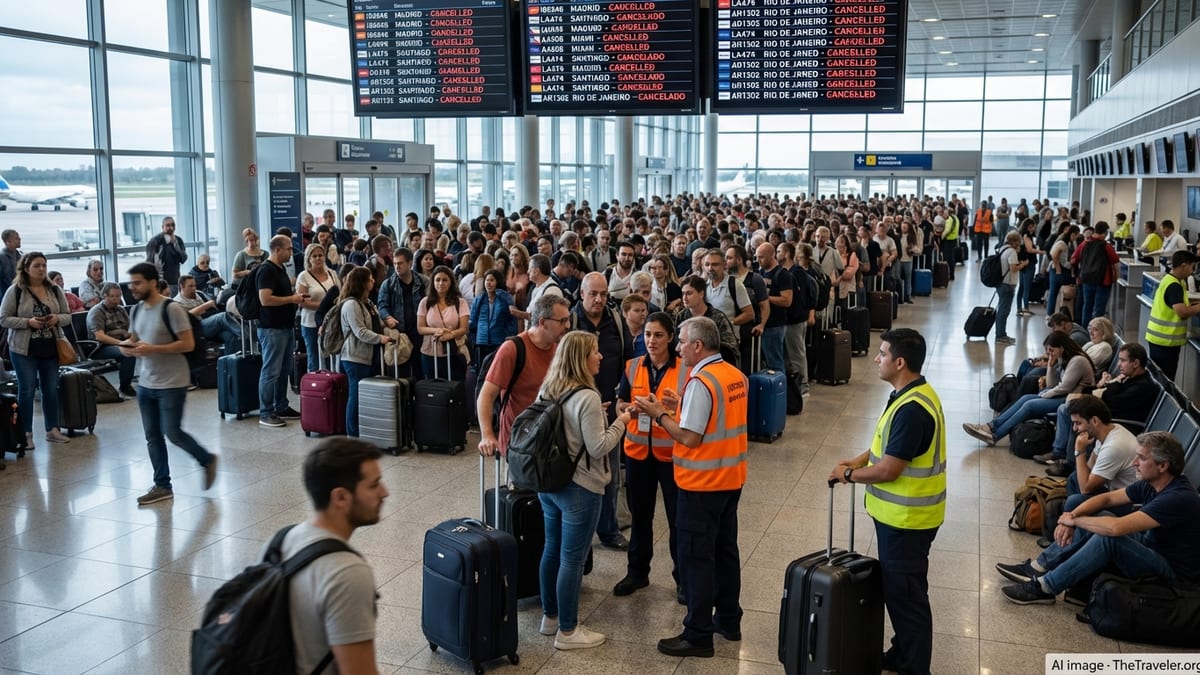
According to recent local coverage, dense fog over the Buenos Aires metropolitan area on July 2 and July 3 led to multiple cancellations and extensive delays at Aeroparque Jorge Newbery, one of Argentina’s main hubs for domestic and regional services. Low visibility forced repeated adjustments to takeoff and landing schedules, compounding congestion during already busy winter travel days.
Reports from Argentine media describe departure boards filled with delayed and canceled flights, as airlines scaled back operations while conditions remained below safety thresholds. Some services were reprogrammed later in the day as visibility improved, but knock-on effects left passengers facing extended waits and missed connections on domestic routes.
The latest weather disruption follows a broader pattern of operational strain at Aeroparque in 2026. Earlier this year, the airport recorded heavy delays during the New Year holiday peak, when more than 90 departures were reported as significantly delayed or canceled in a single day at the start of the summer vacation period.
Analysts note that Aeroparque’s role as a dense domestic and regional hub means that even short-lived weather interruptions can quickly ripple through the network, especially when they coincide with holiday travel or high-demand periods.
Union Measures Add to Cancellations and Delays
While fog was the immediate trigger for recent disruption, labor tensions have also emerged as a key factor behind the latest wave of irregular operations. Municipal and regional outlets in Argentina report that a new measure of force by ground-handling and airport services workers at Aeroparque has led to additional cancellations, extended turnarounds and luggage delivery delays.
One widely cited municipal report indicates that at least 20 domestic flights were either canceled or heavily delayed at the start of July due to industrial action that slowed key ramp and baggage operations. The same coverage estimates that more than 3,000 passengers were affected during just a few hours, with some flights held at the gate and others removed from the schedule entirely.
Ground services disruptions, particularly involving ramp and baggage handling, tend to have an outsized impact on short-haul domestic networks. Even when weather allows flying, aircraft can remain on the ground if loading, unloading and towing operations are curtailed, leaving travelers in terminals while aircraft sit idle on the apron.
Observers in the Argentine aviation sector point out that Aeroparque has experienced several such labor-related interruptions in recent years, often involving short but disruptive work stoppages or “assembly” actions that slow operations during peak hours.
Pressure on Domestic Airlines and Low-Cost Carriers
The recent spate of cancellations also highlights the heightened vulnerability of Argentina’s low-cost segment. Coverage in national and regional media during June detailed how one low-cost airline was reportedly operating with a sharply reduced fleet, at times using only a single aircraft on its domestic network while canceling a series of scheduled services across the country.
Images of Aeroparque’s departure boards from early June, shared by local outlets, showed long lists of canceled flights attributed to this operator on busy cabotaje routes. Industry commentary suggests that the combination of fleet constraints, maintenance requirements and tight scheduling left little margin to absorb either technical issues or external shocks such as bad weather.
Legacy carriers have also been affected by the compounded disruption, with some domestic flights from Aeroparque registering notable arrival delays into other Argentine cities during recent weeks. Tracking data for selected routes between Aeroparque and key provincial destinations show late arrivals and schedule adjustments that align with days of poor weather and labor action in Buenos Aires.
Analysts say the situation is likely to fuel renewed debate about the resilience of Argentina’s domestic air network, particularly as policymakers seek to balance expanded connectivity with the financial and operational realities facing both state-backed and private airlines.
Upcoming Runway Maintenance and Future Disruption Risk
Beyond the immediate cancellations and delays, Aeroparque is preparing for a planned halt in operations later this winter that could further affect domestic flight schedules. Industry and transport-focused outlets recently reported that the airport is expected to suspend all activity for approximately 48 hours in late August to allow maintenance work on the main runway.
Initial estimates circulating in the aviation sector suggest that close to 900 flights could be affected over that shutdown period, including a large share of Argentina’s most heavily trafficked domestic routes. Airlines are expected to reallocate some operations to other airports serving the Buenos Aires area and to adjust frequencies on key provincial links.
Travel experts note that this planned closure will come on top of the operational volatility already seen in 2026, raising concerns about capacity constraints during the Southern Hemisphere winter and early spring. For passengers, the combination of scheduled maintenance and unplanned disruptions from weather or labor issues may translate into more frequent timetable changes and increased reliance on rebooking tools.
Publicly available information from airport operators and air navigation authorities indicates that the maintenance work is intended to enhance runway safety and reliability, which could, in the longer term, reduce weather-related restrictions and improve operational robustness during periods of heavy demand.
What Domestic Travelers Can Expect in the Coming Weeks
For now, Aeroparque continues to operate as Argentina’s primary domestic gateway, handling hundreds of daily flights linking Buenos Aires with dozens of cities across the country. However, the recent sequence of fog-related cancellations, labor actions and advance notice of runway works suggests that passengers on cabotaje routes should be prepared for ongoing schedule volatility in the near term.
Travel specialists recommend that domestic passengers monitor flight status frequently on the day of travel, allow extra connection time when linking through Aeroparque, and stay alert to airline notifications about potential rebookings or airport changes connected to the upcoming August closure. Those traveling during peak winter vacation periods may face higher competition for remaining seats if mass cancellations occur.
The latest disruptions underscore the complex operating environment at Aeroparque, where meteorological conditions on the Río de la Plata, evolving labor negotiations and infrastructure needs can interact to challenge on-time performance. For Argentina’s domestic air travelers, the situation at Jorge Newbery Airport remains a barometer of broader pressures on the country’s aviation system.