


More news on this day
British holidaymakers heading to Portugal are being urged to monitor travel advice closely as extreme heat and fast-moving wildfires trigger emergency measures across the country and raise safety concerns in popular summer regions.
Get the latest news straight to your inbox!
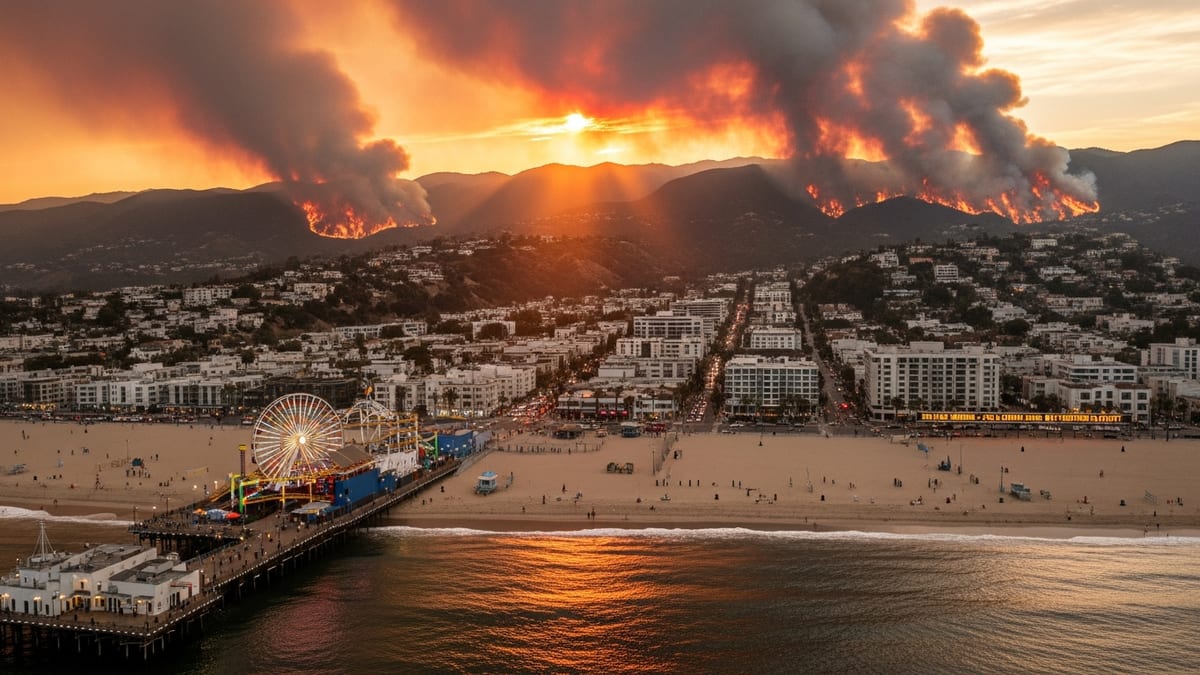
UK travel advice updated as fire risk escalates
Publicly available guidance from the UK government shows that its Portugal travel advice was updated on 3 July 2026 to highlight the growing threat of wildfires. The notice stresses that there is a high risk of rural and forest fires during the summer months and directs travellers to review safety and security information before and during their trip.
The guidance does not advise against travel to Portugal but underscores that conditions can deteriorate quickly when temperatures soar and winds strengthen. Travellers are encouraged to stay informed through local announcements and to follow any evacuation or access restrictions that may be implemented at short notice in affected areas.
Insurance considerations are also being emphasised. The UK advice notes that holidaymakers should ensure they have comprehensive cover for medical treatment, disruption and emergency repatriation, particularly when travelling during a period of heightened environmental risk such as an active wildfire season.
The updated information applies to mainland Portugal as well as islands that are popular with British tourists, including Madeira, Porto Santo and the Azores, reflecting the fact that elevated temperatures and dry conditions can increase fire risk across a wide geographic area.
Portugal declares state of alert amid intense heat
Portugal’s government has declared a state of alert across the mainland from Friday 3 July until Monday 6 July 2026 in response to what national agencies describe as a very high or maximum risk of rural fires. Reports indicate that this step allows civil protection authorities to mobilise additional resources, restrict access to vulnerable forest areas and limit activities that could accidentally spark new blazes.
The Portuguese Institute for Sea and Atmosphere has placed most mainland districts under red or orange weather warnings for extreme heat, with temperatures in some interior regions expected to approach the mid-40s Celsius. Night-time temperatures are also remaining unusually high, which experts say contributes to parched vegetation and makes fires harder to control once they start.
Media coverage in Portugal indicates that the government has asked the European Union for assistance through the EU Civil Protection Mechanism, as well as activating bilateral arrangements with neighbouring Spain and Morocco. These frameworks allow for the rapid deployment of additional aircraft, personnel and equipment when national capacity is stretched.
During the alert period, farmers and landowners face temporary bans on controlled burns and certain types of machinery work in forests, due to the risk that sparks or embers could ignite dry brush. Visitors driving through rural regions are being reminded to avoid discarding cigarettes, lighting barbecues outside designated areas or parking vehicles in tall grass.
Major wildfires strain emergency services
Portuguese and international news reports describe multiple active wildfires burning across the country, with particular concern focused on a large blaze in the municipality of Vouzela in the district of Viseu. This fire, which began in the early hours of Thursday, has developed several active fronts and continues to spread in challenging terrain.
According to published figures from civil protection agencies, more than 1,500 firefighters and other personnel have been deployed nationwide, supported by hundreds of vehicles and a fleet of water-bombing aircraft. In the Vouzela area alone, over a thousand responders have been working to protect communities, indicating the scale of the operation.
The intensity of the flames has led to localised disruption. Coverage from Portuguese media notes that the Vouga railway line has been partially closed in response to the fire threat, and some residents have been moved from at-risk homes as a precaution. Smoke and ash have also affected air quality in nearby towns and villages.
Authorities are warning that the situation remains volatile as long as the heatwave persists. Even in regions where individual fires are brought under control, hot and windy conditions can lead to flare-ups or new ignitions, keeping pressure on emergency services already stretched by multiple incidents.
Impact on British travellers and holiday hotspots
Portugal remains one of the most popular summer destinations for UK tourists, with millions of Britons typically flying to the Algarve, Lisbon, Porto and island resorts over the peak holiday months. The current wildfires are concentrated in central and northern inland districts, but the extreme heat and elevated fire risk extend much more widely across the country.
Travel and tourism commentators note that airports and major coastal resorts are operating normally, and flights from the UK to Portugal continue to run. However, there is the potential for localised disruption, particularly in areas near active fires or where smoke affects visibility. Road closures, rail suspensions and access restrictions to natural parks and hiking areas are among the possible knock-on effects.
British visitors staying in rural accommodation, campgrounds or holiday homes in forested regions are being encouraged by official advice and tourism bodies to pay close attention to local guidance. Many municipalities publish fire-risk scales, and when the level is classified as very high or maximum, outdoor activities that could generate sparks are often banned.
Travel organisations also stress the importance of flexibility. Holidaymakers may be asked to change plans at short notice, such as switching hiking routes, cancelling barbecues, or avoiding certain scenic drives. While tour operators and hotels are accustomed to managing summer heat and fire risks, travellers are being reminded that safety measures can temporarily override normal holiday routines.
Practical safety tips for those heading to Portugal
Public information campaigns in Portugal advise residents and visitors to treat wildfire risk as a serious but manageable hazard when the right precautions are taken. Travellers are urged to familiarise themselves with evacuation routes from their accommodation, identify safe open areas away from dense vegetation, and keep mobile phones charged with emergency numbers saved.
Experts recommend avoiding any open flames in high-risk zones, including campfires and unsupervised barbecues, and refraining from using fireworks or sky lanterns. Discarded glass bottles and litter can also contribute to fire outbreaks when left in dry grass or scrubland, so responsible disposal is strongly encouraged.
When heat is at its peak, typically during the afternoon, visitors are advised to limit strenuous outdoor activity, stay hydrated and seek shade, particularly those with underlying health conditions or travelling with young children. Air-conditioned public spaces, such as shopping centres and some cultural attractions, can provide respite during the hottest hours of the day.
For British travellers, monitoring the UK government’s Portugal travel advice page before departure and during their stay remains a key step. Combined with attention to local announcements and a willingness to adjust plans around fire and heat alerts, this can help ensure that summer holidays proceed as safely and smoothly as possible despite the challenging conditions.