


More news on this day
British holidaymakers heading overseas this summer are being urged to check fast-changing travel warnings, as updated government advisories highlight new security risks, regional unrest and transport disruption affecting popular destinations.
Get the latest news straight to your inbox!
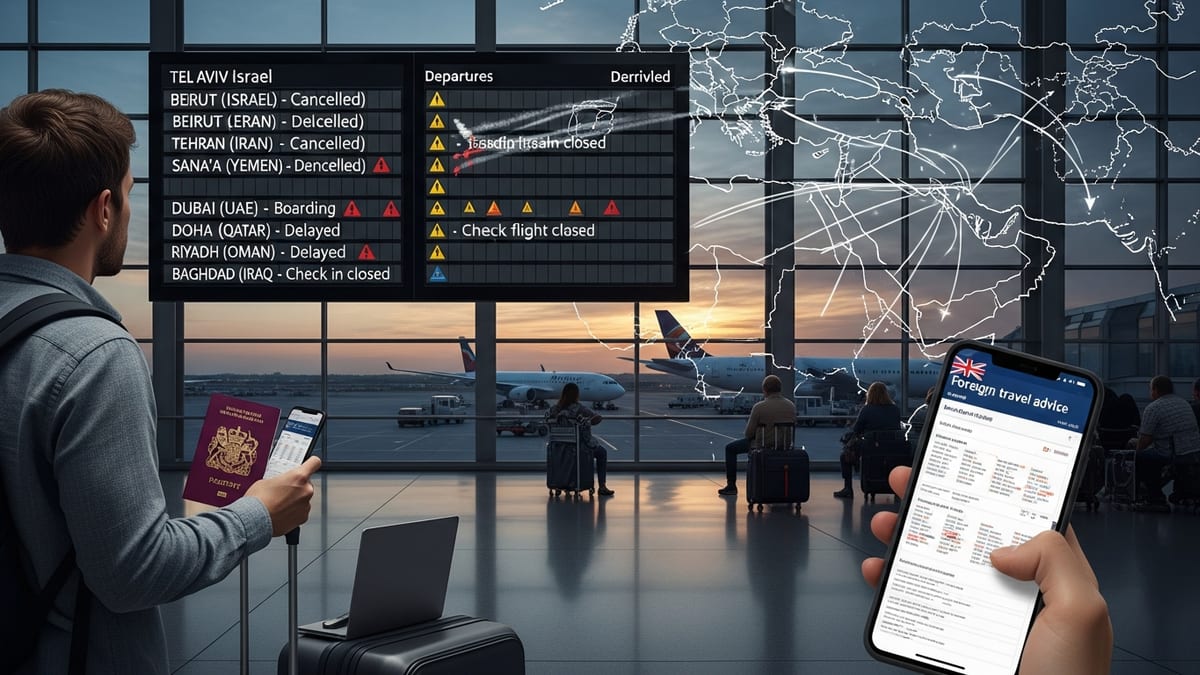
Updated FCDO guidance reshapes the summer getaway map
Publicly available information from the UK Foreign, Commonwealth and Development Office shows that travel advice has been updated for a string of destinations ahead of the main summer holiday period, with the overall message that no trip can be guaranteed safe and that plans may need to change at short notice.
The FCDO continues to publish a tiered system of destination advice, ranging from routine guidance to warnings against all but essential travel or, in some cases, all travel. Recent updates reiterate that British nationals should research their destination carefully, understand local security conditions and be prepared to adjust their itineraries if the situation deteriorates.
Specialist travel coverage notes that these advisories do not ban travel, but they do influence insurance cover, airline schedules and package tour policies. Travellers heading to higher-risk regions this summer are being reminded that ignoring official warnings can leave them without financial protection if they need to cancel or cut short a trip.
Industry commentary also stresses that even destinations traditionally viewed as low-risk can see their status change due to political tension, natural disasters or major events, meaning guidance checked at the time of booking may look very different by the date of departure.
Rising caution over protests, unrest and security threats
Recent foreign travel advice updates place particular emphasis on the impact of protests, occasional unrest and the risk of terrorism in certain parts of the world. In some countries, British travellers are now advised to avoid specific regions, border areas or large public gatherings, even where holidays in main resort zones are still possible.
Travel analysis circulated in recent weeks highlights how demonstrations, even when largely peaceful, can escalate quickly and lead to curfews, roadblocks or sudden curtailment of public transport. Tourists have been warned that being caught in the wrong place at the wrong time can result in missed flights, lengthy delays and unexpected accommodation costs.
Security-focused outlets also underline that major international events, from football tournaments to high-profile political summits, can heighten the risk of opportunistic crime and create a more visible security presence in host cities. British visitors are being urged to follow local media, avoid sensitive sites and keep departure plans under regular review.
At the same time, global risk maps continue to flag a number of countries and regions where the UK government still advises against all or all but essential travel, usually due to conflict, terrorism or widespread instability. Prospective holidaymakers are being encouraged to distinguish between mainstream beach destinations with isolated problem areas and locations where the overall risk is considered unacceptably high.
Transport disruption adds another layer of summer risk
Alongside security considerations, updated guidance for several destinations points to significant transport disruption that could affect British travellers over the coming weeks. A recent FCDO update on the Netherlands, for example, highlights severe interruption to Eurostar services between the UK and the country following a fire near Rotterdam, with operators advising passengers not to attempt cross-channel rail journeys on certain dates.
Similar warnings appear in advice for other European countries, where rail strikes, air traffic control issues or airport staffing shortages are expected to cause delays and cancellations at short notice. Consumer travel columns report that even short-hop city breaks may be affected, with knock-on disruption spreading across wider route networks.
Airlines and tour operators are continuing to urge passengers to monitor their booking portals closely, ensure contact details are up to date and allow additional time for check-in and security. Holidaymakers who have arranged trips independently, combining flights, trains and accommodation from different providers, are considered particularly exposed if one element of their itinerary collapses.
Travel commentators note that while package holiday customers generally enjoy clearer rights to refunds or rebooking when services are cancelled, they are still being told to pay close attention to the small print and to act quickly if their airline or tour company starts amending schedules.
Insurance gaps and cancellation rules under fresh scrutiny
The latest round of summer travel warnings has renewed focus on the fine detail of travel insurance and cancellation policies. Guidance circulated by consumer groups explains that many standard policies will not pay out if a traveller simply changes their mind about visiting a destination that still officially allows non-essential trips, even if media coverage makes them nervous.
In contrast, when the FCDO formally advises against all or all but essential travel to a country or region, package holiday customers may be entitled to refunds or fee-free changes under UK and EU package travel rules, and some insurers will then accept cancellation claims. The timing of any advisory change is therefore critical, particularly for those with imminent departures.
Legal specialists quoted in financial press coverage stress that travellers should keep written records of any changes to official advice and of communications from airlines or tour operators. Evidence of when a warning was introduced or lifted can prove decisive in disputes over refunds, vouchers or alternative arrangements.
There is also growing interest in policies that offer “cancel for any reason” add-ons, which can provide more flexibility but usually at a higher premium. Holidaymakers are being encouraged to weigh these costs against the value of their booking and the volatility of their chosen destination before deciding whether such coverage is worthwhile.
Practical steps for Brits heading abroad this summer
Travel safety campaigns in the UK are using the summer season to remind holidaymakers of a series of basic checks before leaving home. These include confirming that passports meet entry requirements, reviewing any visa or health rules for the destination and keeping digital and paper copies of key documents, from insurance certificates to booking confirmations.
Government-backed information services advise travellers to sign up for email updates on their chosen destination, so that changes in local advice or new warnings arrive directly rather than being missed in the build-up to departure. Similar alerts are available from some airlines, airports and tour operators, offering early notice of disruption or schedule changes.
Experts in risk management recommend that British tourists share their itineraries with family or friends, maintain access to emergency funds and carry contact details for local consular support. Travellers are also being urged to think through how they would react if faced with sudden unrest, a natural disaster or a prolonged transport shutdown, rather than assuming that such scenarios only affect others.
For now, the overall message from publicly available guidance is that millions of summer holidays will go ahead as planned, but that British travellers should avoid complacency. By checking official advisories regularly, understanding insurance limitations and building flexibility into their plans, they can reduce the chance that a long-awaited break abroad turns into an avoidable crisis.