


More news on this day
Beach tourism across the Americas is entering 2026 with record spending, new resort pipelines and intensifying competition, as leading coastal destinations from the United States, Caribbean and Latin America vie for visitors and billions in travel revenue.
Get the latest news straight to your inbox!
Beach Economies Power a High-Stakes Tourism Race
Recent data from international tourism bodies and national agencies indicate that the Americas are benefitting from sustained global travel demand, with tourism receipts in the region reaching the high hundreds of billions of dollars in 2024 and continuing to grow into 2025. Coastal tourism and recreation alone contribute more than 200 billion dollars in gross domestic product annually in the United States, underlining the financial importance of beach destinations from Florida to California.
Studies on the economic value of America’s beaches describe coastal tourism as one of the country’s healthiest industries, projected to grow roughly twice as fast as the wider national economy over the coming decade. That trajectory is helping to frame 2026 as a pivotal year, as destinations move from post-pandemic recovery into a mature phase of competition focused on yield, higher-spending markets and infrastructure investment.
Across the hemisphere, published tourism barometers show that international arrivals to the Americas have moved beyond pre-pandemic levels, with visitor spending rebounding particularly strongly in sun-and-sand destinations. This backdrop is setting the stage for what industry observers are describing as a “beach shockwave” in 2026, as at least 20 leading seaside hubs in North America, the Caribbean and Latin America compete for a larger share of the global leisure travel market.
Market analysis from travel technology and airline data providers points to a solid pipeline of bookings to major coastal destinations, supported by increased air capacity on key beach routes. Confidence indices suggest cautious optimism through the 2026 high seasons, with many beach economies banking on another year of incremental growth in both visitor numbers and expenditure.
U.S. Beach Hubs Scale Up for Bigger Visitor Volumes
In the United States, flagship beach destinations are entering 2026 from a position of relative strength. Publicly available figures for Miami and Miami Beach show a record number of visitors in 2024, generating more than 30 billion dollars in economic impact and accounting for a significant share of local gross domestic product. Early 2025 hotel performance data placed the area among the top U.S. markets for occupancy and revenue per available room, reinforcing its status as a leader in the national beach tourism hierarchy.
Myrtle Beach, long regarded as one of the country’s most tourism-dependent coastal cities, has also reported robust recent performance. Industry reports for 2024 highlight more than 18 million visitors and in excess of 13 billion dollars in visitor spending, with hotel revenues rising year on year. Although some regional commentary suggests mixed results in 2025, the broader trend has positioned the Grand Strand as a central player in the contest for domestic beach travelers in 2026.
Other U.S. coastal markets, from the Gulf Coast to Southern California and Hawaii, are also benefiting from the wider surge in outdoor and coastal recreation. Federal economic data show that outdoor recreation, including beachgoing and water sports, has become a fast-growing segment of the U.S. economy. This has encouraged local tourism organizations to expand marketing around extended stays, shoulder seasons and niche segments such as wellness, sports tourism and events-based beach travel.
At the same time, competition for high-spending visitors is becoming sharper. With international arrivals to the United States facing headwinds in some markets, several U.S. beach destinations are doubling down on domestic travelers while selectively courting Latin American and European segments. The result is a recalibrated strategy for 2026 that emphasizes value, accessibility and diversified experiences beyond the traditional sun-and-surf proposition.
Caribbean Islands and Mexican Coasts Chase Premium Tourism Dollars
Across the Caribbean and Mexico, the 2026 outlook is framed by rising room rates, strong visitor expenditure and a surge in new all-inclusive and luxury developments. Market briefings from regional hotel and tourism associations in early 2026 point to solid performance across many island destinations, with high occupancies and continued investment interest, particularly in the upscale and family segments.
One of the most significant signals is a one billion dollar expansion plan announced by a major all-inclusive resort brand for new and upgraded properties in Turks and Caicos, The Bahamas, Jamaica, Barbados and Exuma. Industry coverage interprets this as a vote of confidence in long-term demand for Caribbean beach vacations, especially among North American families seeking resort-style, high-amenity stays.
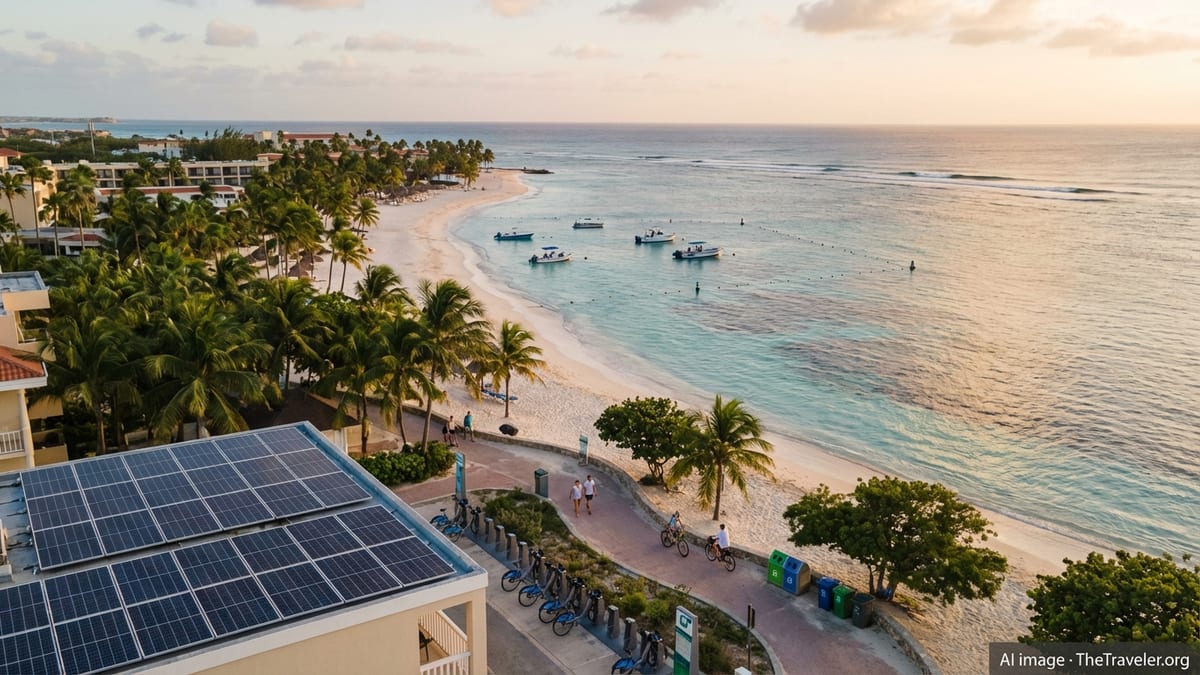
Aruba illustrates the strength of this trend. Government statistics show that by May 2026 the island had already welcomed well over a hundred thousand stay-over visitors in a single month, with visitor nights for the year to date exceeding 1.5 million. Visitor expenditure in 2025 surpassed 3 billion dollars, with roughly three-quarters of spending originating from North America, highlighting the intense competition among islands to capture U.S. and Canadian travel budgets.
Mexican Caribbean destinations such as Cancun and the Riviera Maya continue to rank among the hemisphere’s busiest beach gateways. Travel search data for the 2025 to 2026 winter period indicate double-digit growth in interest for Cancun and Dominican Republic resort hubs like Punta Cana, signaling strong demand heading into the 2026 peak seasons. For many Caribbean and Mexican destinations, the challenge is now to balance rapid growth with sustainability and infrastructure resilience in the face of climate and coastal risks.
Latin American Coasts Leverage Sun, Culture and Events
Beyond the Caribbean, coastal destinations in Latin America are redefining their role in the regional tourism contest. Brazil has emerged as a standout, with national statistics showing international arrivals surpassing 9 million in 2025, up more than 30 percent on the previous year. International tourism receipts approached 8 billion dollars, driven in part by the appeal of Brazilian beach cities that combine sun-and-sea offerings with cultural events and urban experiences.
South American beach metropolises such as Rio de Janeiro, along with Pacific-facing destinations in countries like Colombia and Peru, are increasingly promoted as multi-dimensional tourism products. Reports emphasize not only traditional beach leisure but also gastronomy, music festivals, sports competitions and nature-based excursions, broadening the visitor profile and length of stay.
This strategy is mirrored in parts of Central America, where coastal destinations are tapping into interest in surf tourism, eco-lodges and adventure travel. Industry analysis suggests that these markets are less focused on headline arrival numbers and more on increasing average daily spend and attracting visitors who are willing to pay a premium for distinctive experiences.
As international flight connectivity continues to improve, Latin American beach destinations are expected to play a larger role in the broader Americas tourism landscape in 2026. Their competitive edge lies in the combination of comparatively favorable exchange rates for many source markets and a product mix that spans beaches, culture and nature within a single itinerary.
Data, Climate Pressures and the Next Phase of the Beach Battle
Underlying the 2026 “beach shockwave” is a growing reliance on data-driven decision making. Research collaborations between technology providers and tourism organizations are producing detailed forecasts based on airline bookings, accommodation platforms and real-time search trends. Academic work using booking platform data has demonstrated how destination marketing organizations can forecast shifts in origin markets, length of stay and seasonal patterns, insights that are particularly valuable for beach destinations whose demand is highly seasonal and weather-sensitive.
At the same time, policy papers and coastal management studies highlight the vulnerabilities facing beach tourism. Erosion, sea-level rise and more intense storm activity pose mounting risks to the very assets that underpin beach economies. Analyses of America’s beaches stress the growing costs of beach nourishment and coastal protection, raising questions about how destinations will finance resilience measures while maintaining affordability and competitiveness.
Regulators and local authorities across the Americas are therefore navigating a complex landscape in 2026. On one side is a powerful economic engine in the form of visitor spending that supports millions of jobs and generates significant tax revenue for coastal regions. On the other are long-term sustainability concerns, community pressures around overtourism and housing, and the need to protect fragile marine and shoreline ecosystems.
As TTW’s notional league table of 20 leading Americas beach destinations captures public imagination, the underlying story is less about simple visitor counts and more about strategy. The real battle in 2026 centers on which destinations can convert strong demand into durable, inclusive and climate-resilient tourism models, ensuring that the region’s beaches remain both economically vital and environmentally viable for the decade ahead.