


More news on this day
Dnata Travel Group has consolidated commercial cruise leadership across its destination management brands in the Middle East and Asia, a move designed to streamline how cruise lines work with the company across key embarkation ports and capitalise on fast-rising regional demand for ocean and river sailings.
Get the latest news straight to your inbox!
Expanded Role Brings Cruise Functions Under One Umbrella
According to recently published company information, Dnata Travel Group has expanded the remit of Alvin Materi, Commercial Director, Cruise, to oversee cruise sales and commercial partnerships at Arabian Adventures in the Middle East, in addition to his existing responsibility for Destination Asia’s operations across Asia. The change effectively creates a single point of commercial leadership for cruise across Dnata’s principal destination management businesses in both regions.
The unified role is structured to give cruise lines more consistent access to Dnata’s network of on-the-ground services, which range from shore excursions and transfers to turnaround logistics in major ports. Publicly available statements indicate that the group expects the change to simplify account management for partners that deploy ships on multi-region deployments covering the Gulf, Indian Ocean and Asia.
Dnata Travel Group, part of the Emirates Group, has long positioned cruise as a strategic growth segment within its wider travel portfolio. Previous investments in cruise-focused brands and distribution platforms laid the groundwork for a more coordinated regional approach, and the new leadership structure appears to be the latest step in building scale around that strategy.
Coordinated Support for Cruise Lines Across Key Gateways
Industry coverage of the announcement highlights that Dnata is aiming to offer cruise operators “more coordinated support across multiple ports” as ships increasingly combine Middle Eastern and Asian itineraries in a single season. By having one commercial lead across Arabian Adventures and Destination Asia, the group is seeking to present a unified offer that spans marquee gateways such as Dubai, Abu Dhabi, Singapore, Hong Kong and key regional ports.
The move is expected to reduce fragmentation for cruise partners when planning deployment, contracting shore experiences and managing operational requirements in multiple countries. Reports indicate that Dnata is emphasising simplified communication channels, common service standards and a more integrated approach to pricing and product design across its footprint.
For cruise brands, particularly those expanding winter and shoulder-season programs in the Gulf and Southeast Asia, a consolidated destination management partner may help accelerate itinerary development and differentiate guest experiences on shore. Market observers suggest that this could be especially relevant for premium and luxury lines looking to curate more customised land programmes in both regions.
Rising Cruise Demand in Middle East and Asia Underpins Shift
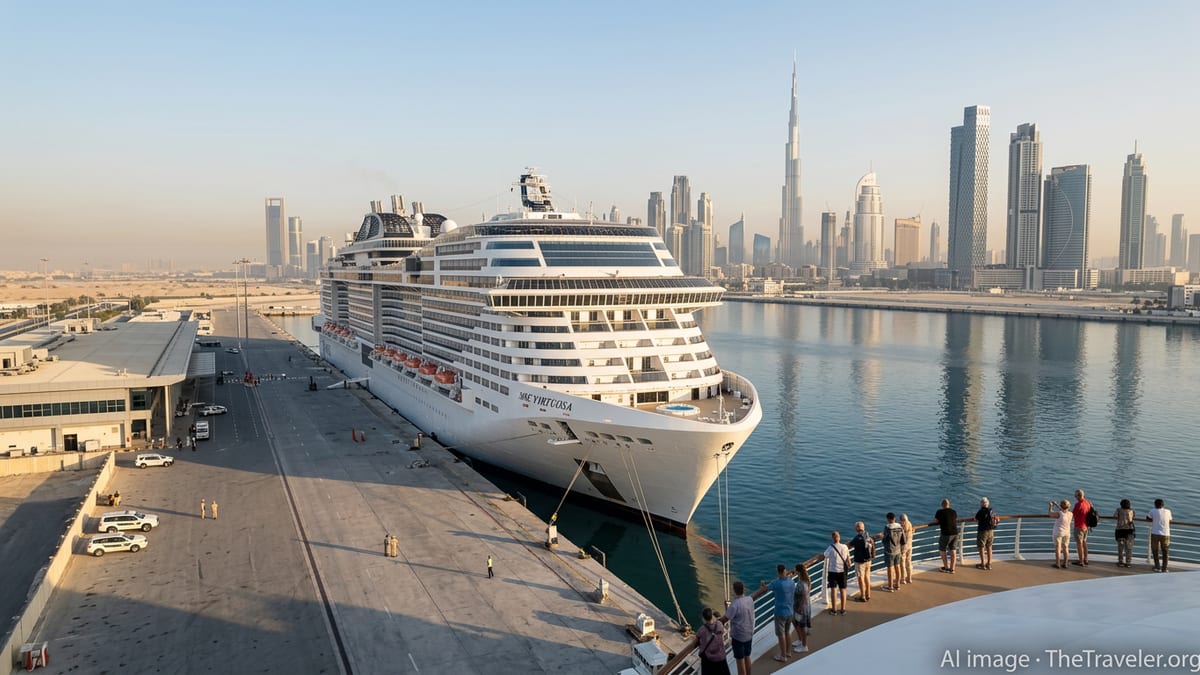
The leadership consolidation comes as both the Middle East and Asia emerge as increasingly important cruise source and destination markets. Industry reports point to a steady expansion of homeport operations in Dubai and other Gulf ports, alongside the continued recovery and diversification of Asian cruise deployment following the pandemic-era pause.
Middle Eastern ports have been investing in dedicated cruise terminals and visitor infrastructure, positioning the region as a gateway between Europe, Africa and Asia for both ocean and expedition-style itineraries. At the same time, Southeast Asian destinations continue to build on their appeal for warm-weather cruising, with itineraries that combine cultural capitals, beach destinations and emerging secondary ports.
Within this context, Dnata’s decision to unify cruise leadership is widely viewed as a response to the growing complexity of regional deployment patterns. With more ships operating repositioning voyages, world cruises and linked Middle East–Asia seasons, cruise lines are seeking partners that can support consistent product delivery across a wide geography. The new structure appears intended to align Dnata’s commercial organisation with that demand.
Strengthening Dnata’s Position in High-Value Travel Segments
Recent analysis of Dnata Travel Group’s broader strategy indicates a concerted shift toward higher-yield travel segments, including luxury, experiential and cruise products. Within that framework, cruise is seen as a sector where deep destination expertise and local operational capabilities can create significant value for both trade partners and end customers.
By centralising cruise leadership for the Middle East and Asia, Dnata is reinforcing its positioning as a single, region-spanning partner able to package pre- and post-cruise stays, bespoke excursions and complex ground arrangements. Publicly available commentary around the group’s growth plans notes that such segments align with a focus on more complex, higher-margin travel rather than purely volume-driven business.
Analysts following the regional travel and tourism sector suggest that the new structure could also support closer collaboration between Dnata’s destination management businesses and its various trade-facing brands and bedbanks. A more integrated cruise strategy may, over time, translate into expanded product for travel agents and tour operators selling sailings that originate or call in the Middle East and Asia.
Implications for Regional Cruise Ecosystems
The decision to unify cruise leadership across two major regions is being interpreted by some industry observers as a signal of confidence in the long-term growth trajectory of cruising in and around the Indian Ocean basin. As capacity gradually increases and itineraries diversify beyond traditional hubs, the availability of coordinated shore and land services is likely to be a key factor in destination competitiveness.
For port authorities, tourism boards and local suppliers working with Dnata’s destination management brands, the new structure may lead to more joined-up engagement around itinerary planning and product development. While concrete outcomes will depend on how the unified leadership translates into day-to-day collaboration, the framework is designed to encourage a more holistic view of the cruise value chain from port calls through to extended land arrangements.
For travellers, the impact of the change will be most visible in the form of curated experiences that feel more consistent from one region to the next, even as itineraries span very different cultures and landscapes. If Dnata’s unified cruise leadership delivers the efficiencies and innovation it is targeting, cruise guests sailing through the Middle East and Asia in the coming seasons could encounter a broader choice of integrated, destination-rich programs on shore.