


More news on this day
British travellers planning summer holidays abroad are being urged to review their plans and prepare for disruption after new guidance highlighted rising risks from extreme heat, wildfires, regional conflicts and travel scams across popular destinations.
Get the latest news straight to your inbox!
Heatwave danger and wildfire disruption across Europe
Publicly available information shows that the UK Foreign, Commonwealth & Development Office (FCDO) has updated advice for several European hotspots as an intense early-summer heatwave pushes temperatures well above seasonal norms. Recent updates for France, Spain and Portugal refer to higher than normal temperatures and an increased risk of wildfires in areas heavily frequented by British tourists.
Weather agencies across the continent report temperatures climbing towards or above 40C in parts of western and southern Europe. A high-pressure system has generated what meteorologists describe as a prolonged heat dome, trapping hot air over countries such as France, Spain, Portugal and Italy, and raising concerns about health impacts, overloaded hospitals and pressure on power grids.
The Met Office has issued an Amber extreme heat warning for parts of the UK, highlighting the likelihood of hot conditions extending into key school holiday weeks. Similar alerts in mainland Europe are already affecting outdoor events, transport networks and tourist attractions, with some rail operators urging passengers not to travel at peak times and local authorities temporarily closing sites during the hottest hours of the day.
Travel industry reports suggest that British holidaymakers may face short-notice changes to itineraries, including cancelled excursions, adjusted check-in times and restrictions on outdoor activities. Travellers are being encouraged to factor heat risk into destination choices and to understand that disruption linked to extreme temperatures may not always trigger automatic compensation from carriers or tour providers.
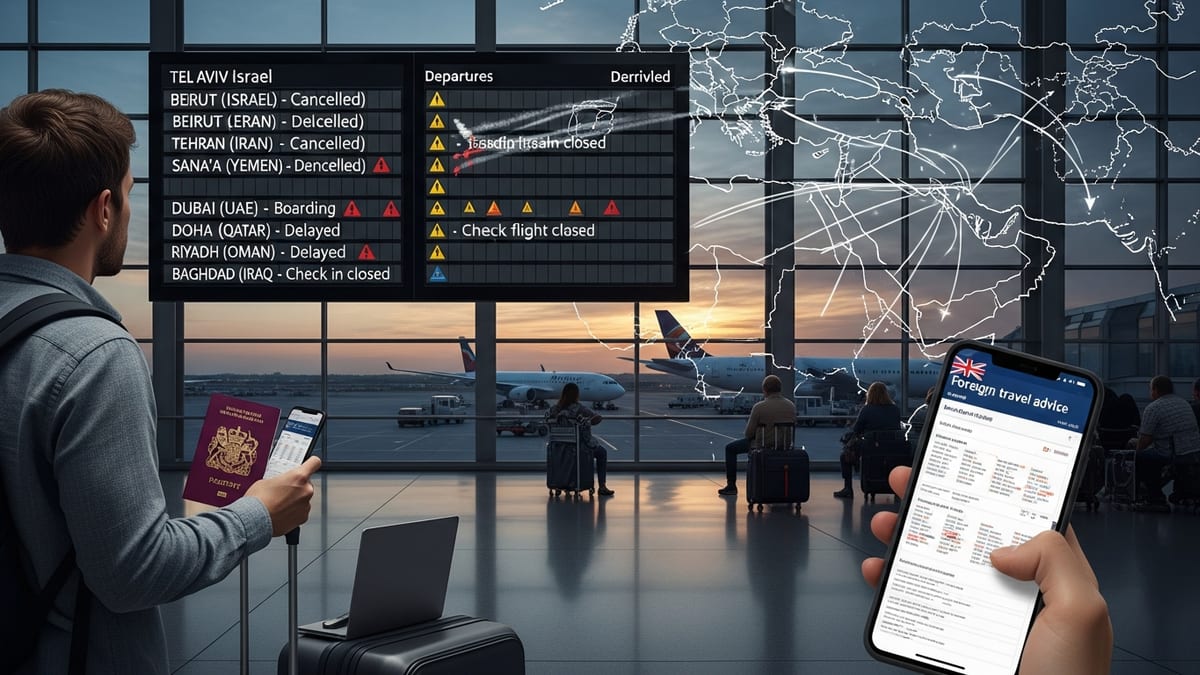
Conflict hotspots and evolving security advisories
Alongside weather-related risks, updated travel advisories continue to highlight conflict-affected regions where trips may be severely curtailed or strongly discouraged. The FCDO currently advises against travel or all but essential travel to several destinations, including parts of Ukraine, where recent guidance reiterates the potential for missile and drone attacks and stresses that travel insurance could be invalidated if trips go ahead in defiance of official warnings.
While these destinations account for a smaller share of mass-market summer holidays, consumer advocates note that a minority of British travellers are still booking trips or overland journeys through neighbouring regions without fully checking the latest restrictions. In some cases, travellers who proceed despite clear warnings may find that insurance providers refuse to cover cancellation, medical treatment or emergency evacuation.
Security analysts point out that sudden changes in regional tensions, local unrest or terror alerts can affect even traditionally popular tourism markets, sometimes with little notice. Government travel pages emphasise that advice is kept under review, meaning that guidance can tighten or relax rapidly in response to developments on the ground.
Industry observers suggest that British tourists should monitor official advisories not only at the point of booking but again shortly before departure and during their trip. In practical terms, that means being prepared for route changes, avoiding large public gatherings where tensions are elevated and having a clear plan in case local authorities introduce curfews or restrict movement.
Paperwork pitfalls: passports, new systems and fake fees
Travel specialists are also drawing attention to a series of paperwork traps that could disrupt summer getaways. The UK government’s foreign travel checklist, updated in June, reiterates the importance of confirming passport validity rules for each destination, particularly in Europe, where Schengen-area countries typically require at least three months of validity remaining on the date of intended departure and may reject documents issued more than ten years earlier.
In parallel, Europe is preparing to introduce the European Travel Information and Authorisation System, or ETIAS, a new pre-travel approval that will apply to British visitors heading to most EU and Schengen-associated states. Guidance from consumer organisations indicates that ETIAS is not yet in force, despite widespread online advertising, and warns that websites already offering to sell approvals are not legitimate. Prospective travellers are advised to treat any request for payment for ETIAS in 2026 with extreme caution and to await confirmation from official EU channels.
Similar concerns have been raised over third-party websites charging high fees for routine services such as applying for electronic travel authorisations or renewing passports. While some intermediaries offer form-filling support, official advice stresses that most British travellers can complete applications directly and at lower cost through government portals. Awareness campaigns urge holidaymakers to check that any site they use is the genuine official service before entering passport details or payment information.
Insurance experts also note that documentation issues can have knock-on effects on cover. Travellers who are turned away at the border because of expired passports, missing visas or incorrect entry requirements may not be able to reclaim their costs, particularly if they did not follow clearly published rules. Reading the small print of policies and the latest entry guidance is therefore being described as a key part of pre-departure planning this summer.
Insurance, health cover and the hidden cost of medical care
With temperatures rising and healthcare systems in popular destinations preparing for additional pressure, UK guidance is putting renewed emphasis on robust insurance and health cover. The foreign travel checklist underlines that even within Europe, a European Health Insurance Card or its replacement, the Global Health Insurance Card, may not cover all medical expenses and will never pay for medical repatriation to the UK.
Travel insurers increasingly highlight exclusions related to extreme weather, conflict and high-risk activities. Some policies specify that they will not pay out if a traveller ignores government advice about avoiding a destination, while others may require evidence that an official advisory or local warning was in place before accepting claims linked to wildfires, heat-related cancellations or air-quality disruptions.
Consumer advocates report a growing number of disputes where tourists assumed that any disruption caused by heatwaves, smoke, or delayed flights would automatically be compensated. In reality, compensation rules vary between airlines, tour operators and insurers, and may depend on whether the underlying cause is classed as an extraordinary circumstance, such as severe weather or natural disaster.
Health professionals warn that older travellers, children and people with underlying conditions face particular risks during prolonged heat events. Recommendations circulating in public health guidance include avoiding strenuous activity during the hottest parts of the day, staying hydrated, seeking air-conditioned accommodation where possible and being alert to early signs of heat exhaustion or heatstroke. Holidaymakers are advised to make sure their insurance details, medication lists and emergency contacts are stored both digitally and on paper in case devices fail.
Practical steps for safer summer travel
Amid the fresh wave of warnings, official travel advice continues to stress preparation rather than panic. British nationals are encouraged to sign up for updates on their chosen destination, keep copies of important documents, and leave contact information for accommodation and itineraries with trusted family or friends at home.
The government’s checklist recommends double-checking that travel insurance is in place from the day of booking, not just from the day of departure, to ensure protection if circumstances change before the trip begins. Travellers are urged to confirm that policies provide sufficient medical and cancellation cover and to consider whether add-ons for activities such as hiking, boat trips or car hire are necessary.
Tourism analysts suggest that flexible bookings, refundable rates and alternative travel dates may prove valuable in a summer marked by climate volatility and shifting advisories. Some operators are reporting rising interest in so-called coolcation destinations in northern Europe and the higher Alps, where temperatures are expected to be more manageable than in southern beach resorts.
Ultimately, the latest warnings aim to encourage British holidaymakers to make informed decisions rather than abandon trips altogether. By monitoring official advice, understanding insurance limitations, guarding against online scams and adjusting plans in response to extreme heat and other hazards, travellers are being told they can still enjoy a summer break abroad while significantly reducing the risks.