


More news on this day
Summer holidaymakers heading to Europe are being urged to plan for severe border delays after Ryanair highlighted seven airports where new EU biometric checks are already causing long queues and raising fears of waits of up to six hours.
Get the latest news straight to your inbox!
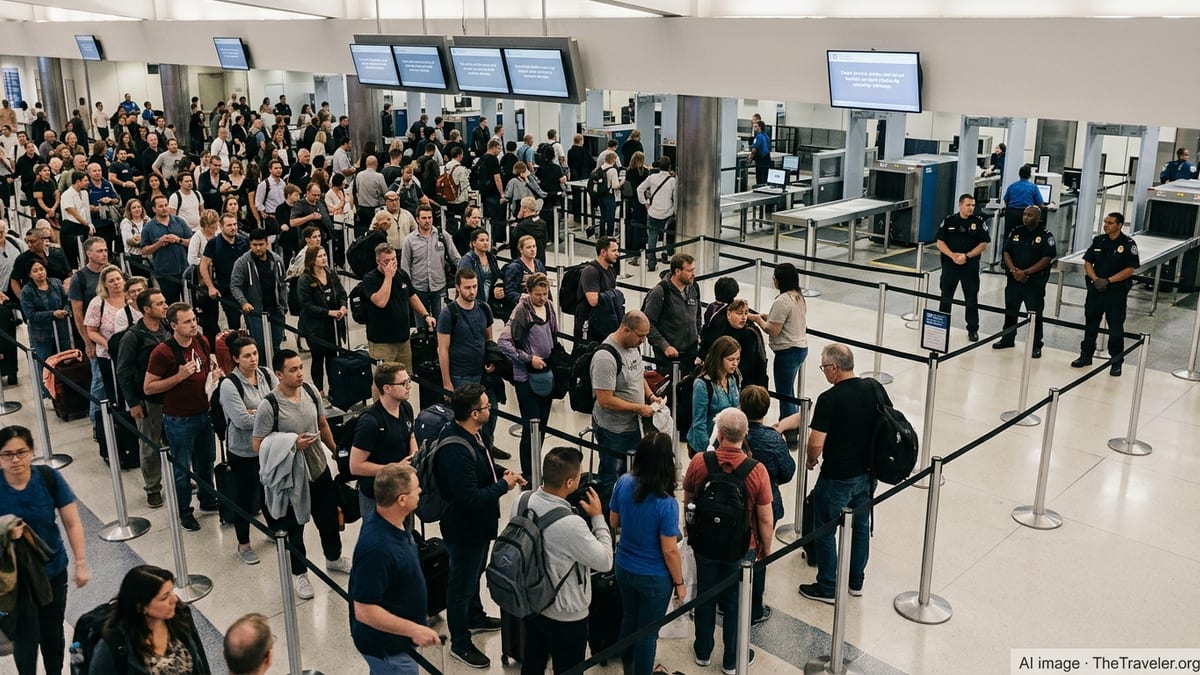
Seven airports flagged as high risk for summer delays
Ryanair has publicly identified seven European airports where passengers are experiencing some of the longest waits linked to the European Union’s new Entry/Exit System, or EES. Reports indicate that these hubs, which serve large volumes of short-haul leisure traffic, are struggling to process non-EU arrivals and departures at peak times despite months of preparation.
The airline says its internal operational data and customer feedback show that passport control at these airports is frequently overwhelmed during early-morning and evening banked departures, when multiple flights feed into the same border-control areas. Processing times that once took minutes are now stretching into hours for travellers who need to complete first-time biometric registration under EES.
While individual airports are publishing their own guidance and insisting that measures are being taken to ease congestion, independent travel coverage across Europe points to a pattern of bottlenecks wherever large numbers of UK and other non-EU passengers converge. The seven airports highlighted by Ryanair are described as “not ready” for full summer volumes, with particular concern for family groups and passengers with tight connections.
Ryanair’s warning focuses on routes between Schengen and non-Schengen destinations, which are most affected by the new checks. Travellers using these airports have been advised to build in significant extra time before departure and to expect crowding at border-control queues, even when flights themselves remain on schedule.
New EU Entry/Exit System at the heart of the disruption
The Entry/Exit System is a major overhaul of how the European Union records the movements of non-EU nationals crossing its external borders. Instead of the traditional passport stamping, travellers now undergo biometric registration, including fingerprints and facial images, which are stored in a shared digital database.
According to publicly available information, first-time enrolment can take several minutes per person, particularly when passengers are unfamiliar with the process or when self-service kiosks are in short supply. At busy leisure airports handling planeloads of tourists arriving within minutes of each other, this additional time is multiplying across entire flights and creating long, slow-moving queues at border control.
Industry bodies and travel analysts have been warning for weeks that the timing of the EES rollout coincides with the peak summer season, when staffing and infrastructure are already under pressure. Some airport groups have reported waits of four hours at peak times, while airline trade associations caution that in a worst-case scenario, queues could stretch to six hours if systems falter or if data needs to be re-entered for returning passengers.
The European Commission has convened meetings with airline and airport representatives to review early operational data and discuss whether further adjustments are needed. However, with millions of travellers already booked for July and August, any significant redesign of the process is unlikely to come in time to fully prevent congestion this summer.
Warnings for British and non-EU travellers
British travellers are among those most exposed to the current disruption, as every trip into the Schengen area now counts as an external border crossing. Travel reports from across the continent describe lengthy queues for UK passport holders at popular sun destinations and major transfer hubs, particularly at the start of school holidays.
Low-cost and network carriers alike have begun issuing their own guidance to passengers, urging earlier airport arrival times and careful planning of connections. Some airlines are advising travellers to reach the airport at least three hours before departure, even for short-haul flights, to avoid missing flights because of passport control queues.
Ryanair’s latest advisory aligns with these broader industry messages, with an emphasis on families and infrequent travellers who may underestimate how long border procedures can take this summer. Publicly available guidance stresses that delays at state-run border-control points fall outside airline responsibility, meaning passengers who arrive late at the gate because of queues may have limited options for rebooking or compensation.
Consumer advocates are recommending that travellers build in generous time buffers, especially when transiting through one of the seven airports highlighted by Ryanair or any hub that has already reported multi-hour EES queues. Travel insurance policies may offer some protection in cases of severe disruption, but terms vary widely and often exclude delays attributable to border processes.
How travellers can reduce the risk of six-hour queues
Although the structural causes of the delays lie with the rollout of EES and airport resourcing, there are several practical steps passengers can take to mitigate the impact. Travel experts recommend treating all flights involving an external Schengen border as high-risk for longer waits, particularly at busy holiday times and on popular leisure routes.
Passengers are advised to arrive at airports earlier than they might have done in previous summers, check in online wherever possible, and proceed directly to security and passport control rather than lingering in landside areas. Having passports, boarding passes and any supporting travel documents ready before reaching EES kiosks or border counters can help keep individual processing times to a minimum.
For families and groups, experts suggest discussing the process in advance, keeping children close at checkpoints and avoiding last-minute bag repacking that can slow the line. Where airports offer separate queues for vulnerable passengers or those with reduced mobility, pre-booking assistance can also reduce the risk of missing a flight during peak congestion.
Travel-planning specialists further recommend avoiding tight self-made connections, such as separately booked onward flights or time-sensitive ground transfers, through airports currently experiencing EES delays. Building in additional time between flights or opting for more resilient itineraries can provide a safety margin if queues begin to stretch towards the multi-hour mark.
Industry pressure grows for phased implementation
Ryanair’s latest warning adds to growing pressure from airlines and airport groups for a more phased implementation of EES. Trade associations representing carriers and airports have publicly argued that full-scale biometric checks should be postponed or limited during the busiest weeks of the year to avoid severe disruption for passengers and frontline staff.
Some airport leaders have already signalled that they are unable to guarantee smooth operations under current conditions, citing staffing shortages, incomplete IT rollouts and a shortage of functioning kiosks at key border-control points. In some locations, reports indicate that the system has struggled to retain traveller data reliably, forcing passengers to repeat biometric enrolment on subsequent journeys.
As the main school-holiday period begins across Europe, attention is now turning to how quickly local authorities can adjust staffing patterns, open additional border channels and streamline passenger flows. Airlines are monitoring real-time performance at the seven airports highlighted by Ryanair, as well as at other hubs where EES is producing similar strain, to decide whether further public advisories or schedule adjustments are needed.
For travellers, the message from the latest wave of industry warnings is clear: this summer will test the resilience of Europe’s new border systems, and those flying through the most affected airports should be prepared for border-control waits that far exceed their pre-pandemic experience.