


More news on this day
Ferrovie dello Stato Italiane, the Italian state owned rail group widely known as FS Group, has issued a new 650 million euro green bond, reinforcing the growing role of sustainable finance in funding Europe’s rail and infrastructure investments.
Get the latest news straight to your inbox!
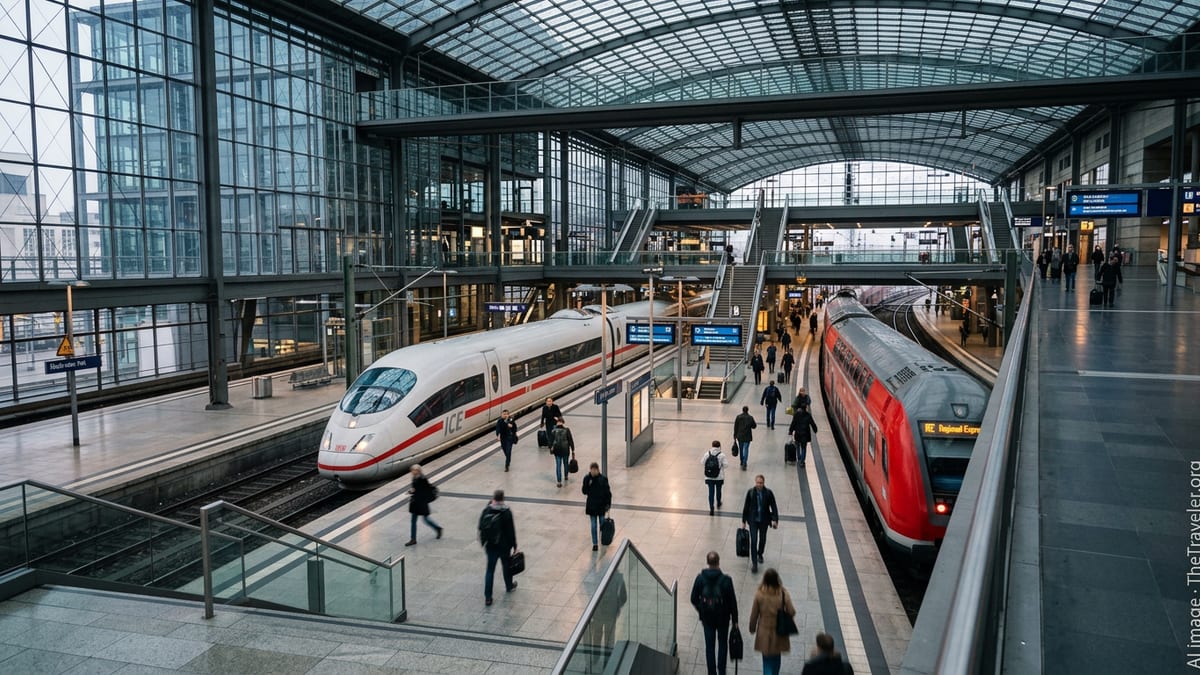
Five year green bond targets low carbon rail projects
According to publicly available information from the company and financial news outlets, the 650 million euro security has been structured as a five year senior unsecured green bond under FS Group’s Euro Medium Term Note programme. The bond is expected to mature in June 2031, aligning with the multi year investment horizon for major rail upgrades and network enhancements across Italy.
Reports indicate that the proceeds are earmarked for projects classified as environmentally sustainable under FS Group’s Green Bond Framework. Eligible investments typically include upgrades to electrified lines, energy efficient rolling stock, station modernisation with lower energy consumption, and related infrastructure that can shift passengers and freight from road and air to rail.
Publicly available documentation shows that FS Group has positioned green bonds as a core component of its funding strategy, using them to channel capital directly into projects with measurable climate benefits. By issuing in line with established green bond principles and its own framework, the group aims to provide investors with transparency on how proceeds are allocated and what environmental indicators are monitored over time.
For the wider transport sector, the transaction underlines the trend of using labelled debt to support modal shift policies, in which rail is promoted as a backbone for more sustainable mobility within and between European cities.
Strong investor demand and pricing signal confidence
Financial press coverage indicates that demand for the new FS Group green bond significantly exceeded the 650 million euro amount on offer, with orders reported at more than three times the final size of the deal. Such oversubscription is viewed by analysts as a sign of continued appetite for high grade, clearly structured sustainable debt from large European infrastructure issuers.
Reports further suggest that the strong order book allowed FS Group to tighten pricing compared with initial guidance, resulting in what market commentators describe as a competitive funding cost for the issuer. The bond carries a fixed coupon identified in specialist financial media at around the mid 3 percent area, reflecting both prevailing euro credit conditions and the issuer’s credit quality.
Market reports note that the investor base was geographically diversified, including institutional buyers from across Europe. Asset managers with dedicated environmental, social and governance mandates, as well as mainstream fixed income funds integrating sustainability criteria, were among the main participants. This mix supports the view that green bonds are increasingly mainstream within the European credit universe.
For investors, FS Group’s sizeable and recurring presence in the sustainable bond market offers the prospect of liquidity and benchmark status, qualities that can be attractive for portfolio construction and index inclusion.
FS Group consolidates its role in Europe’s green bond market
The latest transaction adds to a series of previous green bond issues by FS Group, which has steadily built one of the largest green bond portfolios among Italian corporates. Company materials and prior announcements show that the group has been issuing green bonds for several years, using them to finance both infrastructure and rolling stock aligned with its sustainability objectives.
With the new 650 million euro placement, FS Group further consolidates its position as a reference issuer in the European transport and infrastructure segment of the green bond market. Analysts note that regular and transparent use of the green label can help strengthen the company’s profile with international investors focused on climate aligned assets.
FS Group’s strategy links its funding activities with national and European policy goals that prioritize rail as a key tool for decarbonising transport. By directing bond proceeds to projects such as electrification, capacity upgrades, and more efficient trains, the group aims to contribute to emissions reduction targets while improving the quality and reliability of services for passengers and freight customers.
The scale of FS Group’s programme also illustrates how large transport operators can use capital markets to support long term transition plans, complementing public funding and traditional bank loans with diversified sources of sustainable finance.
Implications for sustainable transport investors and destinations
For investors focused on sustainable transport, the FS Group issuance provides further evidence that rail related green bonds are becoming a recurrent theme in European fixed income markets. The combination of investment grade credit, tangible environmental benefits, and alignment with established frameworks makes such instruments a growing component of many climate focused portfolios.
The transaction is also relevant for destinations and regions served by FS Group’s network. As proceeds are deployed into projects such as network upgrades, new trains, and station improvements, Italian cities and tourist hubs could benefit from more frequent, reliable, and energy efficient services that encourage visitors to choose rail over higher emission modes.
Travel industry observers point out that improved long distance and regional rail can support tourism strategies built around slower, lower impact travel. Enhanced connections between major cities, secondary destinations, and cultural or coastal regions can make it easier for international visitors to explore Italy while keeping their carbon footprint lower than if they relied primarily on air or private car travel.
In this sense, the FS Group green bond is not only a financial transaction but also a component of a broader shift in how mobility infrastructure is financed and delivered, with potential effects on how travelers move across the country in the coming years.
Growing momentum for green finance in European rail
The FS Group deal fits into a wider pattern of European rail and transport operators turning to green bonds and other sustainable instruments to fund fleet renewal and infrastructure modernisation. Recent transactions in the sector show that capital markets are increasingly receptive to clearly defined, climate focused investment plans backed by robust reporting commitments.
For policymakers advocating a shift from short haul flights and road traffic to rail, the expansion of dedicated green financing channels is a critical enabler. By tapping investors that value environmental impact alongside financial returns, issuers can accelerate projects that might otherwise progress more slowly under traditional funding models.
From a traveler’s perspective, the ultimate impact of such financing decisions is likely to be felt in service quality, connectivity, and the availability of viable low carbon alternatives to driving or flying. As FS Group and other operators execute their investment pipelines backed by green bonds, passengers may see incremental improvements in journey times, comfort, and network coverage across key European corridors.
For now, the successful placement of FS Group’s latest 650 million euro green bond underscores how sustainable finance has moved from a niche concept to a central feature of funding strategies in the rail sector, with implications that reach from capital markets to station platforms.