


More news on this day
San Francisco International Airport is experiencing a sharp rise in delays as a federal ban on simultaneous parallel landings ripples through airline schedules, with new data indicating that average waits have roughly quadrupled this year and are increasingly affecting long-haul flights to Japan, China, South Korea and India.
Get the latest news straight to your inbox!
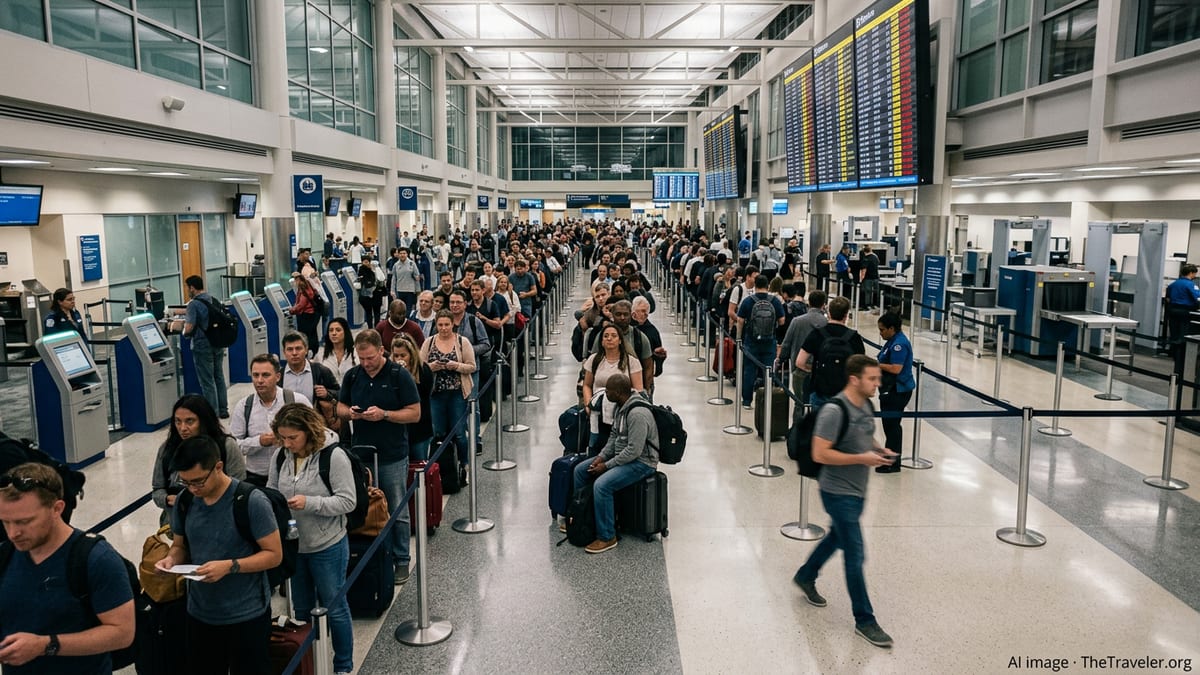
FAA Safety Shift Redraws SFO’s Arrival Playbook
Publicly available information from San Francisco International Airport and the Federal Aviation Administration shows that the agency has barred side by side visual landings on the airport’s closely spaced parallel runways, a procedure that previously allowed two aircraft to arrive almost simultaneously in clear weather. The restriction, which follows years of concern about wake turbulence and tight spacing on approach, effectively forces a more conservative, one after another pattern for many arrivals.
The revised procedures come on top of ongoing runway construction and capacity management programs at SFO. Airport planning documents and local coverage indicate that the maximum arrival rate has been cut, meaning fewer aircraft can be scheduled to land each hour even under ideal conditions. When demand exceeds that reduced capacity, the result is a growing backlog of flights holding in the air or waiting on the ground at origin airports.
Operational summaries on federal traffic management sites now routinely show arrival and departure delays into SFO, often averaging around 20 minutes but spiking higher during peak periods or poor weather. Industry analyses note that while a 20 minute delay may appear modest, the cumulative effect across tightly timed banked schedules can cascade through an airline’s national and international network.
Experts who study air traffic systems point out that SFO’s parallel runways are among the closest of any major hub, which historically made the airport both efficient in good weather and vulnerable when visibility or safety rules limited simultaneous operations. The latest FAA measures tilt that balance toward additional safety margin, at the cost of fewer arrivals per hour and more frequent delay programs.
Delays Quadruple as Peak Periods Strain the System
Regional reporting and airport performance data reviewed over recent weeks indicate that SFO’s average delay time has roughly quadrupled this year compared with prior norms, with many flights now seeing waits of close to 20 minutes as a baseline. On days with storm systems or coastal fog, delays can stretch far beyond that as the lower arrival rate collides with heavy demand.
The pattern is especially pronounced during morning and early afternoon banks, when transcontinental and transpacific flights converge on the Bay Area. Travel coverage focused on SFO’s operations notes that the airport is running more frequent ground delay programs, in which aircraft are held at their departure airports rather than allowed to depart and then circle near San Francisco waiting for a landing slot.
These programs reduce airborne holding but mean that passengers experience delays before takeoff instead of after arrival. Airlines then face difficult decisions about whether to protect on time departure statistics or prioritize connections at destination. With average delays rising from a handful of minutes to the neighborhood of twenty, those tradeoffs are becoming a daily operational challenge.
Industry observers also emphasize that the new normal at SFO adds pressure to crew scheduling and aircraft rotations. Aircraft arriving behind schedule can miss maintenance windows or crew duty limits, particularly on long haul flights, increasing the risk of follow on cancellations or rolling delays later in the day.
Transpacific Routes to Japan, China, Korea and India Hit Hard
San Francisco’s role as a major transpacific gateway means that changes in runway procedures disproportionately affect flights linking the West Coast to Asia and India. SFO’s own traffic reports and airline schedule data show dense schedules to Tokyo, Osaka, Seoul, Shanghai, Beijing, Guangzhou, Hong Kong, Delhi, Mumbai and other key cities across the Pacific and the Indian subcontinent.
These services are typically operated by widebody aircraft loaded with connecting passengers and cargo, leaving limited flexibility to absorb longer arrival queues. When a flight from Asia or India approaches SFO during a congested period, it may be placed into a holding pattern or slowed en route to fit into the constrained landing sequence dictated by the FAA’s parallel approach limits.
Travel industry coverage notes that this has two knock on effects. First, even relatively small inbound delays can cause passengers to miss domestic connections, forcing airlines to rebook travelers across already busy routes. Second, aircraft that arrive late into San Francisco are often scheduled to continue on to other long haul destinations, including overnight “red eye” flights. Any disruption on the transpacific leg can therefore spread across multiple continents.
Analysts following the Bay Area aviation market suggest that some travelers bound for Asia or India are beginning to favor alternative gateways such as Los Angeles or Seattle when schedules permit, seeking to avoid the rising risk of missed connections at SFO. However, because many corporate contracts and frequent flyer loyalties tie travelers to specific hubs, a large share of high value international demand remains concentrated at San Francisco despite the delays.
Major Global Carriers Adjust: United, Delta, ANA, Lufthansa, Air India and American
United Airlines, SFO’s largest tenant and primary transpacific hub carrier, has been the most exposed to the changing arrival profile. Public timetables and on time performance statistics indicate that United’s long haul flights to Tokyo, Seoul, Shanghai, Beijing and Delhi are among those most likely to be affected when parallel landing restrictions constrain peak hour arrivals. The airline has already been operating through a period of runway construction related delays at SFO, compounding the impact of the new FAA rules.
Delta Air Lines, which operates a smaller but strategically important set of SFO routes, including services to major domestic hubs and selected international destinations, is also contending with the revised procedures. Aviation analysts point out that Delta’s SFO flights often feed its joint venture partners on onward routes, meaning that a late arrival into San Francisco can disrupt connections far beyond the Bay Area.
On the international side, carriers such as All Nippon Airways and Lufthansa use SFO as a critical gateway for traffic between Japan or Germany and the western United States. Publicly available schedule data shows that these flights are typically timed to arrive during busy afternoon banks, when the interaction between the FAA’s landing cap and connecting departures is most acute. Arrival delays at SFO can therefore echo across networks in Tokyo, Frankfurt and beyond as crews and aircraft miss scheduled turns.
Air India and other airlines serving the Indian subcontinent face similar challenges, particularly on ultra long haul services where crew duty time is tightly regulated and recovery options are limited. More recently, American Airlines has been expanding its own presence at SFO, including premium facilities in Harvey Milk Terminal 1, positioning the carrier to compete more directly for Bay Area traffic. As American’s schedule grows, it too is becoming more exposed to the airport’s structural delay environment, especially on banked morning and evening departures.
Travelers Weigh Alternatives as Bay Area Capacity Debate Grows
For passengers, the practical effect of SFO’s evolving operating rules is a greater need for buffer time and contingency planning. Travel reports increasingly recommend that those connecting through San Francisco on long haul itineraries allow longer layovers, purchase changeable tickets where possible, and closely monitor flight status on the day of travel. Some frequent travelers are shifting to early day departures, when delays can be easier to absorb, or choosing nonstop services from secondary Bay Area airports when available.
The situation has renewed discussion of how air traffic is distributed across the region. Commentaries on Bay Area aviation note that Oakland and San Jose airports have spare capacity but far fewer long haul international routes, meaning that SFO remains the default choice for most transpacific and India bound travelers. Until additional widebody services are developed at those alternative airports, San Francisco’s parallel landing constraints will continue to shape the region’s long distance connectivity.
Airport planning documents acknowledge that federal safety directives may remain in place for an extended period, even after current runway projects are complete. While minor procedural refinements and technology upgrades could eventually help SFO recover some arrival capacity within the safety framework, observers widely expect that the era of near simultaneous visual arrivals on the airport’s closely spaced parallels is over.
In the meantime, airlines including United, Delta, ANA, Lufthansa, Air India and American are recalibrating their schedules, and passengers are adjusting expectations around punctuality when flying through San Francisco. With average delays now hovering around twenty minutes and occasionally rising much higher, SFO’s experience illustrates the complex tradeoff between maximizing capacity and maintaining wider safety margins in one of the nation’s most constrained pieces of airspace.