


More news on this day
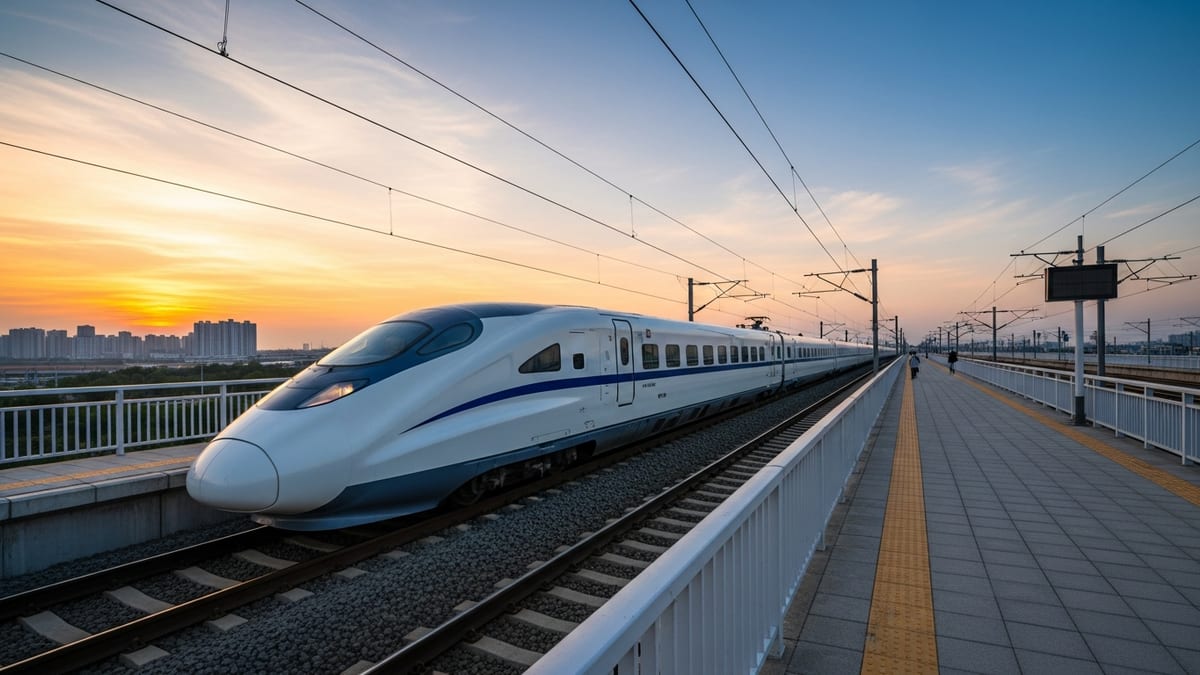
Vietnamese conglomerate THACO has signed a technology transfer and localisation agreement with South Korea’s Hyundai Rotem and confirmed plans for a new rail rolling stock complex, positioning Ho Chi Minh City as a future manufacturing base for metro and high speed trains in Southeast Asia.
Get the latest news straight to your inbox!
Strategic technology transfer anchored in Vietnam’s rail ambitions
According to published coverage in Vietnam and South Korea, THACO and Hyundai Rotem concluded a detailed technology transfer and localisation agreement in Hanoi on 11 June 2026, following an initial localisation accord between the two companies signed in Seoul in December 2025. The latest agreement focuses on enabling domestic production of metro rolling stock for Vietnam’s expanding urban rail networks, with a particular emphasis on Ho Chi Minh City’s Ben Thanh Thu Thiem line.
Publicly available information indicates that Hyundai Rotem will provide manufacturing know how for car bodies, bogies, traction systems and other core components, along with training programmes for Vietnamese engineers and technicians. The cooperation is structured to move beyond simple assembly of imported kits and instead build capabilities for full-cycle production, maintenance and overhaul within Vietnam.
The deal aligns with Vietnam’s broader national strategy to revive and expand its rail infrastructure after decades of underinvestment. Urban metro schemes in Ho Chi Minh City and Hanoi, along with proposed high speed corridors linking major economic hubs, are generating long-term demand for rolling stock and related systems that the government hopes can be met increasingly by local industry.
Analysts following the agreement note that it also supports South Korea’s ambition to deepen industrial cooperation with Vietnam by pairing Korean technology platforms with local production. For Hyundai Rotem, the partnership could serve as a springboard into other Southeast Asian rail projects as countries across the region accelerate investment in mass transit.
New rolling stock complex planned in Ho Chi Minh City
Publicly available project descriptions show that THACO plans to establish a purpose-built railway manufacturing complex within its 786-hectare Mechanical Engineering and Supporting Industry Park in Binh Co Ward, Ho Chi Minh City. The site is expected to house rolling stock production lines, a closed test track and a large-scale service and repair centre.
The complex is being designed to support both urban metro vehicles and, over time, high speed trainsets bearing the THACO brand under license from Hyundai Rotem. Early plans suggest phased investment, starting with facilities for car body fabrication and final assembly, then progressively adding component manufacturing, systems integration and testing capabilities as localisation deepens.
Industry observers say the location in Ho Chi Minh City places the plant close to the country’s largest urban rail market and key ports, easing both logistics and export potential. The park already hosts mechanical and automotive suppliers, giving the new rail facility access to an emerging ecosystem of metalworking, electrical and precision engineering firms.
For travellers, the project signals a future in which metro trains in Ho Chi Minh City and other Vietnamese cities could be designed and built domestically, potentially shortening procurement cycles and simplifying long-term maintenance and upgrades compared with entirely imported fleets.
Building on THACO’s manufacturing base in Chu Lai and beyond
The rail partnership builds on THACO’s existing push to transform itself into a regional manufacturing hub. In recent years, the group has inaugurated a cluster of auto parts factories and an R&D centre at its Chu Lai complex in Quang Nam Province, investing heavily in stamping, chassis and body plants together with design and materials testing facilities.
Company publications describe 12 advanced factories at Chu Lai that already supply components to domestic and export automotive brands, supported by modern production lines and quality systems aligned with international standards. This background in high-volume, high-precision manufacturing provides a foundation for THACO’s move into the more specialised field of rail rolling stock.
Travel industry analysts note that by diversifying from cars, buses and trucks into trains, THACO is positioning itself to participate in a broader mobility ecosystem as Vietnam’s transport landscape changes. New expressways, airports and metro systems are reshaping how visitors and residents move between cities and tourist destinations, and local manufacturing capability could become a competitive advantage as new routes and services are rolled out.
The group has also been developing additional mechanical industry parks, including a specialised complex in Binh Duong Province, further extending its geographic footprint across southern Vietnam’s main industrial corridor. This network of sites is expected to support supply chains for the planned rail facility in Ho Chi Minh City.
Regional implications for Southeast Asian rail and tourism
Observers of Southeast Asia’s rail build-out suggest that the THACO Hyundai Rotem agreement could have implications beyond Vietnam’s borders. With Bangkok, Jakarta, Manila and Kuala Lumpur all expanding or planning metro and commuter rail systems, the region is projected to need hundreds of trainsets over the coming decades.
If the technology transfer results in a competitive production base in Vietnam, the Ho Chi Minh City complex could potentially bid for export contracts, introducing a new supplier to the regional market. That could encourage more standardisation around Korean-derived technology platforms, simplifying cross-border procurement and maintenance for operators.
From a tourism perspective, locally produced metro fleets and improved rail infrastructure may support more predictable, comfortable journeys within Vietnamese cities and along intercity corridors. Easier access to airports, heritage districts and coastal resorts by rail is seen as a factor that can disperse visitors more evenly and relieve pressure on congested streets in popular destinations.
Travel planners are watching how quickly the first domestically produced metro cars emerge from the new facility once construction starts. While detailed timelines have not been widely disclosed, the multi-year nature of rail projects means that the benefits for passengers and visitors are likely to unfold gradually as new lines open and fleets expand.
Timeline and next steps for the partnership
According to news reports, the June 2026 technology transfer agreement follows more than a year of preparatory work between THACO and Hyundai Rotem, including site visits, feasibility studies and discussions on localisation targets. The December 2025 localisation accord is described as the framework for the deeper, implementation-focused deal signed this year.
In the near term, the partners are expected to concentrate on engineering design, staff training and setting up initial production processes, while Vietnam advances planning and funding for metro projects that will ultimately use the domestically built trains. Industry coverage indicates that localisation of components is likely to increase in stages rather than all at once.
For international travellers eyeing Vietnam as a destination over the coming decade, the agreement represents another sign that the country’s urban transport networks are on a path to become more extensive and more reliable. As metro and potential high speed rail links gradually take shape, they are expected to complement aviation and coach travel, offering new options for moving between key city centres, business districts and tourist hubs.
While many project details remain to be finalised, the combination of THACO’s industrial capacity and Hyundai Rotem’s rail technology is being closely tracked by both transport industry specialists and tourism stakeholders looking at how mobility improvements will reshape travel across Vietnam and the wider region.