


More news on this day
Around 200 passengers who had signed up to live at sea for years aboard the Villa Vie Odyssey have seen their plans abruptly cut short in Cambodia, after the residential cruise ship suspended its multi-year global voyage due to surging fuel costs and ordered everyone to disembark.
Get the latest news straight to your inbox!
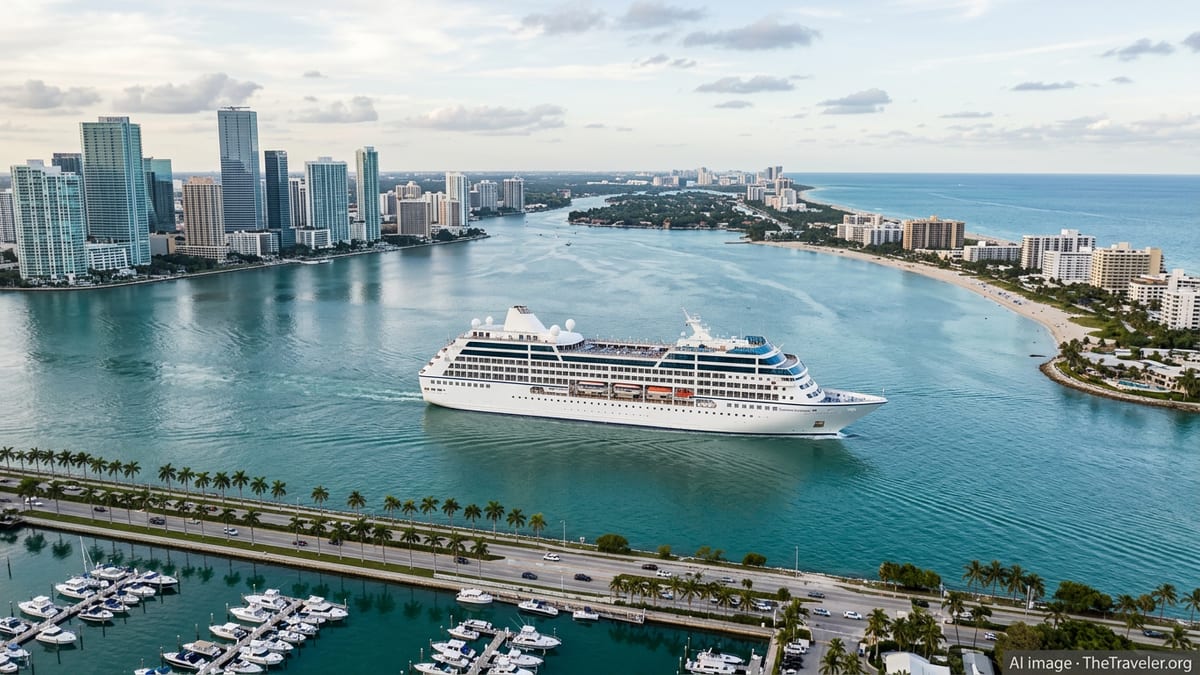
Residential "life at sea" cruise cuts journey in Southeast Asia
The Villa Vie Odyssey, operated by Florida-based company Villa Vie Residences, had been marketed as a floating neighborhood, offering long-term stays and a continuous journey to nearly 150 countries over about three and a half years. The ship departed Belfast, Northern Ireland, in October 2024 and was scheduled to circle the globe, visiting all seven continents.
Publicly available information indicates that the vessel, which has capacity for around 650 guests, had been operating with a smaller community of full-time and long-stay residents rather than traditional short-cruise passengers. Many had sold or rented out homes on land and relocated personal belongings, and in some cases pets, to their cabins on board.
The voyage was suspended in late October 2026 while the ship was docked in Sihanoukville, a coastal city in southern Cambodia on the Gulf of Thailand. Reports indicate that passengers were informed that operations could not continue under current fuel prices and that the ship would not proceed with its planned itinerary across Asia and onward to other regions.
Accounts in international media describe a hurried change of plans for guests who had expected to remain at sea for years, with some residents suddenly searching for accommodation on shore and last-minute flights out of Cambodia.
Soaring fuel prices and geopolitics upend a niche cruise model
According to published coverage, Villa Vie Residences attributed the suspension to rapidly rising fuel costs linked to the wider energy shock following conflict involving Iran earlier in 2026. Operators in the cruise and shipping sectors have reported sharp increases in bunker fuel prices since hostilities disrupted supply routes and pushed up global oil benchmarks.
The residential cruise concept relies on predictable long-term operating costs because cabins are marketed more like apartments than holiday berths. Prospective residents typically pay substantial upfront sums or long-duration leases to secure cabins, along with ongoing monthly fees intended to cover fuel, food, crew, port charges and maintenance.
Analysts following the sector note that when fuel prices spike beyond assumptions built into a company’s business model, operators have limited flexibility, especially if contracts lock in pricing for residents over several years. Increasing monthly fees mid-voyage risks legal and reputational challenges, while absorbing the extra costs can quickly undermine financial viability.
In this case, the company has said through public statements and notices cited in news reports that it is seeking ways to restructure and potentially resume operations, but there is no confirmed restart timetable. Passengers have reported uncertainty over how much of their payments may ultimately be refunded and whether alternative arrangements at sea will be offered.
Stranded passengers navigate housing, visas and onward travel
With the Odyssey’s voyage halted, around 200 passengers suddenly found themselves residents without a ship in a Cambodian port city most had not planned to call home. Local and regional media describe guests scrambling to secure hotel rooms in Sihanoukville and nearby areas while they evaluate options for longer-term accommodation or return travel.
Some travelers had oriented their entire lives around the multi-year sailing, giving up leases or selling properties in their home countries before boarding. Others had synchronized medical treatment, remote work or retirement planning with the timing of the voyage. For these residents in particular, the abrupt stop has translated into complex logistical and financial decisions.
Reports from on the ground indicate that passengers are also dealing with immigration requirements, as Cambodian tourist permissions for some nationalities are limited in duration and may not align with an open-ended stay ashore. Travel advisers note that many travelers in similar situations must quickly check visa rules, arrange onward tickets and ensure that passports meet regional entry conditions if they plan to continue journeys independently across Southeast Asia.
While some passengers appear to be booking flights back to North America and Europe, others are considering remaining in the region for at least part of the time they had expected to be at sea, turning the unplanned pause into an improvised overland trip through Cambodia, Thailand and neighboring countries.
Spotlight on the risks of long-term "live aboard" travel
The situation on the Villa Vie Odyssey follows other recent disruptions in the emerging market for residential and multi-year cruises. In 2023 and 2024, a planned three-year “Life at Sea” voyage under a different operator was canceled before departure, leaving customers who had already rearranged their lives on land to navigate delays in refunds and alternative housing.
Travel industry observers suggest that these events highlight both the appeal and the vulnerability of long-duration sea living. Residents are effectively tying housing, transportation and much of their daily life to a single corporate operator. If that operator faces financial or operational challenges, the consequences can affect nearly every aspect of a resident’s life at once, from where they sleep to how they access healthcare.
Consumer advocates recommend that travelers considering similar products look closely at financial protections such as refund policies, trust or escrow arrangements for large upfront payments, and the terms covering cancellations or major itinerary changes. Traditional cruise bookings may be covered by national travel guarantee schemes or card-company protections, but coverage for multi-year residential products can be more complex and vary by jurisdiction.
Specialists also point to the importance of keeping a contingency fund and a flexible plan on land, even for those committed to a long-term life at sea. The experience of Odyssey residents in Cambodia underscores how quickly global events, from wars affecting oil prices to regulatory changes, can ripple through to individual travelers.
Cambodia’s role and what comes next for the Odyssey
The Odyssey’s unplanned pause has also placed a spotlight on Sihanoukville, a port that has sought to diversify its economy beyond casinos and construction by attracting more regional cruise calls. Local coverage notes that hotels and guesthouses in the city and nearby coastal resorts have seen an uptick in demand as former passengers search for short-term stays.
For Cambodian authorities and port operators, the episode illustrates both the opportunities and challenges associated with hosting long-haul cruise traffic. While embarking and disembarking passengers can provide a temporary boost to local businesses, sudden changes in ship operations can strain local capacity and create demand for consular support from multiple embassies.
As of early November 2026, publicly available statements from Villa Vie Residences indicate that the company is exploring options to secure additional financing and adjust its business model. However, there has been no definitive public announcement on when, or if, the Odyssey will resume its planned global itinerary or what that would mean for current and would-be residents.
For the roughly 200 people who expected to call the Villa Vie Odyssey home for years, the sudden stop in Sihanoukville has transformed a carefully planned world voyage into an unexpected test of flexibility and resilience, with their next chapter unfolding not at sea but on land.