


More news on this day
Asia’s post‑pandemic travel rebound is colliding with a new wave of economic shocks, as surging oil, liquefied natural gas and other import costs from the Middle East combine with volatile gold prices to strain tourism-dependent economies from South Korea and China to India, Vietnam and Sri Lanka.
Get the latest news straight to your inbox!
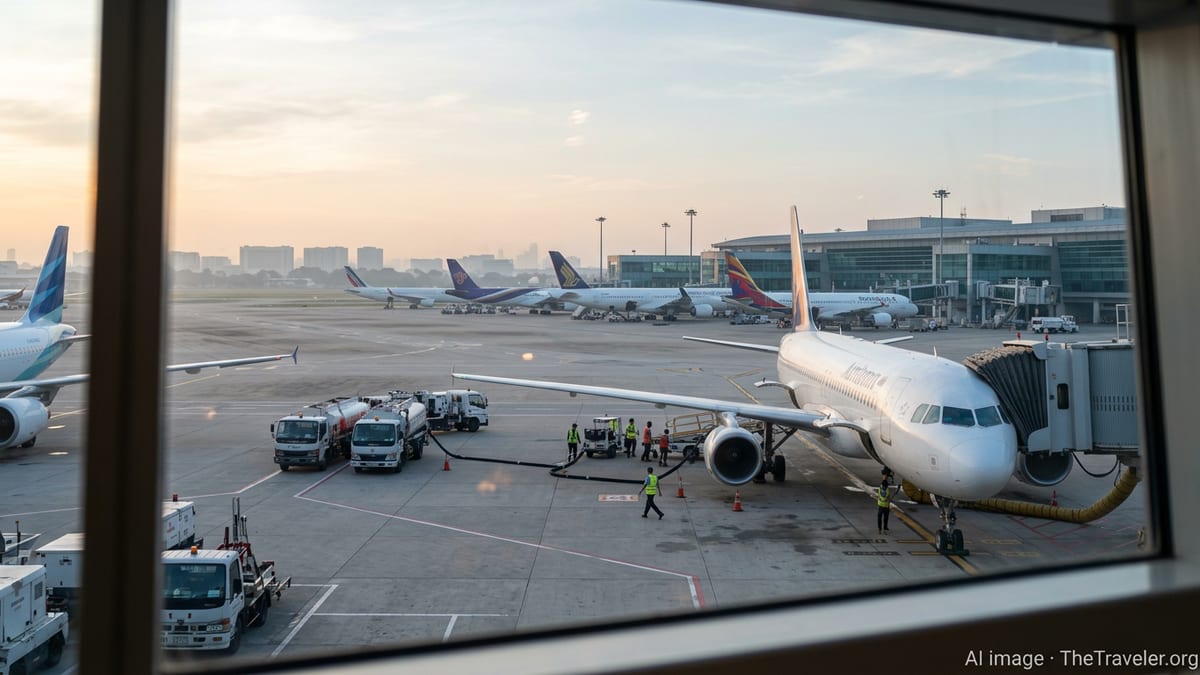
Middle East Conflict Triggers New Fuel and Price Shock
Recent conflict involving Iran, Israel and the United States has upended oil and gas flows through the Strait of Hormuz, a critical supply route for Asian energy imports. Publicly available data on the Iran war and related fuel crisis indicate that airspace closures, shipping disruptions and sanctions have pushed global crude and jet fuel benchmarks sharply higher in early 2026, with kerosene-based products more than doubling from levels seen at the start of the year.
Industry and aviation analyses describe a jet fuel market under severe pressure, with refiners struggling to replace Middle Eastern grades suited to aviation fuel production. Reports from airline associations and energy consultancies suggest that fuel now accounts for a significantly larger share of carrier operating costs, magnifying the effect of any further volatility on ticket prices and route viability.
Forecasts from market research firms show that Asia, the world’s largest net importer of fossil fuels, is particularly exposed. Japan relies on the Middle East for the vast majority of its crude imports, while China, India, South Korea and several Southeast Asian economies also depend heavily on suppliers in Saudi Arabia, Iraq, the United Arab Emirates and other Gulf states. Rising insurance premiums for ships, longer maritime routes and tighter credit conditions are adding to the cost burden.
At the same time, recent commentary from banks and commodity analysts highlights a sharp correction in precious metals after a period of record highs, leaving gold prices volatile and retreating from peak levels. That slump is eroding the spending power of gold-backed households and investors in key markets such as India, China and Southeast Asia, where gold has long served as a store of wealth and a de facto travel savings vehicle.
South Korea’s Tourism Boom Meets Mounting Headwinds
South Korea entered 2026 on the back of a strong tourism rebound. Market coverage of Korean tourism and hospitality shows that international arrivals in 2025 surpassed 18 million, nearing pre-pandemic levels, with local brokerages projecting more than 20 million foreign visitors for 2026. Hotel investment reports pointed to solid occupancy in Seoul, Busan and Jeju, while duty-free operators benefited from returning Chinese group tours and rising independent travel from Southeast Asia.
The fuel and import price shock is now complicating that recovery. According to regional aviation tracking, Korean carriers are among those rerouting Europe-bound flights around conflict zones, adding time and distance to journeys that previously crossed Iranian and nearby airspace. Longer routings increase fuel burn at exactly the moment when jet fuel and insurance costs are climbing, putting pressure on airlines to raise fares or trim capacity.
Travel industry updates indicate that South Korean airlines have introduced or expanded fuel surcharges on international tickets in recent weeks. Analysts monitoring the local equity market report that some Korean aviation and tourism stocks have lagged the broader index this spring, reflecting concerns that sustained cost pressures could dampen travel demand later in the year, especially among price-sensitive regional visitors.
At the destination level, higher energy and import bills are feeding through to hotel operations and daily tourism spending. Accommodation operators face steeper utility charges and higher prices for imported food, beverages and consumables, while restaurants and transport providers serving visitors are contending with rising fuel and ingredient costs. These pressures are gradually filtering into room rates, tour prices and local transport fares, narrowing the margin for further increases without deterring travelers.
China, Japan, Australia and India Face Parallel Strains
Across the wider Asia-Pacific region, a similar pattern is emerging. China’s large outbound travel market is contending with higher ticket prices on long-haul routes to Europe and the Middle East, where airlines are absorbing extended flight times and costly detours. Regional coverage of airline schedules shows selective capacity cuts on marginal routes as carriers prioritize profitable corridors and leisure demand that can bear higher prices.
Japan, heavily dependent on Middle Eastern crude, is grappling with the dual effect of rising import costs and a weaker currency. Reports on Japan’s energy security planning note calls from refiners to draw on strategic reserves, underlining the severity of the supply squeeze. For inbound tourism, which had been buoyed by a favorable exchange rate, hoteliers and rail operators are now recalibrating as higher energy costs threaten to erode the spending advantage that attracted many visitors in 2024 and 2025.
Australia and India are experiencing their own version of the turbulence. Australian carriers with long-haul networks to Europe and Asia are dealing with higher jet fuel prices and possible route changes around the Middle East and Russia, while tourism operators in destinations like Queensland and Western Australia report increased operational costs tied to imported fuel and goods. In India, where many households hold wealth in gold, the recent pullback and volatility in gold prices is colliding with higher airfare and hotel bills, raising concerns that some middle-class travelers may scale back or postpone overseas trips.
Energy analysts caution that even if crude benchmarks stabilize, the lagged impact on refined products such as jet fuel and marine fuel could keep travel-related costs elevated through at least the peak northern-hemisphere summer season. That prospect is prompting tourism authorities and private operators around the region to re-evaluate marketing campaigns, pricing strategies and capacity plans for the remainder of 2026.
Tourism Hotspots in Southeast Asia and Sri Lanka Under Pressure
In Southeast Asia, where tourism is a critical source of foreign exchange, higher transport and import costs are hitting multiple points along the travel value chain. Industry updates for Thailand, Vietnam and Malaysia describe airlines adding fuel surcharges and adjusting frequencies on regional routes, while low-cost carriers that connect secondary cities are reassessing the viability of ultra-low-fare models in an environment of expensive fuel.
Vietnam, one of Asia’s fastest-growing tourism destinations before the pandemic, now faces a more fragile outlook. Publicly available analysis from regional consultants notes that Vietnamese carriers have limited scope to absorb higher fuel costs without passing them on to passengers, increasing the risk that budget-conscious travelers will shorten trips or opt for domestic holidays. At the same time, hotels and resorts along the country’s coast rely heavily on imported food, beverages and construction materials, exposing them to the broader surge in shipping and commodity prices.
Sri Lanka, which is still rebuilding visitor confidence after its recent economic crisis, is also vulnerable. The country’s dependence on imported fuel and basic goods means that any spike in oil and liquefied natural gas prices quickly filters through to transport, electricity and food, three core components of the visitor experience. Analysts following Sri Lanka’s debt restructuring and tourism revival efforts warn that higher global borrowing costs and pricier energy imports could slow the sector’s recovery and constrain investment in new capacity.
Other Indian Ocean and Gulf-adjacent destinations, including the Maldives and Jordan, are contending with similar dynamics. Airlines serving these markets are balancing higher operating costs against the need to maintain competitive fares and reliable schedules, particularly for long-haul travelers from Europe and East Asia who must now navigate a more complex and uncertain route network.
Daily Travel Life: Higher Fares, Uncertain Schedules and Squeezed Budgets
For travelers themselves, the unfolding crisis is most visible in rising fares, frequent schedule changes and a noticeable uptick in on-the-ground costs. Aviation tracking services and booking platforms show that average ticket prices on many Asia–Europe and trans-Middle East routes have risen markedly since late February 2026, with additional fuel surcharges applied even to some short-haul regional flights.
Flight schedules have grown more unpredictable as airlines adjust routings and frequencies in response to fuel prices and airspace restrictions. Publicly accessible aviation databases reflect an uptick in cancellations and last-minute equipment changes, particularly on routes that previously relied on overflying or connecting through Middle Eastern hubs. Travelers passing through major Asian airports are being advised by airlines and travel agents to allow more time for connections and to monitor updates closely.
Once on the ground, visitors in cities from Seoul and Tokyo to Hanoi and Colombo are encountering higher prices for taxis, ride-hailing services, domestic flights and even intercity trains where operators are adjusting fares to reflect energy costs. Hoteliers and tour operators are quietly revising pricing for late 2026 departures, and some package providers are adding explicit fuel or currency adjustment clauses that allow surcharges if conditions worsen.
Despite these headwinds, demand for travel across much of Asia remains resilient for now, supported by pent-up desire for international trips and relatively strong labor markets in key source countries. However, economists and tourism analysts warn that if elevated energy and import prices persist, or if gold and other household assets suffer deeper corrections, the region’s newly regained status as one of the world’s fastest-growing tourism hubs could come under renewed strain.