


More news on this day
British holidaymakers heading to Greece this summer are being told to expect a simpler, faster arrival, as the country confirms that UK passport holders will not be required to undergo biometric scanning at Greek border checkpoints during the 2026 peak season.
Get the latest news straight to your inbox!
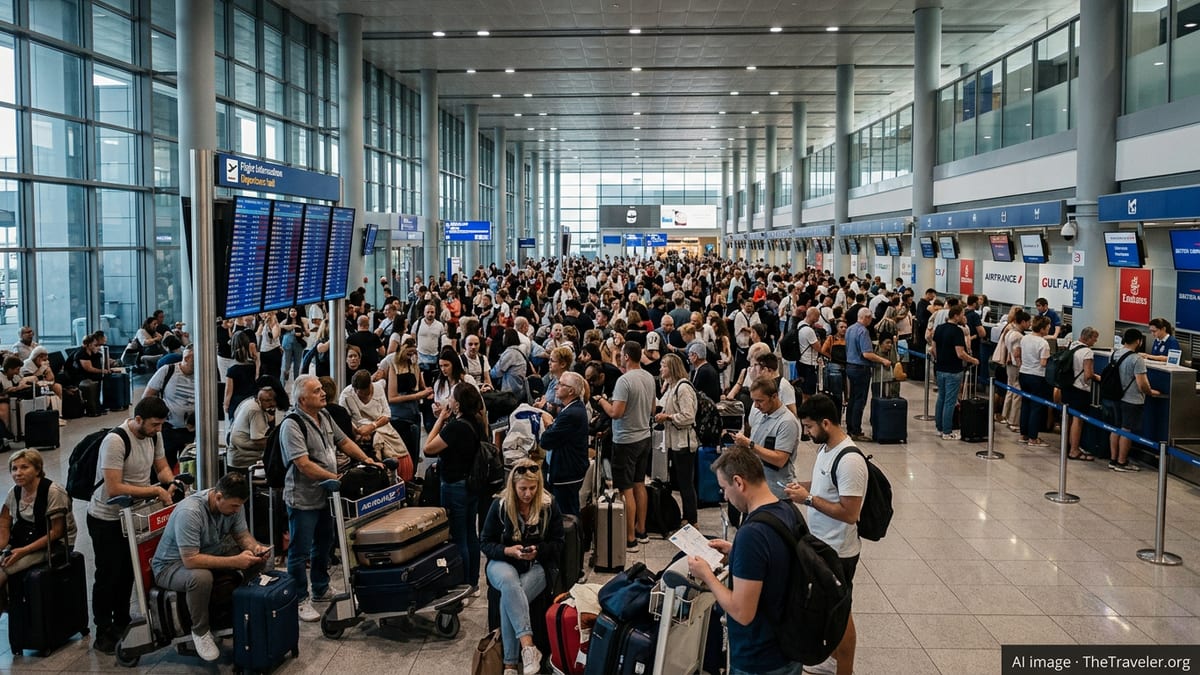
Greece Carves Out a Biometric-Free Lane for UK Visitors
Publicly available information from Greek and European travel policy sources shows that Greece has moved to exempt UK passport holders from the European Union’s new Entry/Exit System biometric registration at its borders. The decision comes just weeks after the EU’s automated border scheme became operational at Schengen crossings, replacing traditional passport stamping with digital fingerprint and facial-image collection for most non-EU nationals.
Reports indicate that Greek authorities have used flexibilities built into the EU rollout to suspend biometric capture for British travellers, even while keeping the core Entry/Exit recording in place. In practice, UK visitors to Greece this summer are expected to present their passports for a standard manual check, without being required to scan fingerprints or have facial biometrics taken at self-service kiosks.
Coverage from specialist visa and travel outlets describes Greece as the first Schengen country to introduce such a targeted relaxation for UK nationals, a group that represents one of its most valuable tourism markets. The move sets Greece apart from several other EU destinations where early implementation of the new system has been associated with longer queues and more complex processing for non-EU tourists.
Travel industry analysis frames the exemption as a calculated attempt to protect Greece’s competitiveness at a time when many British holidaymakers are actively comparing how smooth border procedures are across different Mediterranean destinations.
Background: EU’s New Entry/Exit System Meets a Busy Summer
The EU’s Entry/Exit System, which became fully operational in April 2026 after years of delays, is designed to register the movements of non-EU nationals entering and leaving the Schengen Area. Under the standard model, visitors from countries such as the UK, the United States and Canada are asked to provide biometric data, including fingerprints and a facial image, which are stored along with passport details in a centralised database.
In the months leading up to the 2026 summer season, media coverage across Europe highlighted concerns from airports, airlines and passenger groups about the potential for bottlenecks as travellers encounter the system for the first time. Reports from major European hubs have described queues stretching to several hours on peak days, particularly where infrastructure and staffing levels have struggled to match demand.
European policy briefings show that, in response to these worries, EU institutions granted member states additional leeway to phase in or temporarily scale back certain parts of the system ahead of the peak holiday rush. Greece has taken advantage of this flexibility in a targeted way, choosing to suspend biometric enrolment specifically for UK tourists rather than pausing the entire Entry/Exit framework.
Analysts note that Greece’s choice also reflects local aviation realities. Many of the country’s island airports operate near capacity over the summer months, handling concentrated arrival waves from the UK and other markets in short time windows. Removing the need for first-time biometric capture for British visitors is being viewed as a way to avoid serious congestion at terminals that have limited space for new kiosks and queuing zones.
What British Holidaymakers Can Expect at Greek Borders
For UK travellers, the most immediate change this summer is in the level of contact with the new technology, rather than a total departure from EU rules. According to travel advisories and recent reporting, British passport holders arriving in Greece should still expect their journeys to be logged in the Entry/Exit database through a passport scan, but they will not be asked to complete fingerprinting or additional biometric steps on arrival or departure.
Instead, arrivals at Greek airports and seaports are expected to resemble the familiar pre-system process, with border officers conducting visual checks of travel documents and, where applicable, stamping passports. Travel commentators suggest that this approach could translate into shorter lines at Greek checkpoints compared with some other Schengen destinations where full biometric enrolment is being carried out for every non-EU passenger.
Airlines and tour operators focusing on the UK outbound market have begun to update their guidance to emphasise that flights to Greece may involve fewer new procedures at the border than services to certain other EU countries. Industry-facing briefings describe the exemption as a potential selling point for Greek resorts at a time when British travellers are closely watching stories about delays linked to the new system.
However, specialists also note that passengers should still allow extra time when travelling at peak periods, given that wider EU processes, security screening and airport capacity constraints remain important factors. The absence of biometric collection for UK visitors in Greece does not remove normal passport controls or the need to comply with standard Schengen entry conditions.
Impact on Greek Tourism and the Wider Mediterranean Market
Tourism data compiled over recent years consistently ranks the UK among Greece’s largest and highest-spending visitor groups. British travellers have long been a mainstay of summer traffic to islands such as Crete, Rhodes, Corfu and Zakynthos, as well as to mainland destinations including Athens and Halkidiki. Travel sector reporting suggests that any perception of friction at the border can quickly influence booking patterns within this market.
Industry observers argue that Greece’s decision to ease the Entry/Exit experience for British tourists is likely to resonate with UK holidaymakers who value simple, predictable arrival procedures. In a season when social media posts and news coverage are drawing attention to queues elsewhere in Europe, a narrative of “no biometrics and quicker entry” may help Greece retain or even expand its share of UK bookings.
Commentary from European travel analysts also points to a competitive ripple effect. Other Mediterranean destinations that rely heavily on British tourism, such as Spain, Portugal and parts of Italy, are facing pressure to demonstrate that they can manage the new system without extensive disruption. Greece’s move effectively raises the bar by offering an alternative where biometric formalities are, for now, out of the picture for this key national market.
There are also questions about how long such exemptions can reasonably remain in place within a common EU border framework. Policy experts suggest that the summer 2026 season may act as a real-world test of whether targeted relaxations can coexist with the broader aims of the Entry/Exit programme, including security enhancements and better data on overstays.
Looking Ahead: ETIAS and Possible Future Changes
While the focus this summer is on biometric checks at the border, British travellers are also being reminded that another change is on the horizon. The EU’s separate European Travel Information and Authorisation System, commonly known as ETIAS, is scheduled to begin in late 2026 after several postponements. Once active, it will require most visa-exempt visitors, including those from the UK, to obtain a pre-travel authorisation before entering the Schengen Area.
Public guidance from EU institutions indicates that ETIAS will operate alongside the Entry/Exit System, adding an online screening step to the physical checks carried out at airports, ports and land borders. Travel experts underline that Greece’s current waiver of biometric registration for UK nationals does not affect the future requirement to secure an ETIAS approval when that scheme goes live.
For now, however, Greece’s summer 2026 approach offers a comparatively streamlined experience for British holidaymakers at a time of adjustment in European border management. Observers note that the coming months will show whether reduced biometric demands can coexist with efficient and secure operations during one of the busiest travel periods on the continent.
As airlines, airports and tourism boards monitor passenger flows and waiting times, Greece’s decision is likely to be closely watched by neighbouring countries weighing up how strictly to apply new border technologies when visitor numbers surge. For UK travellers deciding where to book a beach escape this year, the promise of no biometric scanning on arrival in Greece adds a new factor to the holiday planning equation.