


More news on this day
A residential world cruise marketed as an “endless” voyage has abruptly halted in Cambodia after a steep jump in fuel prices and mounting financial pressures, leaving more than 200 passengers who had treated the ship as a floating home suddenly searching for flights, hotels, and long term housing on land.
Get the latest news straight to your inbox!
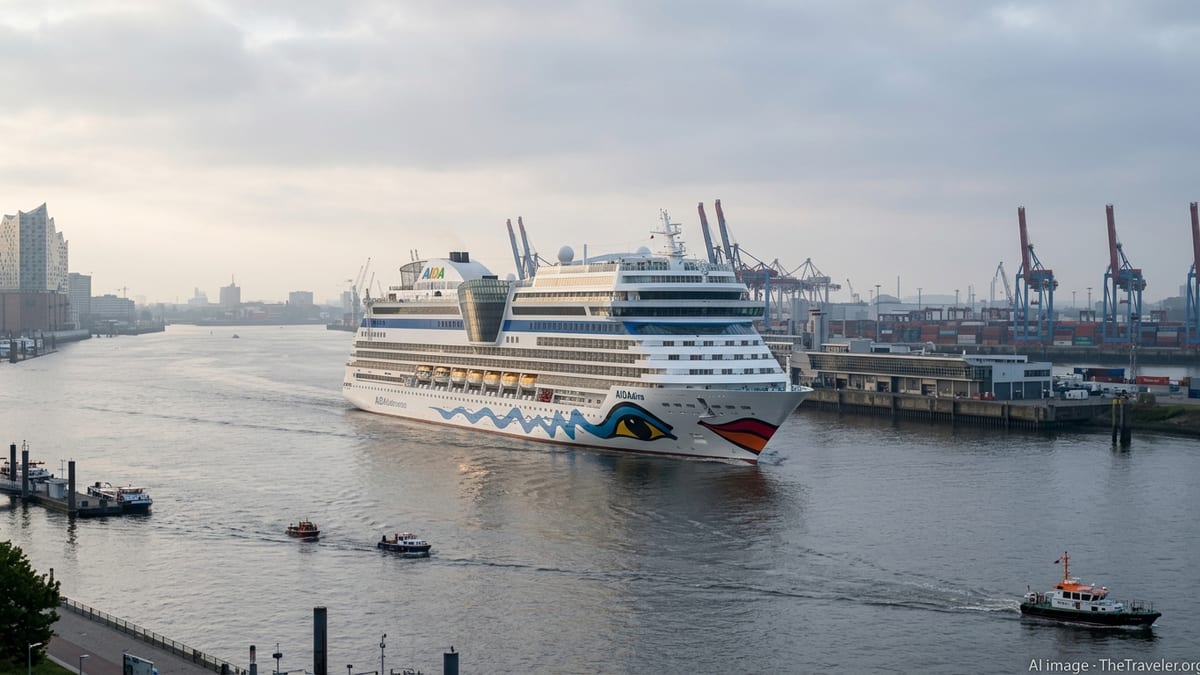
An “Endless” Voyage Cut Short in Cambodia
Publicly available reports indicate that the vessel at the center of the disruption is the Villa Vie Odyssey, a Florida based residential cruise ship that had been marketed as an open ended or “endless” way to live at sea. The ship, refitted for long term stays and launched on its current global itinerary in October 2024 from Belfast, was promoted as a way for residents to combine full time life on board with a multi year, seven continent route.
The program was structured less like a traditional cruise and more like a condominium at sea. Passengers did not simply book a voyage; many purchased long duration stays or multi year packages, some selling their homes or ending leases on land as they prepared to relocate permanently to the ship. Coverage in outlets including the Associated Press, CBS News and travel industry publications describes a community of mostly retired residents from the United States and other countries who expected to live aboard for years, with onboard medical care, dining, and housekeeping included.
The journey, initially pitched as lasting at least three and a half years with an option to continue indefinitely, came to an abrupt stop in late October 2026 in the Cambodian port city of Sihanoukville. According to published coverage, residents were given limited notice that the company, Villa Vie Residences, was suspending operations and that they would need to disembark with their belongings.
Accounts compiled by major news outlets and cruise focused publications describe scenes of confusion on board as passengers packed up cabins they had treated as permanent apartments and began frantically searching for last minute accommodation and flights out of Cambodia.
Fuel Prices, War and a Strained Business Model
Information released by Villa Vie Residences and cited in multiple business and travel reports points to a surge in fuel costs as a key factor behind the suspension. Industry coverage notes that the company’s monthly fuel expenses, which it estimated at around 1,800 dollars per cabin during 2024 and much of 2025, had risen to between 6,000 and 8,000 dollars per cabin on portions of the Asia segment.
Analyses in financial and energy focused media link those higher costs to geopolitical turmoil, particularly the war in Iran and related disruptions to shipping routes through the Strait of Hormuz, a critical chokepoint for global oil supplies. As fuel prices climbed, the economics of running a relatively small residential ship on a complex, constantly moving world itinerary appear to have become increasingly difficult.
CBS News and other outlets that reviewed internal company communications report that Villa Vie spent several months attempting to restructure finances and secure additional funding to keep the voyage going. Those efforts reportedly included outreach to potential investors, efforts to renegotiate fuel contracts, and consideration of itinerary adjustments to reduce consumption.
By late October, however, publicly available statements from company representatives and court focused reporting indicate that Villa Vie Residences had concluded it could not safely continue the program. Coverage in business media now indicates that the company plans to seek Chapter 11 bankruptcy protection in the United States, a step that would allow it to reorganize debts under court supervision while it evaluates options for the vessel and any future operations.
Passengers Scramble for Flights, Visas and Housing
For the roughly 200 to 203 residents believed to have been on board when the ship reached Sihanoukville, the immediate concern has been how to get home, or at least to a new temporary base. Reports from international news organizations and regional outlets such as NBC’s Los Angeles affiliate describe passengers spending hours online and on phones trying to secure flights from Cambodian airports to hubs in Bangkok, Singapore, Europe, and North America.
Travel coverage and passenger blogs note that some residents had limited travel insurance or none at all, in part because they viewed the ship as their home rather than as a conventional trip with fixed start and end dates. That assumption left several people exposed to last minute ticket prices and the cost of extended hotel stays in Cambodia and other Southeast Asian destinations while they arrange onward plans.
Discussions on cruise forums and social platforms reviewed by travel media highlight practical challenges that many residents did not anticipate facing so suddenly: securing necessary visas for unplanned overland routes, managing prescription refills and health care off the ship, and arranging storage or shipment of personal belongings that no longer have a permanent cabin to occupy.
Some passengers, according to aggregated reporting, chose to remain in Southeast Asia temporarily, booking month to month rentals in beach towns or major cities while they evaluate whether to return to their home countries or look for other long term travel options. Others reportedly sought assistance from family and friends to fund emergency flights back to the United States, Canada, and Europe.
Legal Fallout and Financial Uncertainty
The sudden halt to the cruise has also raised complex questions about consumer protections in the emerging residential cruise sector. While traditional cruise holidays are typically covered by clear ticket contracts and, in some jurisdictions, by travel protection schemes or bonding requirements, the hybrid nature of a ship based residence that operates more like a private community has tested existing frameworks.
Business coverage indicates that Villa Vie marketed its offering through multiyear residency agreements and, in some cases, by selling long term usage rights for specific cabins. Passengers had committed substantial sums, often financed by proceeds from home sales or retirement savings, in exchange for the promise of ongoing accommodation and travel rather than a finite voyage.
Attorneys and consumer advocates quoted in prior reporting on similar “life at sea” ventures have pointed to the difficulty of recovering funds when an operator suspends operations or fails to deliver as advertised. In this case, the company’s stated intention to seek Chapter 11 protection suggests that residents may need to file claims in bankruptcy court and could wait months or years to learn how much, if any, of their investment will be returned.
Comparisons are already being drawn in travel industry analysis to earlier attempts at multi year “live aboard” cruises that collapsed before departure, leaving would be residents seeking refunds from overseas operators. Those cases highlighted gaps between consumer expectations shaped by traditional cruise marketing and the more complex risk profile of long duration residential products at sea.
What the Collapse Signals for “Life at Sea” Travel
The abrupt end of the Villa Vie Odyssey program is being watched closely by cruise lines, investors, and travelers who have followed the growth of residential and long stay cruising. Over the past several years, various companies have promoted multi year or even open ended ocean itineraries aimed at retirees, remote workers, and digital nomads willing to trade a fixed address for constant movement.
Analysts quoted across business and travel publications suggest that the Cambodia shutdown underscores the sensitivity of such models to variables largely outside an operator’s control, including fuel prices, geopolitical events, and regulatory changes that can affect port access and routing. Unlike large mainstream cruise ships that can adjust itineraries and pricing across thousands of passengers, a relatively small residential vessel has less flexibility to absorb sudden cost spikes.
Coverage in cruise trade media also notes reputational implications for the wider sector. While the majority of ocean cruises operate on fixed, clearly defined schedules, the high profile difficulties of a branded “endless” voyage may make some travelers more cautious about paying upfront for very long itineraries or for arrangements that require giving up housing on land.
At the same time, industry commentators point out that interest in extended cruising and ship based living remains strong, driven by demographic shifts and the appeal of simplified, all inclusive lifestyles. Future residential or world cruise projects may move toward structures that more closely resemble timeshares or long term charters, potentially paired with stronger financial guarantees and clearer exit options if operating conditions change.