


More news on this day
Around 200 passengers who bought into a “cruise for life” residential voyage have been left scrambling for housing and onward travel after their ship abruptly halted operations and ordered them to disembark in the Cambodian port city of Sihanoukville.
Get the latest news straight to your inbox!
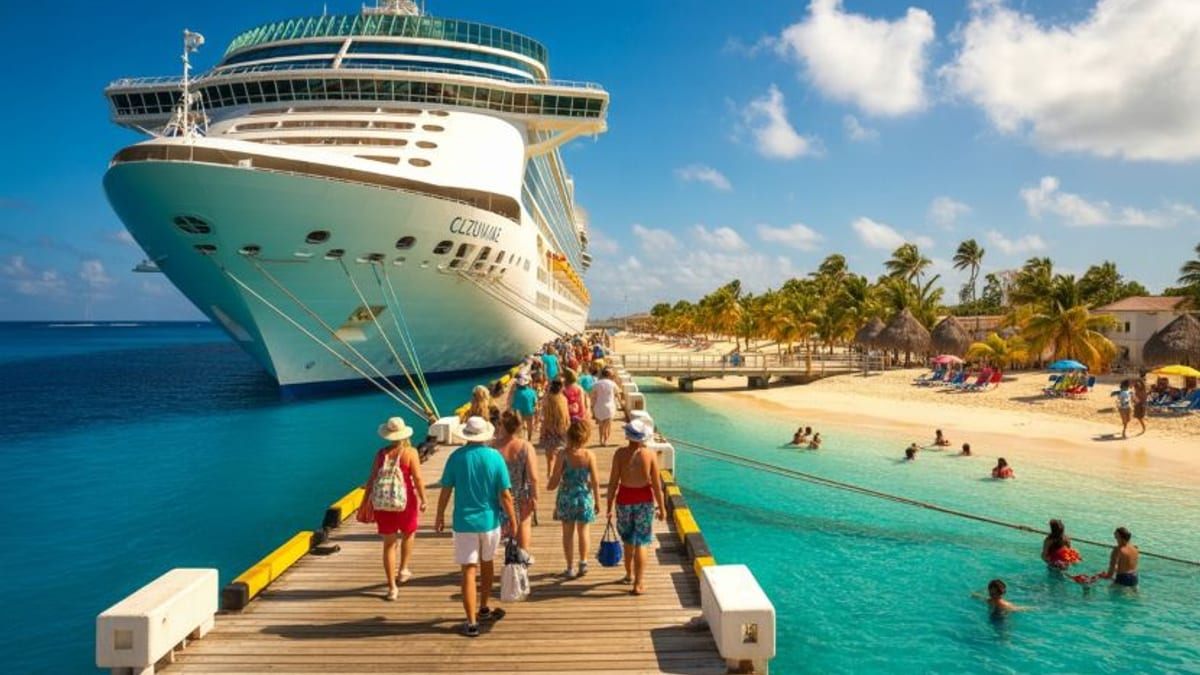
Residential world voyage abruptly halts in Sihanoukville
Publicly available information indicates that the Bahamas flagged residential ship Villa Vie Odyssey arrived at Sihanoukville Autonomous Port on October 23, 2026, after sailing from Thailand. The vessel had been operating a continuous world itinerary marketed as a long term or permanent home at sea, with some passengers selling property on land or committing significant savings to buy or lease onboard residences.
Reports from international and regional media describe how, during the scheduled Cambodian call, residents were informed that the operator, US based Villa Vie Residences, could no longer sustain operations due to soaring fuel costs linked to wider energy market disruptions. A written notice reproduced by passenger blogs and news outlets shows that guests were instructed to disembark with their belongings in Sihanoukville, effectively ending their time living at sea.
Coverage from news agencies and specialist cruise publications indicates that approximately 200 to just over 200 residents were on board at the time, supported by more than 150 crew members. The ship, designed to carry many more guests than were currently resident, is reported to have entered a form of lay up in Cambodia while the company evaluates its options.
Local statements cited in Cambodian media put the Odyssey’s stay at Sihanoukville at five days or longer, with plans for refuelling and potential onward movements of the vessel itself. For the residents, however, the key development was the directive to leave the ship on short notice, which transformed a familiar port call into the end of a highly marketed “endless” voyage.
Seven hour deadline upends life at sea plans
Accounts compiled from passenger forums and social media indicate that residents received an early morning notification giving them roughly seven hours to pack cabins and prepare to step ashore. For many, the ship had functioned not as a temporary holiday cruise but as a primary home, complete with personal furniture, extensive luggage, and in some cases pets.
Several reports note that some residents had committed to multi year leases or cabin purchases, while others were paying substantial monthly residency fees positioned as an alternative to retirement communities or long term rentals on land. The sudden instruction to leave, combined with the logistical challenge of moving a household out of a ship’s cabin in a single day, left many describing themselves as effectively homeless far from their home countries.
Publicly available information shows that Villa Vie had already introduced additional fuel surcharges earlier in 2026 in an attempt to offset rising costs, signalling financial strain well before the Cambodian stop. Nonetheless, the scale and speed of the shutdown came as a surprise to many residents, who had been planning for years of continuous global travel rather than a rapid return to land based living.
Online discussion among cruise watchers and travel industry commentators has focused on the vulnerability of residents who concentrated retirement funds or home sale proceeds into a single, relatively new operator. The Cambodia episode is being cited as a sharp reminder that, unlike traditional cruise holidays, residential voyages can expose participants to business risks more commonly associated with real estate or long term investment products.
Stranded residents navigate housing, visas and onward travel
Reports from Cambodian and international outlets indicate that passengers disembarking in Sihanoukville faced an immediate set of practical challenges, including finding short term accommodation, understanding local visa rules and arranging flights onward to regional hubs such as Bangkok, Singapore or Ho Chi Minh City.
According to published coverage, Villa Vie has moved to secure limited hotel rooms and ground transportation in and around Sihanoukville for at least part of the group, though the extent and duration of this support remains unclear. Public statements cited in business media suggest that while some local costs are being covered, residents have not been promised financial assistance for international airfares or for establishing new long term housing arrangements elsewhere.
Some passengers with greater financial flexibility reportedly left Cambodia within days, while others chose or were forced to remain longer in the coastal city as they searched for affordable flights and weighed whether to return to their countries of origin or attempt to remain in Southeast Asia. Cambodia’s relatively relaxed tourist visa regime may offer short term breathing room, but it does not resolve the question of where former residents will build their next home.
Travel industry analysts note that Cambodia has invested heavily in cruise infrastructure at Sihanoukville, primarily to attract conventional ocean liners and regional itineraries. The arrival of a suddenly defunct residential ship has drawn local attention to the less visible social and financial risks behind the growing life at sea trend.
Fuel costs and fragile business models under scrutiny
In public communications referenced by news reports, Villa Vie has cited “extraordinary” increases in fuel prices following regional conflicts and broader volatility in global energy markets as a central reason for halting operations. For a ship committed to long range itineraries and frequent repositioning voyages between continents, marine fuel represents one of the largest and most unpredictable operating expenses.
Analysts quoted across multiple outlets have highlighted the inherent tension in residential cruise models, which rely on relatively predictable monthly fees from long term residents to cover costs that can spike quickly with market shifts. When fuel prices rise sharply, operators face a choice between imposing steep surcharges on residents, cutting services or itineraries, seeking additional investment, or reducing sailing distances, all of which can undermine the core promise of a carefree, globe spanning lifestyle.
Information drawn from company materials and passenger documents indicates that Villa Vie had already attempted to rebalance its economics through additional charges earlier in the year, but that these measures were not sufficient to keep the business viable under current fuel market conditions. The decision to suspend sailing entirely, rather than adopt a reduced routing or extended stays in lower cost ports, suggests that management viewed the existing model as unsustainable without a more fundamental reset.
The Cambodia shutdown has prompted renewed discussion among cruise experts about whether any operator can reliably offer multi year or lifelong residential programs at sea without building in substantial financial reserves and clear contingency plans. The experience of Odyssey’s residents is likely to be studied closely by future regulators, insurers and potential investors in similar ventures.
Wider implications for the ‘cruise for life’ trend
The Villa Vie Odyssey had been part of a broader movement promoting extended or permanent life on cruise ships as an alternative to conventional retirement villages, long leases in popular coastal cities or frequent short cruises. Marketing materials from across the sector have highlighted perceived advantages such as included meals, housekeeping, social activities and global itineraries that remove the need to arrange separate flights, hotels and tours.
Travel media have chronicled a growing number of retirees and remote workers considering such arrangements, sometimes arguing that, at certain price points, long term cruising could rival or even undercut the cost of living in major cities. The events in Sihanoukville, however, demonstrate how quickly those calculations can unravel if an operator’s finances come under pressure or if key operating inputs such as fuel change dramatically.
For prospective residents, the Cambodia case may serve as a cautionary example of the importance of examining contract terms, refund policies, corporate structures and contingency planning before committing housing budgets and savings to life at sea. Industry commentators are pointing to questions around what happens if a ship is sold, redeployed or placed into lay up, and how residents’ rights compare to those of traditional cruise passengers or apartment tenants on land.
As the roughly 200 former residents of the Cruise for Life style program regroup in Cambodia and beyond, other operators in the niche residential cruise space are likely to face more detailed questions from regulators, insurers and prospective customers. Whether the sector can rebuild confidence will depend not only on fuel prices and itineraries, but also on the strength of consumer protections and the transparency of financial and operational planning behind the promise of a home at sea.