


More news on this day
Britons heading to Dubai this winter are being urged to scrutinise official travel advice after the UK updated its Middle East guidance, highlighting regional tensions, a persistent terrorism risk and the possibility of sudden disruption to flights across the wider region.
Get the latest news straight to your inbox!
What the latest UK travel advice says about the UAE
The United Kingdom’s official travel advice for the United Arab Emirates, which includes Dubai, remains in force with a prominent section on “regional tensions” and potential knock-on effects from conflicts elsewhere in the Middle East. The guidance, current as of late October 2026, notes that missile and drone incidents and retaliatory attacks linked to regional rivalries have taken place in several nearby states, and warns that the situation across the region remains unpredictable.
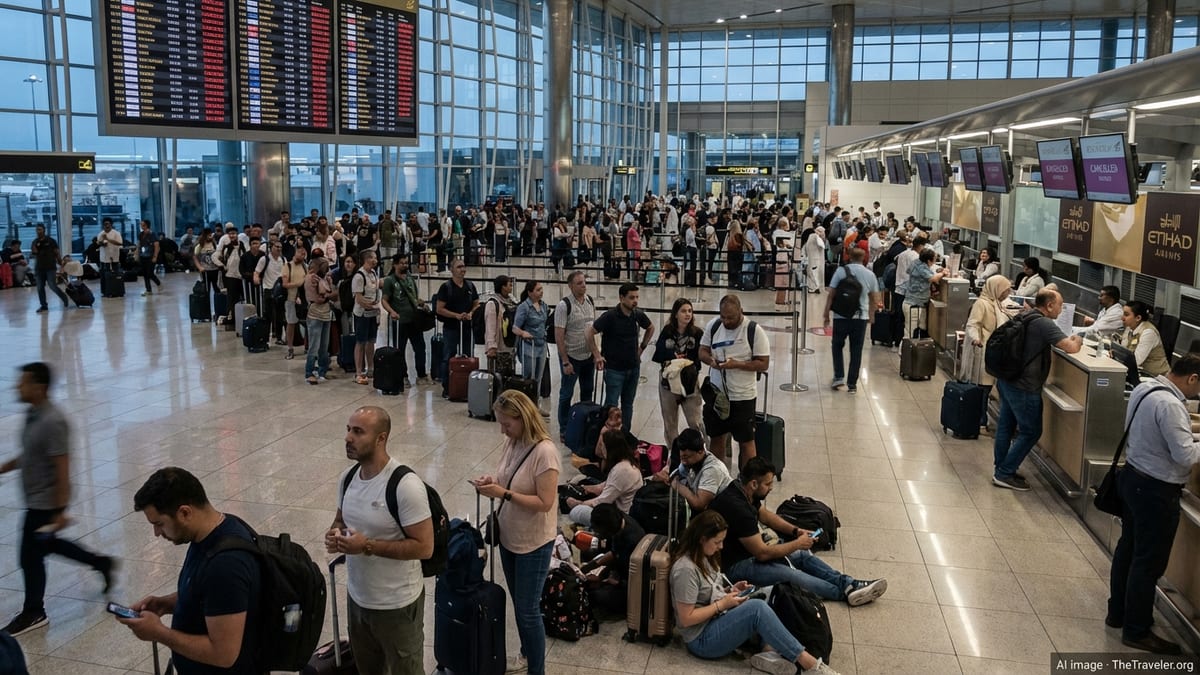
The Foreign, Commonwealth and Development Office (FCDO) states on its public advisory pages that British nationals in the Middle East should be prepared for possible flight cancellations, periodic airspace closures and wider travel disruption if tensions escalate further. It also draws attention to recent strikes and retaliatory attacks attributed to Iran across parts of the region, and the risk that further incidents could affect air routes used by commercial traffic to and from Gulf hubs such as Dubai.
For the UAE itself, the FCDO does not currently advise against travel, but the safety and security section underlines that terrorists are considered likely to try to carry out attacks in the country. Publicly available information explains that attacks could be indiscriminate, including in places visited by foreign nationals, and that there is a high threat of terrorism globally affecting UK interests and British nationals. Due to increasing regional tensions, sites linked to Israeli and Jewish communities are highlighted as potential targets within the UAE.
Other governments have issued comparable messages. Advisories from Canada, Australia and the United States emphasise an elevated regional threat environment, point to previous missile and drone activity in the broader Gulf, and encourage travellers to the UAE to exercise a high degree of caution, remain alert in crowded places and keep up to date with developments that could affect air travel.
Regional conflict, airspace risks and what this means for Dubai flights
Although Dubai remains one of the world’s busiest long haul hubs, the UK’s updated language on regional tensions reflects a wider pattern of disruption across Middle Eastern airspace since the latest round of conflicts involving Israel, Iran and armed groups in Yemen and elsewhere. FCDO material for the region, alongside advisories from other countries, notes that military strikes and reprisal attacks have taken place in several states and that air corridors can be restricted at short notice.
Recent crises in the Strait of Hormuz and the Bab al Mandab area have seen commercial shipping and energy infrastructure targeted with drones and missiles, prompting heightened alert levels among aviation and maritime authorities. Open-source reporting on maritime incidents near Fujairah and the wider Gulf of Oman shows how quickly risk assessments for key transit routes can change, and travel insurers in the United Kingdom have circulated bulletins warning that war and terrorism exclusions may apply if official advice is upgraded for particular countries in the region.
For Dubai-bound tourists, the immediate impact is most likely to be indirect. Public advisories do not currently report sustained attacks on UAE airports themselves, but they stress that knock-on effects are possible if neighbouring airspace is closed or if carriers reroute aircraft to avoid specific conflict zones. Recent worldwide cautions from the United States for travellers in the Middle East similarly speak of potential airspace closures, flight cancellations and last-minute schedule changes.
Middle East specialist travel agents in the UK have been advising customers, based on published guidance, to build flexibility into their plans, choose fully refundable or changeable fares where possible, and monitor airline communications closely in the days before departure. Insurers and industry notices have also highlighted that if FCDO advice changes to warn against all but essential travel to a particular destination, some standard policies may automatically restrict or withdraw cover for new trips booked after that point.
Terrorism and security concerns in Dubai and the wider Gulf
The security picture for Dubai is different from that in active conflict zones such as parts of Israel, Gaza and southern Lebanon, where several governments currently advise against all travel or recommend that visitors reconsider non-essential trips. Nevertheless, the FCDO, along with agencies in other countries, continues to flag a terrorism threat across the Gulf, including in the UAE.
On the UK’s official UAE travel advice pages, terrorism is listed as a key risk factor. The text notes that terrorists have previously issued statements threatening attacks in the Gulf region, with references to western interests and individuals. It also points to the possibility that international events, including confrontations between Iran and western powers or Israel, could increase the risk to locations associated with those states, among them diplomatic missions, places of worship and community institutions.
In practical terms, Dubai visitors are urged to stay alert in crowded public spaces that attract tourists, such as large shopping malls, waterfront promenades, major hotels and entertainment districts. The FCDO signposts general UK counter terrorism advice on how to respond in the unlikely event of an incident abroad, including basic principles like identifying exits, following local emergency announcements and moving away from any suspicious activity.
Advice from Australia’s Smartraveller service and Canada’s travel pages for the UAE echoes this tone, advising a high degree of caution due to terrorism and the unpredictable regional security environment. These notices highlight that even where day to day life appears normal in cities like Dubai, the risk profile can shift rapidly if tensions spike elsewhere in the Middle East.
Insurance, transit routes and what UK tourists should check before departure
The UK’s renewed focus on Middle East travel risks has significant implications for how British holidaymakers plan Dubai trips, especially given the UAE’s role as a transit point for journeys on to Asia and Africa. Publicly available guidance from insurers and industry bodies in the UK links policy conditions explicitly to FCDO travel advice, meaning that cover may be restricted if the government moves a destination into a higher risk category.
Documents produced for UK consumers in recent months explain that if a country is subject to “advise against all but essential travel” or “advise against all travel” warnings at the time of departure, standard leisure policies may not pay out for cancellation or disruption connected to the underlying security threat. Some providers also specify that travelling into or through countries designated as active war or conflict zones could invalidate parts of a policy, unless customers have purchased specialist cover.
Travelers heading to Dubai are therefore being encouraged, in publicly available advisories and industry updates, to read their policy wording carefully and check whether transiting through higher risk states on a single ticket is covered. In addition, official FCDO material repeatedly recommends that British nationals register for email alerts for each country on their itinerary, so that they receive an early warning if advice changes shortly before or during a trip.
For those connecting in Dubai to onward flights to destinations with more severe warnings, such as certain parts of the Levant or Gulf, the combination of FCDO advisories and airline policies may affect whether tickets can be changed without penalty. Some carriers have introduced flexible rebooking options on routes most exposed to sudden airspace decisions, and travellers are advised to confirm the latest rules directly with airlines or travel agents before committing to complex itineraries that rely on multiple regional sectors.
Practical steps for Dubai-bound UK travellers now
Against this backdrop of heightened regional tension, official information still presents Dubai and the wider UAE as accessible for tourism, but with more caveats than in previous years. The core message from the UK government and many partner countries is not that people must stay away from Dubai, but that they should approach travel there with a greater awareness of how quickly conditions around the region can change.
British tourists planning to visit Dubai in the coming months are therefore urged by open source government and industry guidance to track FCDO updates for both the UAE and any neighbouring states on their route, purchase insurance that explicitly covers disruption linked to regional instability where available, and allow time buffers for connections that depend on potentially volatile airspace. Travellers are also encouraged to keep contact details for their airline, tour operator and accommodation easily accessible so that they can react quickly if schedules are adjusted.
Once in Dubai, the prevailing advice is to follow local security information, stay alert in busy public places without becoming overly anxious, and maintain routine precautions such as safeguarding passports and valuables. While the city continues to host large numbers of international visitors, the latest UK warning underlines that the Middle East’s shifting security landscape is now a factor every Dubai-bound traveller needs to understand before they fly.