


More news on this day
A United States operated residential cruise ship that marketed years long global living at sea has abruptly suspended its voyage in Cambodia, citing surging fuel costs and leaving around 200 passengers stranded in port and scrambling to replace what had become their primary homes.
Get the latest news straight to your inbox!
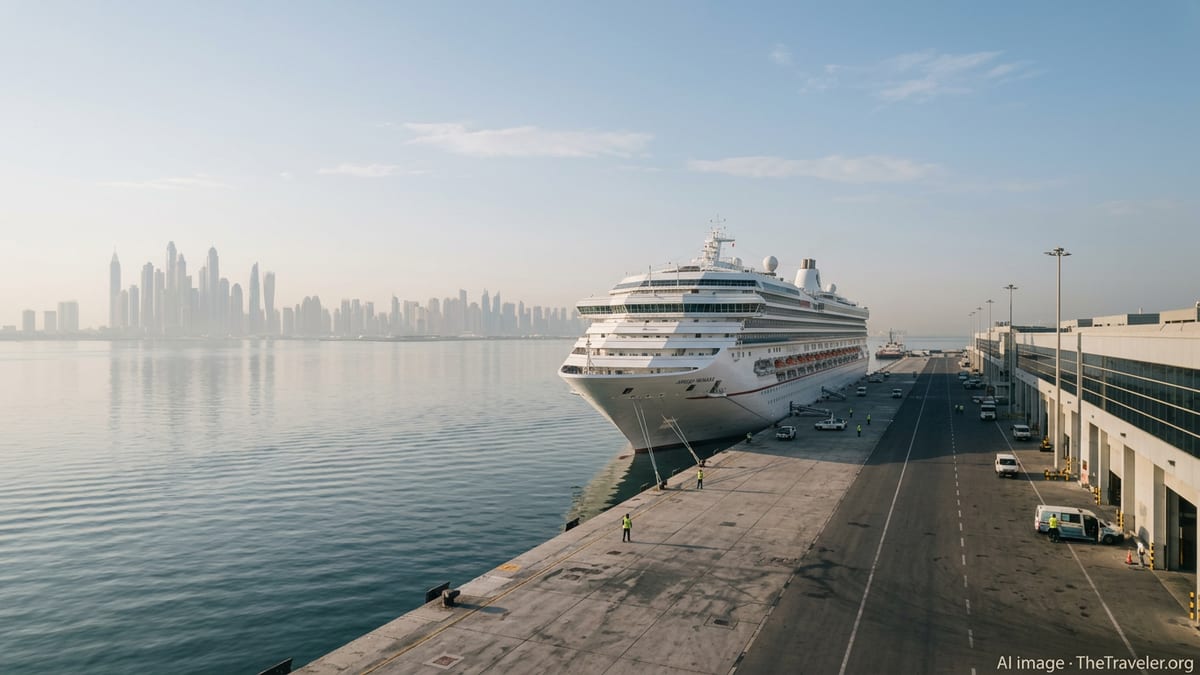
Residential "endless" voyage cut short in Sihanoukville
US based operator Villa Vie Residences announced on Tuesday, October 27, that it had suspended operations of its ship Villa Vie Odyssey while moored in Sihanoukville, on Cambodia’s southern coast. Publicly available information shows the company framed the halt as a response to what it described as extraordinary increases in fuel prices on the Asia segment of the ship’s multi year global itinerary.
Villa Vie Odyssey is a residential style cruise ship marketed as an “endless” world voyage, where passengers purchase cabins and live on board full time while the vessel circles the globe. Reports indicate that the ship has been sailing for more than two years and had capacity for about 650 residents and guests, although current estimates suggest about 200 people were living on board when operations were paused.
Coverage from international outlets indicates passengers were informed they would need to disembark in Cambodia with their belongings after the company said it could not secure the fuel needed to continue operating under its existing business model. The decision effectively ended the world voyage in Southeast Asia rather than continuing toward India and other planned ports.
According to published itineraries and marine tracking data, Odyssey had called at destinations including Tonga and Australia earlier in 2026, with its late year schedule focused on the Indian Ocean and South Asia before fuel market turmoil altered those plans.
Fuel cost shock blamed amid wider energy market turmoil
In a public statement cited by multiple news organizations, Villa Vie Residences said its monthly fuel expenses calculated on a per cabin basis had risen from a historical average of about 1,800 dollars to an estimated 6,000 to 8,000 dollars in parts of Asia. That represents more than a threefold increase in one of the ship’s core operating costs.
Reports from regional business media link those higher expenses to a sharp jump in marine fuel prices in Singapore and other major bunkering hubs following the conflict centered on the Strait of Hormuz and broader disruptions in Middle Eastern energy exports. Data shared in that coverage shows marine gasoil prices in Singapore nearly doubling compared with levels before the Iran related crisis, while very low sulphur fuel oil used by many cruise ships has also climbed steeply.
Cruise industry filings and risk disclosures have long highlighted fuel as one of the sector’s most volatile costs, but the scale and speed of the latest surge have been described in recent analyses as especially challenging for smaller or highly specialized operators such as residential ships. With fares on Villa Vie Odyssey locked in for residents who had already purchased cabins, the company had limited flexibility to pass on the additional fuel burden through higher prices in the short term.
Analysts quoted in trade and financial publications note that larger mainstream cruise brands often use fuel hedging strategies or fleet redeployments to manage such shocks, options that are harder to exercise for a single ship tied to a rigid long range world voyage route.
Passengers in limbo as housing plans unravel in port
News reports from Cambodia and international broadcasters describe scenes of uncertainty in Sihanoukville as passengers, many of whom had sold or rented out land based homes to move aboard permanently, were told they would need to find accommodation on shore and make independent onward travel arrangements. Coverage indicates that some residents had signed on for the full multi year itinerary and viewed their cabins as long term or even lifetime housing.
According to information from local authorities and port related sources cited in regional media, roughly 200 people were on board when the order to disembark was communicated. While the company has indicated it is assisting with temporary lodging and transport within Cambodia, several outlets report that funding for international flights and relocation is not being systematically provided, leaving many travelers to draw on personal savings or travel insurance.
Travel industry commentators say the situation highlights the unique risks associated with residential cruising, a niche model in which ships function both as transport and as a primary residence. Unlike conventional cruise guests on shorter leisure itineraries, many passengers on Villa Vie Odyssey had intertwined their financial and housing plans with the ship’s continued operation.
Consumer advocates quoted in news analysis pieces note that while contracts for such products typically outline operational and financial risks, few residents anticipate a scenario in which a voyage marketed as “endless” or multi year is cut short mid route because the operator cannot afford fuel.
Uncertain future for ship and residential cruising concept
Villa Vie Residences has said through published statements that it is entering a restructuring process while the ship remains in lay up in Cambodia. The company had previously promoted plans for a second residential vessel, reportedly targeted for entry into service in 2029, though recent coverage points out that the latest announcement did not address whether that project will proceed.
Industry focused publications report that the operator had already sought additional financing earlier in 2026, including an emergency loan style investment offer of several million dollars to existing and prospective residents, at double digit interest rates. The failure to stabilize operating finances despite those efforts has raised questions among analysts about the viability of residential cruising at price points closer to mainstream travel than ultra luxury segments.
By contrast, The World, a long running residential ship owned by a collective of high net worth residents, is often cited in commentary as a rare example of a sustainable model, supported by owners with substantial reserves and the ability to absorb rising operating costs. Observers say the difficulties facing Villa Vie Odyssey may prompt would be residents to scrutinize operators’ capital structures, fuel strategies and contingency plans more closely before committing to multi year at sea living arrangements.
Maritime experts and tourism economists writing in recent days suggest that while demand for extended cruising and alternative lifestyles remains strong, residential operators with thinner margins and smaller fleets could be especially exposed to sharp swings in fuel and insurance costs, as well as geopolitical disruptions along key sea lanes.
Broader implications for long-haul cruising in Asia
The suspension of Villa Vie Odyssey’s voyage comes as cruise lines worldwide reassess routes and deployment in response to higher fuel prices and instability around strategic chokepoints. Asia and the Indian Ocean, which had been touted as growth markets for extended itineraries and world cruises, are now under closer review by planners seeking to limit expensive detours or unplanned lay ups.
Port calls in countries such as Cambodia, Vietnam, Thailand and India can be fuel intensive for ships repositioning from the Pacific, particularly if geopolitical tensions or security considerations complicate direct transits through key passages. Analysts note that for boutique and residential operators with only one or two vessels, a single disrupted region can undermine the economics of an entire multi year product.
Travel advisors contacted for comment in recent coverage recommend that prospective guests on long duration cruises, whether residential or traditional, pay close attention to contract clauses related to itinerary changes, force majeure events and financial guarantees. They also point to the value of comprehensive third party travel insurance that can help cover unexpected repatriation or housing costs if a voyage is cut short in a distant port.
For now, Villa Vie Odyssey remains alongside in Sihanoukville as its former residents search for short term accommodation and longer range housing solutions, and as the cruise industry watches closely to see whether the ship and its operator can find a path back to sea in a fuel cost environment that has rapidly reshaped the economics of global voyaging.