


More news on this day
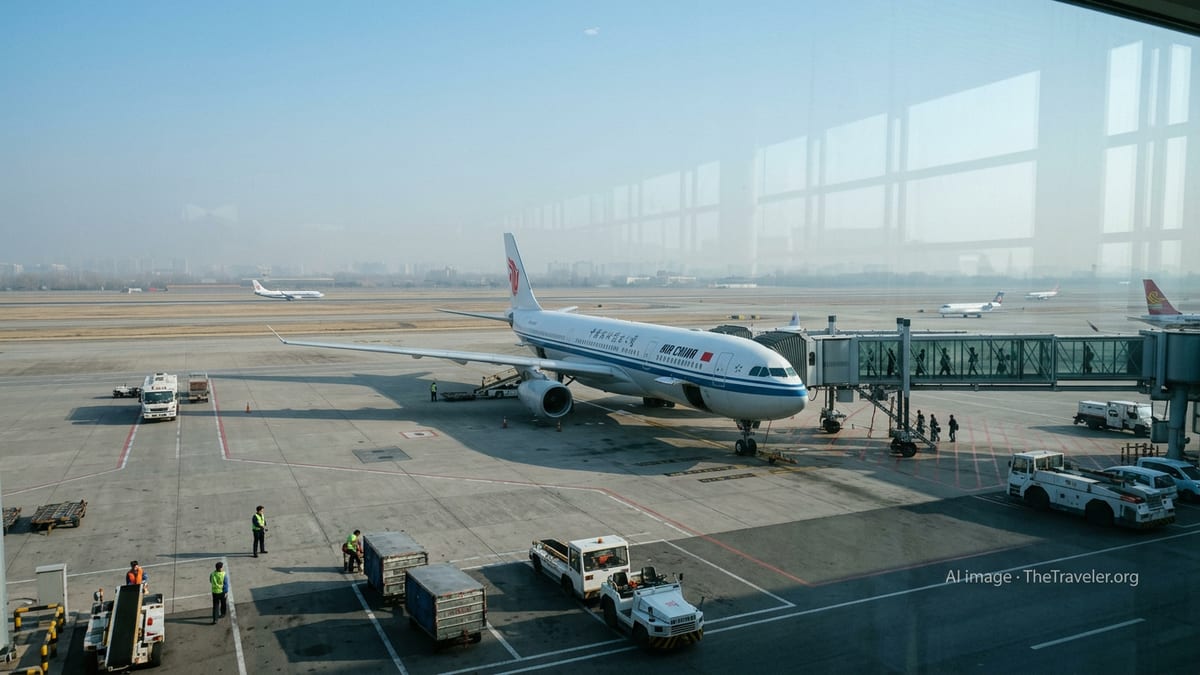
China’s three largest state-owned airlines have swung to a combined first half 2026 net loss of about 8.2 billion yuan (US$1.21 billion), as a sharp jump in jet fuel prices wiped out profits from booming Lunar New Year travel and rising international demand.
Get the latest news straight to your inbox!
Profits Reversed as Fuel Costs Surge
Public filings and industry reports show Air China, China Eastern Airlines and China Southern Airlines collectively reported first half 2026 net losses of roughly 8.16 to 8.2 billion yuan, after posting a combined profit of 4.82 billion yuan in the first quarter. Revenue at all three carriers rose around 10 percent year on year, underscoring how fuel costs rather than demand have become the main drag on performance.
Market coverage indicates that jet fuel expenses for the trio rose between about 35 percent and 38 percent compared with a year earlier, turning what had been a solid start to the year into deep losses by June. Aviation analysts note that fuel now accounts for close to 40 percent of operating costs at some Chinese carriers, leaving limited room to absorb further price shocks without eroding margins.
The reversal came despite a sustained recovery in passenger volumes following China’s post pandemic reopening. International routes in particular supported higher yields early in the year, but the benefit was overwhelmed by a spike in global oil benchmarks tied to ongoing conflicts in the Middle East and supply constraints in key producing regions.
China’s Big Three Under Pressure on Margins
According to published earnings breakdowns, China Southern posted the largest individual loss at around 3.7 billion yuan, more than double the deficit recorded a year earlier. Air China and China Eastern each reported losses of roughly 2.2 to 2.3 billion yuan, even as both carriers recorded solid top line growth driven by cross border travel and recovering premium cabins.
Industry coverage points out that the first half 2026 result marks the seventh consecutive year in which the three carriers have reported combined losses for the January to June period. While global peers in North America and parts of Europe have largely returned to sustainable profitability, China’s state owned airlines remain weighed down by high fuel costs, limited hedging and intense fare competition on domestic routes.
Reports also highlight the stock market reaction to the latest numbers. On the first trading day after the results, shares of China Southern fell more than 5 percent in Hong Kong, while Air China and China Eastern each lost more than 4 percent, as investors reassessed earnings expectations for the remainder of the year.
Weak Domestic Pricing and Weather Disruptions
Beyond fuel, the first half results reveal structural challenges in China’s home market. Travel industry outlets note that oversupply on key trunk routes and aggressive discounting by smaller rivals have kept average domestic fares under pressure, even during what would traditionally be strong shoulder seasons. Capacity that had been deployed in anticipation of a stronger summer has proven difficult to profitably fill.
Regional media reports further indicate that an unusually active typhoon season in the northwestern Pacific and South China Sea added to operational strain, forcing widespread flight cancellations and schedule disruptions. Meteorological data cited in recent coverage shows 21 typhoons formed in the region so far this year, significantly above the long term average, creating additional costs in the form of crew repositioning, passenger care and irregular operations handling.
On international routes, airlines have faced a slower than expected recovery in some long haul markets because of air traffic rights constraints, limited airport slots and capacity bottlenecks at security and border control. These limitations have curbed the ability of Chinese airlines to redeploy aircraft from overcrowded domestic networks into higher yielding overseas markets.
Fuel Hedging Gaps Leave Carriers Exposed
Aviation finance analysts and past annual reports underline that China’s big three airlines hedge very little of their jet fuel exposure, in contrast with some Asian and European competitors that use derivatives more extensively. As a result, the recent run up in fuel prices has passed through quickly to their income statements, with limited offset from financial instruments.
Historical risk disclosures from carriers such as Air China show that even a 5 percent move in average jet fuel prices can translate into billions of yuan in additional annual costs for a single airline. With fuel bills rising by more than a third in just six months, the impact on margins has been magnified, particularly for long haul operations where fuel represents a larger share of total trip costs.
To mitigate the blow, airlines have continued efforts to trim unit fuel burn by optimizing flight levels, increasing single engine taxi procedures and accelerating the retirement of older aircraft. However, those operational gains are incremental and have not been sufficient to counter the scale of the recent fuel price shock, especially in a competitive pricing environment.
Outlook: Demand Solid but Profit Recovery Uncertain
Forward looking commentary in financial coverage suggests that passenger demand is expected to remain relatively firm into the peak autumn and winter travel periods, helped by outbound tourism and business travel normalization. Air traffic volumes within China have already surpassed pre pandemic levels, and international connectivity continues to improve as more routes are reinstated or added.
Even so, the outlook for profitability at China’s big three airlines is clouded by continued volatility in global oil markets and the lagged effect of capacity decisions made earlier in the year. Without a meaningful easing in jet fuel prices or a shift toward higher fares, analysts cited in industry reports see limited scope for a rapid turnaround in margins during the second half.
For now, the combined first half loss of US$1.21 billion underscores how exposed large network carriers remain to energy price swings, particularly when fuel hedging is limited and domestic competition caps ticket pricing. The next set of quarterly results will reveal whether China’s flagship airlines can stabilize earnings or whether fuel costs will keep them anchored in loss making territory despite strong traveler demand.
Caixin Global coverage of first half 2026 airline losses
Economic Times Travel report on fuel costs and losses