


I booked my first G Adventures trip half expecting a classic package-tour experience: color-coded lanyards, every minute scheduled, and barely a moment to wander off on my own. What I found instead was something much harder to pull off: a trip with real structure, yet enough freedom that I still felt like an independent traveler. That balance between planned logistics and authentic free time turned out to be my biggest surprise about G Adventures, and it is the reason I keep recommending them to readers who want guidance without giving up their autonomy.
Get the latest updates straight to your inbox!
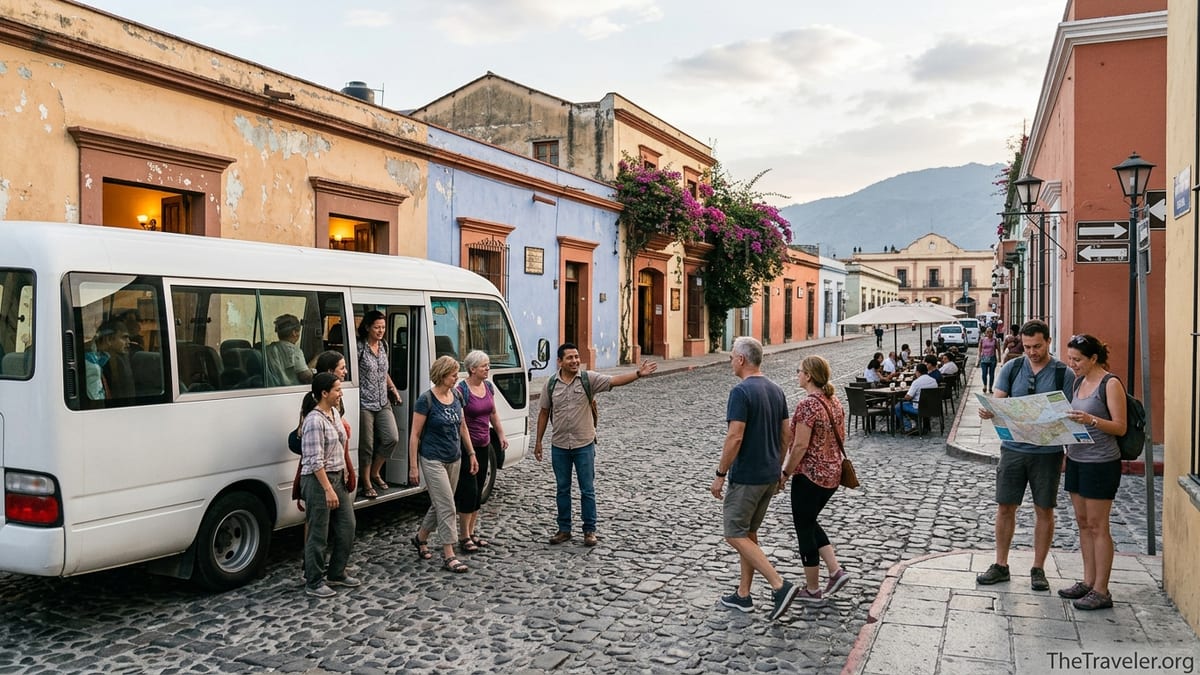
Why G Adventures Feels Different From Traditional Tours
G Adventures positions itself squarely in the small-group adventure space, with typical groups of about 10 to 16 travelers rather than the 40-seat bus model most people associate with escorted tours. The company talks openly about giving travelers the security of a group but the freedom to explore on their own terms, and that philosophy shows up directly in their itineraries. Days are built out with activities, accommodation and transport, yet “free time” is treated as a formal component of the schedule rather than an afterthought, which you can see if you browse their detailed day-by-day breakdowns or agent guides.
On paper, that might sound like marketing language. In practice, it changes how the trip feels. On a classic G Adventures itinerary through Chile and Argentina, for example, you might have a guided walking tour on arrival in Puerto Varas, followed by several hours explicitly designated as free time to stroll the lakeside, visit the local craft market or find your own café table with a view of the Osorno volcano. The group still comes together again for a briefing or an optional group dinner, but you are never marched from church to museum to souvenir shop in lockstep.
This is where G Adventures quietly diverges from many traditional coach tours. Instead of trying to fill every hour so that travelers feel “they got their money’s worth,” the company deliberately leaves space for your own choices. Their own FAQs emphasize that many activities are left as optional and that some meals, especially lunches and dinners, are intentionally not included so that guests can choose where and what to eat in each destination rather than following a preselected restaurant circuit.
Inside a Typical Day: Structure in the Morning, Freedom by Afternoon
On most G Adventures trips, the core structure is front-loaded into the day. Morning often starts with a hotel breakfast and a short briefing from the Chief Experience Officer, or CEO, the company’s title for its tour leaders. That is when you get practical information: departure times, what to wear, local customs and which parts of the day are guided versus free. Transport and any key site entries are handled for you, which removes the stress of navigating unfamiliar ticketing systems, language barriers and schedules.
Consider the “Patagonia Dreaming” itinerary, which links the lush Lake District of Chile with the stark landscapes of southern Patagonia. One day might include a scenic bus journey from Puerto Varas to a new town, an orientation walk on arrival and then the rest of the afternoon and evening free. You could choose to visit a small museum, book a lakeside kayaking session or simply sit in a bakery with a slice of local kuchen and watch daily life unfold. The structure gets you there, gets you oriented and keeps the group moving across a large region, but what you do with those unscheduled hours is entirely up to you.
This pattern repeats on many of their classic itineraries, from Southern Europe to Southeast Asia. Guided elements tend to cluster around complex logistics or culturally significant experiences that benefit from context, such as a local-led tour through a historic neighborhood, a homestay in a rural village or a hike that requires permits and safety oversight. Free time usually opens up later in the day, giving you room to chase your own interests, whether that means an espresso in a tucked-away piazza in Italy or a quick haircut in a bustling market in Vietnam.
The Role of “Free Time” as a Designed Component, Not a Gap
Perhaps the most underappreciated design choice in G Adventures itineraries is that free time is not a leftover scrap of the day. It is labeled in their internal planning tools as a distinct component, alongside activities, accommodation and transport. That may sound technical, but it signals a mindset: unscheduled hours are intentionally placed where they will be most useful or rewarding, rather than appearing only when logistics demand a break.
You can see this clearly on more relaxed trips such as the “Islands of the Philippines on a Shoestring,” where several days are described as having lots of free time built in. In practice, that might mean a morning boat transfer arranged by the CEO, followed by a quick orientation to the beach town where you are staying and then wide-open hours to choose between snorkeling, island-hopping tours, a local cooking class or simply doing nothing at all on the sand. The group reconvenes in the evening to share stories over fresh seafood, but no one has been herded from one predetermined activity to the next.
Travelers who have shared their experiences online often echo this point. Many describe tours where orientation walks or included visits happen early in the day and afternoons are left open for self-directed exploration. Others note that there is space to book last-minute activities once you are on the ground. In Italy, for example, some CEOs encourage travelers to use booking platforms to secure timed museum entries or wine tastings during free windows rather than locking them in months in advance, which gives people the flexibility to respond to how they feel in the moment.
Optional Activities: Choice Without Chaos
Optional activities are where structure and freedom intersect most clearly. G Adventures usually includes a handful of core experiences in the base price: things like a guided visit to a major archeological site, public transport passes in a big city or a full-day hike in a national park. Around those, the CEO will typically offer a menu of optional extras that you can add on at your own expense, ranging from sunset sailing in Croatia to tango lessons in Buenos Aires or food tours in Bangkok.
In theory, optional activities can create pressure in group travel. Some companies funnel everyone into the same add-ons, turning “optional” into “strongly suggested.” On most G Adventures trips, though, the expectation is different. It is common to see half the group head off with the CEO for a wine tasting or cycling tour while others use the same time slot to visit a museum, browse independent shops or simply take a nap. The CEO usually helps coordinate timing and points you toward reliable local operators, but you are not punished socially or logistically for doing something different.
Real-world examples drive this home. Travelers on an Iceland itinerary report days where the group spends a morning visiting major waterfalls and geysers together, with optional evening excursions such as a Northern Lights hunt or geothermal spa visit offered later. Some join, some do not, and the next morning everyone starts again from the same place. On a Belgian beer tour, guests describe long afternoons where tastings were available through the CEO, but others chose to ride trams out to Art Nouveau neighborhoods or linger in bookstores, returning in time for a group dinner if they felt like socializing.
How the CEO Shapes Your Sense of Freedom
The personality and style of the CEO makes a huge difference in how the structure-freedom balance feels on the ground. G Adventures markets their leaders as facilitators rather than lecturers, and that generally matches reality. A strong CEO handles the unglamorous details of travel: confirming transfers, checking opening hours, spotting weather or political disruptions early and adjusting the plan before you have to worry about it. At the same time, many are careful not to dominate your choices once the essentials are covered.
In Japan, for instance, a CEO might lead the group through the Tokyo subway system on day one, explaining ticket machines and basic etiquette. That morning is tightly structured for a reason. By day two or three, instead of endlessly shepherding you from temple to shrine, that same CEO may encourage you to branch out, handing over a short list of neighborhood suggestions for your free time and reassuring you that if you get turned around, they are only a message away. You still benefit from the group’s logistical backbone, but your daily wanderings are your own.
It is also worth acknowledging that some CEOs skew more structured than others. A few prefer to have the whole group together most of the time, while others are more relaxed about people peeling off. If independence is extremely important to you, it is wise to choose itineraries that clearly advertise free days or long blocks of unscheduled time, such as certain “Classic” or “18-to-Thirtysomethings” trips. Those styles tend to attract leaders and travelers who are comfortable with a looser daily rhythm, giving you more breathing room than, say, a heavily active trek where safety dictates sticking together.
Comparing Freedom Across Travel Styles and Destinations
Not all G Adventures trips offer the same degree of freedom, and that is by design. The company segments its product into several travel styles, each with its own balance of structure and independence. Classic small-group tours usually offer a mix of must-see highlights, local experiences and generous free time. Active or trekking trips, by contrast, lean more heavily toward structure, since you are dealing with set hiking routes, altitude considerations and safety factors that require the group to move as a unit.
Destination also matters. In countries where logistics are straightforward and safety risks are relatively low, such as much of Western Europe, Canada or New Zealand, itineraries often build in long stretches of independent exploration. You might have a guided walking tour in the morning in Lisbon and then the rest of the day free to ride vintage trams, search out pastel de nata bakeries and watch the sunset from a miradouro. In more complex environments, such as remote parts of the Andes or certain regions of Africa and the Middle East, there is more emphasis on guided elements and group coordination, though even then you often get pockets of free time in markets, coastal towns or cities at the start and end of the trip.
The company’s newer “solo-focused” offerings add another wrinkle. Some of these itineraries explicitly structure days around different modes of engagement, with a social group day of shared activities, a more independent “me day” with built-in free time and a “G day” that leans into signature experiences and surprises. For solo travelers who worry about feeling trapped in constant group togetherness, that kind of built-in variety can be especially appealing, giving them confidence that there will be room in the schedule for quiet time as well as connection.
Who Thrives With G Adventures’ Balance and Who May Not
The travelers who tend to love G Adventures the most are those who could plan a trip independently but either lack the time to arrange complex logistics or prefer to travel with a ready-made group. If you like having trains, buses and guesthouses lined up in advance, appreciate the insight of local guides and enjoy occasional group dinners, yet still want to follow your nose down a side street in your free hours, their structure-freedom balance is a strong match. Many repeat guests cite the relief of landing in a new country and knowing that from the airport transfer to the first night’s accommodation, the basics are covered without losing the ability to say “no” to a particular optional outing.
On the other hand, if you are the kind of traveler who delights in waking up with no idea where you will sleep that night, who changes countries on a whim and sees fixed itineraries as a constraint rather than a comfort, then even G Adventures’ relatively flexible model may feel too structured. Group departure dates are set, and there are always some non-negotiable meeting times, especially for transfers, border crossings and entrance slots at popular sites. Likewise, if you prefer every moment to be choreographed and dislike unscheduled blocks of time, you may find yourself craving a more regimented coach tour that fills afternoons with back-to-back attractions.
Price sensitivity plays a role too. Because G Adventures intentionally leaves some meals and activities open for you to choose, you have control over how much you spend on restaurants and extras. Dinner might be a simple street-food stop in Bangkok one night and a splurge on a rooftop restaurant in Santiago the next. Travelers who enjoy calibrating their own spending find that freedom empowering, while those who prefer one all-inclusive price with everything decided in advance may find the additional on-the-ground decisions less appealing.
The Takeaway
What surprised me most about traveling with G Adventures was not a single dramatic moment but the day-to-day feeling of being both looked after and left alone. The group provided structure where it mattered most: airport pickups in unfamiliar cities, cross-border bus transfers, language barriers smoothed over by a CEO who knew the system, and well-chosen accommodations that I did not have to vet personally. Within that framework, though, there was room to make the trip feel unmistakably mine.
Afternoons spent wandering side streets in Buenos Aires, unplanned stops in neighborhood cafés in Kyoto, last-minute decisions to join or skip an optional activity: none of that felt out of place on a G Adventures tour. Instead, it felt quietly built into the DNA of how they design trips. For travelers who want a safety net without surrendering their sense of discovery, that balance between structure and freedom may be the most pleasant surprise of all.
FAQ
Q1. How much free time do you usually get on a G Adventures tour?
Free time varies by itinerary and travel style, but on many classic trips you can expect a mix of structured mornings and several free afternoons or evenings each week for independent exploration.
Q2. Can I skip an included group activity if I want more solo time?
In most cases, yes, as long as you are not skipping something critical for logistics or safety, such as a border crossing or mandatory briefing. Many travelers occasionally opt out of a museum visit or city walk to recharge or explore on their own.
Q3. Are meals always taken with the group, or can I eat on my own?
Breakfast is often at the hotel and may be shared informally with group members, but lunches and dinners are frequently left open. You can usually choose whether to join a group meal organized by the CEO or find your own restaurant.
Q4. How do optional activities work and do I have to decide before the trip?
Optional activities are extra experiences you can add and pay for separately. Some can be booked in advance, but many are arranged once you are on the tour, after your CEO explains the options, prices and timing for the free-time windows.
Q5. Will I feel rushed if I like to take things slowly?
That depends on the specific itinerary. Fast-moving trips that cover multiple countries tend to have early starts and full days, while slower-paced itineraries and certain travel styles build in longer stays and more relaxed free time in each stop.
Q6. Is it safe to go off on my own during free time?
CEOs typically give clear guidance on safe areas, local scams and how to get back to the hotel. As long as you follow their advice, keep basic travel precautions in mind and respect meeting times, exploring on your own is both expected and encouraged.
Q7. How independent can I really be if transport and hotels are prebooked?
Major logistics are set, but within that framework you retain a lot of autonomy. You can choose how to spend your days during free blocks, where to eat, which optional activities to join and how social or solitary you want to be.
Q8. Are some G Adventures travel styles more structured than others?
Yes. Active and trekking trips are usually more structured for safety and route planning, while Classic or youth-oriented itineraries often have a looser schedule with more unstructured afternoons and evenings.
Q9. What if I discover a local experience I want to add that is not on the list?
In many destinations, your CEO can help you assess whether a new idea is feasible within the schedule and arrange it through a reputable local operator, or advise you how to fit it into your free time safely on your own.
Q10. Is G Adventures a good fit if I usually travel completely independently?
If you enjoy planning but want someone else to handle complex logistics or you are visiting a region where you would prefer extra support, the balance of structure and freedom can be a strong fit. If you dislike fixed itineraries altogether, you may find any group trip too limiting.